

Korea: The Politics of Liquidation and Severance Are Necessary
“Democracy is restored through democracy.” Prosecute all participants in the 12.3 coup without exception. Purge the judicial and administrative bureaucratic elites. Amend laws to prevent the destruction of constitutional order. Share lessons learned through investigative commissions and public discourse.
- “청산과 단절의 정치가 필요하다”. translation of a Korean column originally published on January 27, 2025, titled “청산과 단절의 정치가 필요하다”.
- Author
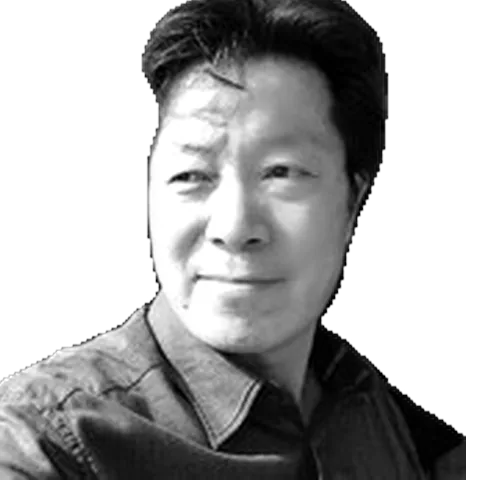
By Choi Yong-ju, Former Head of Investigation Division 1, 5.18 Truth and Reconciliation Commission
Exposing the Vulnerabilities in Our Society
Unless another decisive variable emerges, President Yoon Suk-yeol will be removed from office, sentenced as the leader of a coup d’état, and serve a prison term. Those who conspired, executed, aided, abetted, or followed orders related to the coup will also be punished according to the severity of their crimes. A new government will be elected and inaugurated. Does that mean everything will be resolved? Absolutely not.
The December 3 coup and the series of political upheavals that have followed starkly expose the fragility of the political and social infrastructure that supports our democracy. This can be observed in the following aspects:
1. Persistent Nostalgia for Authoritarian Rule
Even though more than a generation has passed since South Korea transitioned to a democratic system, there remains a deep-seated “reactionary nostalgia” for the governing ideologies and methods of the past military dictatorships. Shockingly, this sentiment is not confined to private cliques but has boldly entered the public sphere, exerting political influence and ultimately escalating into violent political and military actions aimed at restoring the “good old days.”
2. Incomplete Depoliticization of the Military
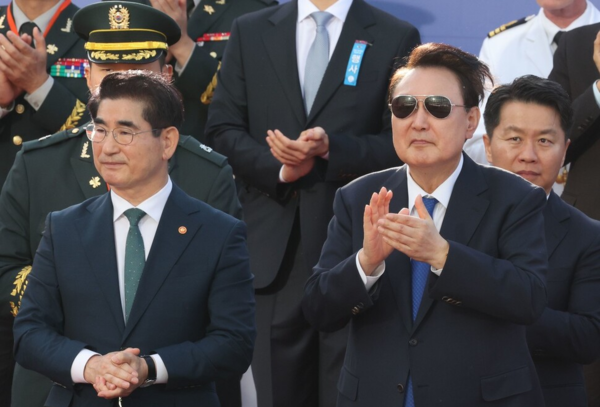
The December 3 coup reveals that the depoliticization of the military, a basic premise for deepening democracy and political development in a post-authoritarian state, remains incomplete. Ongoing investigations and trials will make this more evident, but it is already clear that numerous active and retired military elites actively participated in planning and executing the coup.
Within the military and among retired generals, there are factions that view the political generals of the Park Chung-hee and Chun Doo-hwan eras as heroic saviors of the nation. These groups are not only organized but are actively working to realize their beliefs.
3. Highly Organized Reactionary Groups
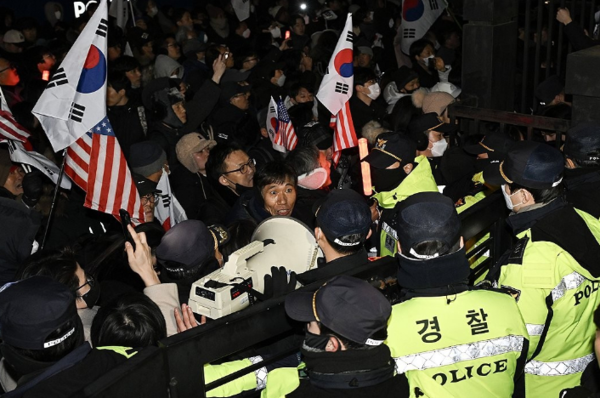
The groups intoxicated by this reactionary nostalgia are far more organized than previously imagined. Their sustained and systematic collective actions, as evidenced by the shocking riot at the Seoul Western District Court on January 19, cannot simply be dismissed as crowd psychology or social pathology.
Within these groups, there exists a cohesive chain of command and mobilization system. Rewards and compensations for carrying out orders are systematically provided. Bolstered by this structure, their members are indoctrinated with irrational and anachronistic ideologies, as well as baseless conspiracy theories and fake news. They internalize these into a dogmatic belief system, exposing their propensity for violence without reservation.
4. The Violent Far-Right Shift in Politics
The trend toward violent far-right extremism in politics is another alarming aspect. Conservative politicians have not only encouraged the far-right rhetoric seen on the streets but have also actively joined protests. Eventually, they went so far as to invite far-right groups into the National Assembly, the very temple of democracy, openly endorsing their actions and positions.
Incidents such as Representative Kim Min-jeon’s press conference with the White Skull Corps and the People Power Party leadership’s response to the Western District Court riot, led by Representative Yoon Sang-hyun, vividly illustrate the radical rightward shift of the conservative political sphere. They have gone so far as to declare President Yoon a political martyr and publicly commit to waging a “crusade” on his behalf. This situation reveals vulnerabilities in our democratic system that must be addressed to prevent further threats.
Yoon Suk-yeol to Give “Remote Orders”
So, what should be done? The fragile democracy and unstable political system we are witnessing will not be resolved through mere judicial punishment of Yoon Suk-yeol and his coup conspirators, nor through a simple transfer of power. Unless more radical and sustained political, judicial, and personnel reforms follow, Korea’s political system is likely to descend into even greater chaos than it faces now.
Yoon Suk-yeol, as a political martyr, will continue to issue “remote orders,” and the far-right groups empowered by this sense of justification will become more organized and aggressive. In response, the radical rightward shift of conservative politics will accelerate, leading to the erosion of deliberative democracy and the intensification of division, conflict, and politics of vengeance.
This political turmoil may create conditions for military intervention or a new type of authoritarian regime, formed through a civil-military coalition. There is no guarantee that South Korea will not regress into the kind of political chaos seen in Germany after the collapse of the Weimar Republic, Chile under Augusto Pinochet, or Argentina after Juan Perón.
The Politics of Liquidation and Severance Must Begin
We must now implement a politics of liquidation and severance. This means thoroughly addressing all political, social, legal, institutional, and personnel factors that caused the current crisis and carrying out fundamental reforms to prevent recurrence.
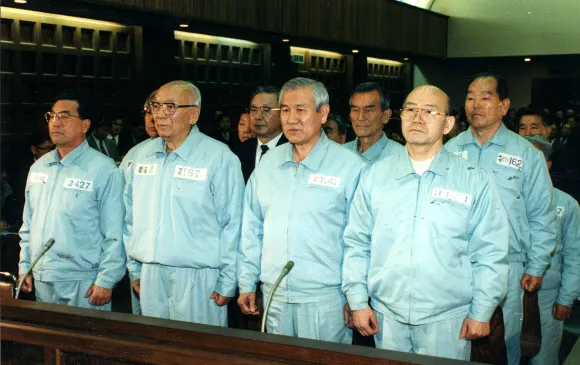
Since transitioning to democracy, South Korea has never fully addressed the legacy of its military dictatorship. Even the punishment of Chun Doo-hwan’s coup group in the 1980s was merely symbolic. During the May 18 Gwangju Democratization Movement, hundreds of civilians were killed or went missing, yet not a single field commander responsible for these crimes against humanity was ever punished. This incomplete reckoning with the past has directly contributed to the current crisis. Failing to learn from these historical lessons will only ensure the repetition of unfortunate history.
Four Tasks for Liquidation and Severance
The politics of liquidation and severance must unfold in four key areas: realization of judicial justice, personnel reform, legal and institutional changes, and public memory and education.
Realization of Judicial Justice
All participants in the December 3 coup must be punished without exception, and the criteria for culpability and sentencing must not waver under political or societal pressure. Civilians who openly defend the December 3 coup should also face legal consequences. It must be firmly established that fake news and conspiracy theories that incite violence and disrupt social order are not protected by freedom of expression but are criminal acts.
There must be no repetition of incidents like the pardons granted to Chun Doo-hwan and Roh Tae-woo, who, despite receiving life and 17-year sentences respectively, were released after only two years.
Personnel Reform Through “Lustration”
Alongside judicial justice, a systematic “lustration” process must be undertaken across the judicial and administrative bureaucracies. After the fall of socialism in the late 1980s, Eastern European countries carefully investigated officials who had collaborated with secret police or intelligence agencies under communist regimes and removed them from public office to stabilize their democracies.
Similarly, France addressed the collaborators of the Vichy regime during Nazi occupation by classifying their level of complicity into 14 categories and imposing disciplinary measures independent of judicial punishment. West Germany under Willy Brandt also undertook extensive de-Nazification efforts to address the legacy of the Nazi regime.
South Korea must conduct a rigorous evaluation of the actions of its bureaucrats during the December 3 coup and the subsequent crises, implementing personnel reforms proportional to their actions.
Third, Institutional and Legal Reforms to Prevent Future Coups
Third, the legal and institutional mechanisms that enabled such acts of insurrection must be thoroughly reviewed to establish safeguards against the destruction of constitutional order. Foremost among these is the need to amend the Martial Law Act, which was revised under Chun Doo-hwan’s regime in 1981 to relax the conditions for its enforcement. The act should be re-revised to restrict its invocation solely to wartime or quasi-wartime situations. (This proposed revision is included in the recommendations to the government within the comprehensive report by the May 18 Democratization Movement Truth Commission, and the relevant ministries are obligated to provide their opinions on this matter.)
Additionally, the Military Criminal Act must be amended to ensure that soldiers have the right to disobey unjust orders from their superiors. Legal and institutional measures must be devised to prevent military intervention in politics, attacks on civilians, and other acts of human rights violations by the military.
The Lessons Must Be Remembered and Shared
Lastly, the events of the December 3 coup must be remembered. The political, social, and historical context of this coup, its progression, the investigations and trials that followed, the subsequent process of reckoning, and the political, social, economic, moral, and psychological repercussions it caused must all be meticulously recorded and shared with both the current and future generations.
The lessons from this incident must be systematically articulated so that all members of society can learn from them, fostering nationwide awareness and consensus to prevent similar occurrences in the future.
Proposal for a Commission and Deliberative Forum
In this regard, I propose the following: The incoming government should establish a commission and a public deliberative forum to uncover the full truth of the December 3 coup and to distill its lessons. This commission should include political scientists, sociologists, psychologists, public policy experts, and military experts who will work together to systematically investigate the coup’s background, progression, and outcomes. Their findings, along with recommendations for preventive measures, should be compiled into a comprehensive report.
This report should then be presented to a randomly selected citizen deliberative forum for discussion and refinement. Through this deliberative process, the report can be adopted as the nation’s official position. Such an approach—rooted in societal consensus and democratic principles—offers the most “democratic” method to restore our damaged democracy and achieve political and social stability. Democracy is restored through democracy.
Who Will Undertake This Radical Politics of Liquidation and Severance?
Some may ask who will carry out such radical reforms. The answer is simple: in the upcoming presidential election, we must choose a leader committed to undertaking these reforms.
This process will ultimately reaffirm the idea that only the organized power of an awakened citizenry can restore damaged democracy and deepen societal progress. If civil society remains vibrant and engaged, though the road ahead may be long, hope is near.
Choi Yong-ju Columnist
Choi Yong-ju, former Director of Investigation Section 1 at the May 18 Democratization Movement Truth Commission, graduated from Chonnam National University with a degree in sociology and completed his doctoral studies in sociology at the University of Kentucky. After retiring from public service, he served as a research fellow at the May 18 Memorial Foundation and as the director of Investigation Section 1 at the Truth Commission. He is now an independent researcher. His translated works include Closing the Books: Transitional Justice in Historical Perspective (Jininjin, 2022), Blue-Eyed Witness of May 18 (Hallym Publishing, 2020), and My Name is Lim Dae-woon (GUEST, 2022). Born in 1958.

댓글