

Korea:We Must Invest More in Democracy
Confirmation of Korea’s Serious Crisis of Democracy Yoon Suk-yeol’s resignation won’t resolve it Bureaucratic power tries to control and guide the sovereign How can we supplement the limits of representative democracy?

By Choi Yong-Ju Former Director, Investigation Division 1, the 5.18 Truth Investigation Commission
Unprecedented innovative measures are needed
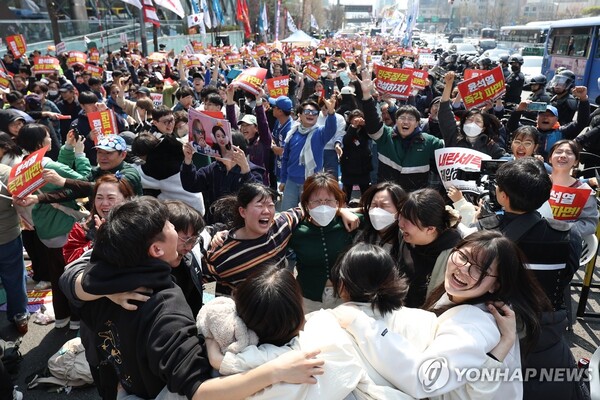
Yoon Suk-yeol has been impeached. It took a full 110 days to obtain this rightful ruling. During that time, our country paid an enormous price—economically, politically, and socially—and suffered deep wounds that will not easily heal.
The political turmoil following the 12.3 coup incident clearly demonstrated that South Korea’s democracy has encountered a severe institutional and operational crisis. Since achieving institutional democratization in 1987, we have experienced many trials and errors, but managed to preserve and share a basic operational principle of democracy. That has now been seriously fractured. Yoon Suk-yeol is not the cause of this crisis but rather a consequence or a single facet of it. Therefore, his departure is unlikely to resolve the crisis. This moment calls for an unprecedented level of innovative action. Here’s why:
First, the ruling party refused to acknowledge its clear political defeat. A fundamental rule of democratic politics is that participants in the political game accept current losses and prepare for future wins. As political scientist Adam Przeworski pointed out, “Democracy is a system where any party can lose in an election.” Nevertheless, Yoon Suk-yeol and the People Power Party ignored this norm and completely refused to accept their defeat. They continued to defend the declaration of martial law, which the National Assembly voted to annul and the majority of the public judged illegal, as a legitimate act of governance. They went so far as to cry “eradication of pro-North leftists” and assert absurd claims of election fraud. It is questionable whether they even sincerely accepted the Constitutional Court’s ruling.
In representative democracy, a party might refuse to accept defeat because it cannot be certain of future victory. But if future victory were assured, it wouldn’t be democracy anymore. Democracy, by its nature, is based on the “unpredictability” of outcomes resulting from the sovereign’s free choice. Thus, if the ruling party refuses to accept defeat and seeks to guarantee future wins, it often resorts to authoritarian and violent means. We witnessed this tragic phenomenon clearly in Yoon Suk-yeol’s declaration of martial law.
The Ruling Party Protects Violent Far-Right Forces
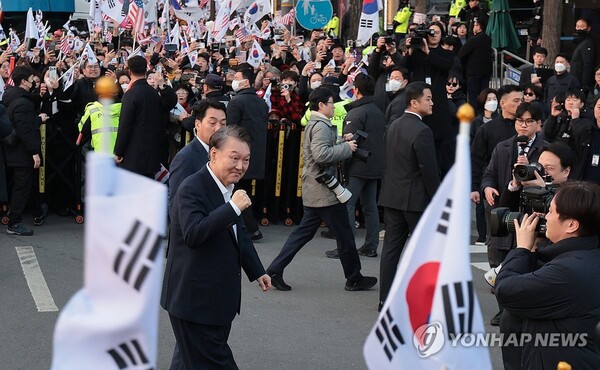
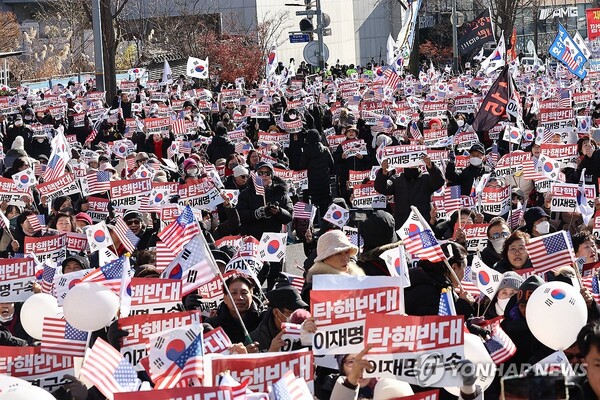
Second, the ruling party gave “political space” to far-right street groups and publicly defended their violent actions. Lawmakers from the People Power Party openly attended anti-impeachment rallies led by Jeon Gwang-hoon and others, delivering speeches and seeking support. They even invited violent extremist groups to the National Assembly, giving them a public platform. The party defended the January 19 Western District Court riot and Yoon Suk-yeol sent multiple political signals encouraging violent actions among his supporters.
Historically, in Korea, the political mobilization of the masses was part of authoritarian regimes’ long-term rule strategies and efforts to control civil society. Since democratization, although conflicts and divisions persisted, conservative parties had never “openly” allied with far-right groups for political goals—until now. This alliance is not just an electoral tactic; it risks evolving into fascism. Around the world, we see democracy devolve into new forms of authoritarianism when conservative parties align with far-right forces—examples include Donald Trump (USA), Viktor Orbán (Hungary), Recep Erdoğan (Turkey), and Narendra Modi (India). The People Power Party, defending Yoon Suk-yeol, appears poised to join this trend.
Tyranny of the Unelected Bureaucracy
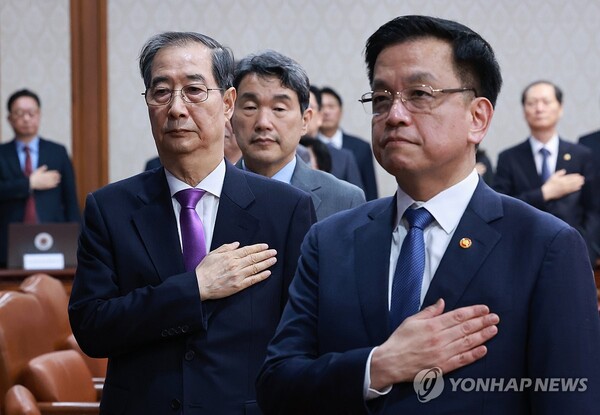
Third, unelected bureaucratic elite groups have undermined constitutional order and severely threatened democracy based on majority consensus. Acting President Han Duck-soo and Deputy Prime Minister Choi Sang-mok vetoed legislation passed by the National Assembly without valid justification and blatantly disregarded the Constitutional Court’s decisions, the National Assembly Speaker’s recommendations, and opposition leaders’ proposals. Prosecutors and the judiciary selectively applied the law for political purposes, betraying the constitutional principle of equality before the law. None of the cabinet ministers who failed to stop the illegal declaration of martial law voluntarily resigned or took responsibility. Although the National Assembly, representing the sovereign, passed Yoon’s impeachment with a two-thirds majority, the sovereign had to wait over 100 days for a ruling from eight Constitutional Court judges.
Democracy recognizes minority opinion and appointed elites’ checks to prevent the majoritarian tyranny or mob rule. This is the principle of mixed republican governance. But this recent crisis revealed that unelected bureaucratic power has gone beyond checks and balances, occupying a dominant position, now controlling and guiding the majority sovereign. Our democracy has fallen under what political scientist Steven Levitsky and others call “tyranny of the minority” or “elite capture.” Without effective mechanisms to curb the excesses of appointed power, both representative democracy and participatory democracy become meaningless.
What Should Be Done and How?
So, what should be done and how? The core issue is how to supplement the limits of representative democracy and control minority power. I believe the key lies in strengthening the political capacity of civil society. It was precisely civil society’s remarkably agile response and altruistic dedication that allowed Korean democracy to endure even amid unprecedented crisis. On the night of December 3, citizens rushed to Yeouido to prevent the execution of illegal martial law. Their sustained protests in the square for over 100 days fueled Yoon’s impeachment. We must further develop this incredible civic capacity to restore and protect democracy.
In this context, French sociologist Pierre Rosanvallon’s concept of “counter-democracy” offers relevant insights. He argues that democracy in crisis regains legitimacy when the sovereign exercises three forms of surveillance beyond voting: vigilance, denunciation, and evaluation.
The Citizen’s Role: Vigilance, Denunciation, and Evaluation
First, citizens must be able to monitor whether representative powers are truly representing them and whether appointed powers are infringing upon their domain. When signs appear, they must send warnings—via formal or informal channels—and prepare self-defense mechanisms to protect their rights.
Second, citizens must be able to demand the reduction, recall, or abolition of representative and appointed powers. They must retain the right to recall elected powers at any time, and to rightfully demand impeachment, replacement, or power reduction of appointed officials.
Third, citizens must deliberate whether government actions and public policies are being conducted purposefully. They must demand correction or improvement, and receive feedback from relevant institutions and representatives.
All these civic rights should be exercised within institutional spaces prepared by the state, not merely in public squares. (Though, of course, institutions do not entirely replace the square.) In other words, the state must establish a public sphere that deepens democracy through political cooperation and constructive tension with civil society—encouraging citizen participation and oversight. When vigilance, denunciation, and evaluation move beyond the square into institutions, unnecessary political friction can be reduced, and civil society can minimize the sacrifices it has made to uphold its claims. We must absorb collective civic action into institutions and reflect its power in politics and public policy—thus practicing true republicanism.
Let’s Establish a 12.3 Coup Investigation Committee
As a first step, I propose establishing an investigation and deliberation committee to evaluate the entire process from the 12.3 coup to the impeachment verdict. Political scientists, sociologists, legal scholars, public policy experts, and military specialists should jointly form a committee to comprehensively review the background, progression, and implications of the 12.3 incident and Yoon’s impeachment. Their findings should be compiled into a report containing lessons learned, recurrence prevention measures, and legal/institutional reforms. This report should then go through a public deliberation process with a randomly selected citizens’ jury, and ultimately be adopted as the official national view.
This process will serve as a meaningful political innovation in which civil society, representative power, and appointed power—together as a national community—collaborate to resolve deep political and social conflicts and restore our democracy in crisis. For the past 40 years, we have never had such a precious political opportunity. Innovation means treading uncharted paths—and political innovation is no exception. The state must be willing to pay the price, regardless of success. In short, we must invest more in democracy.
Author Note
Choi Yong-ju, former Director of Investigation Division 1 at the 5.18 Democratization Movement Truth Investigation Committee, graduated from Chonnam National University with a degree in sociology and completed his doctoral studies in sociology at the University of Kentucky. After retiring from public service, he served as a research fellow at the May 18 Memorial Foundation. He is currently an independent researcher. His translated works include Closing the Books: Transitional Justice in Historical Perspective (Jininjin, 2022), Blue-Eyed Witness of 5.18 (Hallym Publishing, 2020), and My Name is Lim Dae-woon (Gaek, 2022). Born in 1958.

댓글