

[Dismissal of Yoon Suk-yeol] Full Text of Constitutional Court’s Impeachment Ruling Summary
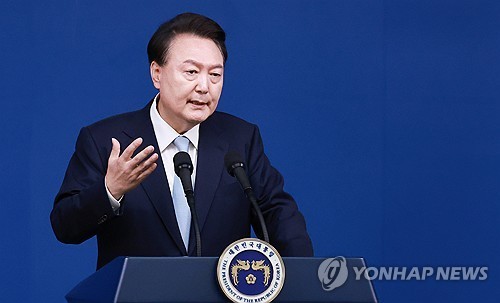
The following is the summary of the impeachment ruling of President Yoon Suk-yeol of the Republic of Korea, read by Acting Chief Justice Moon Hyeong-bae of the Constitutional Court.
We will now begin the ruling on the 2024Hun-Na8 case regarding the impeachment of President Yoon Suk-yeol.
▣ First, let us examine the requirements of legality.
➀ Let us consider whether the proclamation of martial law in this case is subject to judicial review.
Given the purpose of impeachment trials, which is to protect the constitutional order from violations of the Constitution and laws by high-ranking public officials, even if the declaration of martial law in this case required a high-level political decision, the legality and constitutionality of such an act can be reviewed.
➁ Let us consider the point that the impeachment proposal in this case was passed without an investigation by the Legislation and Judiciary Committee of the National Assembly.
The Constitution entrusts the procedure of impeachment to the legislation of the National Assembly, and the National Assembly Act stipulates that the investigation by the Judiciary Committee is at the discretion of the Assembly. Therefore, the absence of such an investigation does not render the impeachment resolution unlawful.
➂ Let us consider whether the resolution of the impeachment proposal in this case violates the principle of non-repetition of the same motion (res judicata).
The National Assembly Act stipulates that a proposal which has been rejected cannot be reintroduced in the same session. The first impeachment proposal against the respondent failed to reach a vote during the 418th regular session. However, the current proposal was introduced during the 419th extraordinary session and thus does not violate the principle.
Justice Jeong Hyeong-sik expressed a supplementary opinion that legislation is needed to limit the number of times an impeachment proposal can be submitted even in different sessions.
➃ Let us consider whether the fact that martial law was lifted in a short time and caused no harm invalidates the interest in protection.
Even if martial law was lifted, the grounds for impeachment had already occurred; therefore, the benefit of judgment is not negated.
➄ Let us consider the point that, although the impeachment resolution was based on violations of criminal law such as insurrection, the arguments were later reframed as constitutional violations after the filing of the impeachment trial.
As long as the basic facts remain the same, withdrawing or changing the applicable legal provisions does not constitute a withdrawal or change of the grounds for impeachment, and thus is permitted without a special procedure.
The respondent argues that without the insurrection charge, the quorum for passing the resolution would not have been met. However, this is a hypothetical assertion without objective evidence.
➅ Let us consider the argument that the impeachment power was abused to usurp the presidency.
Since the impeachment proposal process was lawful and the constitutional or legal violations by the respondent were substantiated to a significant degree, the impeachment power cannot be considered abused.
Therefore, the petition for impeachment in this case is legitimate.
Regarding the rules of evidence, Justices Lee Mi-seon and Kim Hyeong-du expressed a supplementary opinion that the hearsay rule in criminal proceedings can be relaxed in impeachment trials.
On the other hand, Justices Kim Bok-hyeong and Jo Han-chang opined that the hearsay rule should be applied more strictly in future impeachment trials.
▣ Next, we examine whether the respondent violated the Constitution or laws in performing his duties, and whether the violations were serious enough to justify removal from office.
We will first consider the grounds for impeachment individually.
① Let us examine the proclamation of martial law in this case.
According to the Constitution and the Martial Law Act, one of the substantive requirements for declaring emergency martial law is the actual occurrence of a state of national emergency equivalent to war or calamity, such as a situation in which administrative and judicial functions are severely hindered due to extreme disruption of public order while in a state of hostilities with the enemy.
The respondent claims that an extraordinary crisis arose due to the unilateral acts of the opposition-majority National Assembly in pushing for impeachment, exercising legislative power, and attempting budget cuts.
Since the respondent took office, up until the proclamation of martial law in this case, the National Assembly proposed a total of 22 impeachment motions against the Minister of the Interior and Safety, prosecutors, the head of the Broadcasting Commission, and the Auditor General. This raised concerns that the Assembly was using impeachment not based on the seriousness of the violations but merely as a tool of political pressure against the administration.
However, at the time of the proclamation, only the impeachment trials of one prosecutor and the head of the Broadcasting Commission were ongoing.
The bills the respondent claimed were unilaterally passed by the opposition had not taken effect due to the respondent’s request for reconsideration or withholding of promulgation.
The 2025 budget plan, which was being discussed at the time of the martial law proclamation, could not have impacted the situation since the 2024 budget was still in effect, and the budget had only passed the Budget Committee, not the full Assembly.
Therefore, the National Assembly’s exercise of authority regarding impeachment, legislation, and budget review cannot be considered to have realistically caused a grave crisis.
Even if the exercise of authority by the Assembly was illegal or unjust, it could have been addressed through ordinary constitutional measures such as impeachment rulings by the Constitutional Court or the President’s power to request reconsideration, and thus cannot justify the use of emergency powers.
The respondent also claimed that martial law was proclaimed to resolve suspicions of electoral fraud. However, mere suspicions do not constitute an actual grave crisis.
Moreover, the National Election Commission had taken measures to address most cybersecurity vulnerabilities before the 22nd general elections and implemented safeguards such as 24-hour CCTV access to ballot storage areas and a double-checking system during counting, thus rendering the respondent’s claims unpersuasive.
Ultimately, even considering all the respondent’s arguments, no objectively justifiable crisis existed at the time of the martial law proclamation.
The Constitution and the Martial Law Act require that martial law be justified by military necessity or the need to maintain public order.
However, the respondent’s arguments about legislative paralysis or election fraud are political, institutional, and judicial matters, not issues that can be solved by military force.
The respondent claims the martial law was a “warning” or “appeal” to the public regarding the opposition’s overreach and national crisis, but that is not the legal purpose defined by the Martial Law Act.
Furthermore, the respondent did not stop at the declaration of martial law but went on to violate the Constitution and laws by mobilizing military and police forces to obstruct the exercise of legislative powers. Thus, the claim that it was a mere warning or appeal cannot be accepted.
Accordingly, the proclamation of martial law in this case violated the substantive requirements of emergency martial law.
Next, let us examine whether procedural requirements for the proclamation of martial law were followed.
The proclamation and the appointment of the martial law commander must be deliberated in the State Council.
It is acknowledged that the respondent briefly explained the intention to proclaim martial law to the Prime Minister and nine ministers just before the declaration.
However, the respondent did not explain the specific details or give the other members the opportunity to express their views. Therefore, it is difficult to consider that proper deliberation took place.
Additionally, the respondent proclaimed martial law without obtaining co-signatures from the Prime Minister and relevant ministers, failed to announce the effective date, region, and martial law commander, and did not promptly notify the National Assembly.
Hence, the procedural requirements under the Constitution and Martial Law Act were violated. Accordingly, it is recognized that the benefit of upholding the Constitution by removing the respondent from office far outweighs the national loss that accompanies the removal of a president.
Therefore, the Court announces the ruling with the unanimous opinion of all Justices.
As this is an impeachment case, we will now confirm the time of the ruling. The current time is 11:22 AM.
Order
The respondent, President Yoon Suk Yeol, is hereby removed from office.
This concludes the ruling.



댓글