

Korea: Parliamentary Justices quotas appointments are mandatory
[Professor Jongcheol Kim’s Constitution for the Citizens] National Assembly-elected quotas appointments are constitutionally mandated They fall within the role of the head of state as formal acts For the Protection of the Constitution, the appointments are also mandated Acting President Han Deok-soo must be faithful to the Constitution
- 헌법재판관 임명은 협상 대상이 아니다. anslation of a Korean column originally published on December 25, 2024, titled 헌법재판관 임명은 협상 대상이 아니다.
- Author:
A risky gamble by Acting President Han Deok-soo
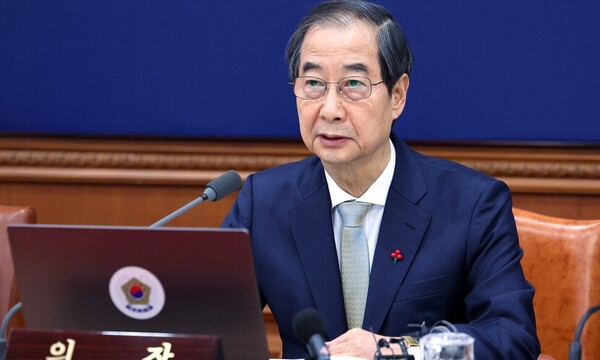
Acting President Han Deok-soo is playing a dangerous game. His vow to end his last public life well, his determination to achieve the “Beauty of Good End” is far from fulfilled. The glamor of his 40 years in office has already been tarnished by the fact that he flattered Yoon as a “great man” and “the most reformed president” in the first place. Moreover, his unconstitutional and illegal declaration of emergency martial law, which made him a suspect in the insurrection, will go down in history as a stigma regardless of his criminal responsibility.
He has been given a golden opportunity to make amends as acting president, but hehas failed to utilize his good fortune and made many Korean people angry. However, let’s suppress our emotions and calmly analyze Han Deok-soo’s faults according to the Constitution, which is our code of conduct. Let’s appeal to his last conscience in the name of the Constitution with the feeling of ‘just in case’ until the end, even though it may end in ‘just in case’.
Appointment of Constitutional Court Justices is a constitutional duty!
Acting President Han Deok-soo’s refusal to appoint a constitutional judge elected by the National Assembly is an unconstitutional dereliction of duty. The appointment of constitutional judges is a matter determined by the Constitution to be divided among the three branches of government in order to secure democratic legitimacy and social diversity in consideration of the political influence of constitutional adjudication systems such as impeachment. The Constitution provides that the President, who is directly elected by the people, makes three appointments, the National Assembly, which is the people’s representative body, makes three appointments, and the Chief Justice, who is best able to take into account legal expertise, makes three appointments.
In the case of the three National Assembly-elected quotas at issue, the Constitution grants the National Assembly the substantive power of selection and the President the formal power of appointment. Political bargaining is not at issue in the case of the appointment of the nominees selected by the National Assembly. Political negotiations must take place before the National Assembly’s selection process, and the acting president is only obligated to make the appointment, not to judge it. It would be contrary to the spirit of the Constitution for the acting president to deny the National Assembly the right to elect constitutional justices on the ground that there is a political confrontation between major political parties.
Because it’s the head of state’s prerogative? Absolutely not!
Kwon Sung-dong , the leader of the People Power Party, who is defending the president who has been impeached for declaring unconstitutional and illegal emergency martial law, uses the logic that the acting president cannot appoint constitutional judges because it is a power that the president can exercise from his position as head of state. It is unfortunate that the current Constitution retains the head of state clause, a remnant of the Yushin Constitution, to provide a platform for this sophistry, but the logic that the acting president cannot act as head of state is an absurdity that is inconsistent with the free and democratic basic order.
The free and democratic basic order as enshrined in the Korean Constitution is premised on the guarantee of the basic rights of the people and the rule by the constitution with popular sovereignty as the core principle. Therefore, the idea that the office of the head of state has a superior position that transcends the legislative, executive, and judicial powers and has a substantial position to correct or intervene in the errors of the three powers is in direct conflict with the free and democratic basic order. This may be true for constitutions that adopted an “imperial” presidential system, such as the “Yushin Constitution” or “the Fifth Republic Contribution”, but in constitutions that adopted a democratic republican presidential system, such as the current 1987 Constitution, it is reasonable to interpret the office of the same head of state as exercising only formal and ceremonial powers in accordance with the spirit of the free and democratic basic order. After all, the acting head of state exercising such formal and ceremonial powers is more necessary for the continuity of the state when the powers of the president elected by the people are suspended. The suspension of presidential powers does not mean that diplomatic missions cannot be recognized, received, or dispatched, nor can the organization of important constitutional institutions be neglected.
Rather, the acting president is asked to exercise restraint in the exercise of the substantive powers of his or her position as head of the executive branch. They should focus primarily on maintaining the status quo and be cautious about creating a new order or practice through the formation of significant policies. This is because it is an appointed position that does not have the full democratic legitimacy of a president elected by the people. The only democratic legitimacy is that of the Prime Minister, who is appointed with the consent of the National Assembly. Therefore, it should be avoided to deny the National Assembly’s personnel and legislative powers that provide such legitimacy.
Moreover, even if the president lacks democratic legitimacy, he or she must exercise his or her powers properly if there is an urgent need to realize the national interest. In a situation where the president has betrayed the trust of the people and has been impeached, it is in line with the spirit of the Constitution to follow the National Assembly, which has become the only representative body of the people, in enacting laws or exercising personnel powers. If the reason for the existence of the state ordered by the Constitution, i.e., the task of guaranteeing the inviolable basic human rights of individuals and thoroughly realizing the sovereignty of the people, is an issue with sufficient public support, but the president cannot exercise his power through the formal logic of ‘acting presidency’ and misses the right time, what is the point of having an acting president?
Appointment of constitutional judges is also mandatory for the protection of the constitution.
Given the constitutional status of the Constitutional Court, which has impeachment jurisdiction, the appointment of constitutional judges should be viewed as a constitutional obligation. Impeachment requires that a high-ranking public official has violated the Constitution and laws in the performance of his or her duties. Therefore, impeachment is a system for the defense of the constitution that excludes public officials who undermine the rule of law from important state positions. As a special disciplinary procedure for the defense of the Constitution, impeachment trials require the affirmative vote of at least six judges. If the Constitutional Court is unable to fill the required quorum of nine judges, the court is deemed to have voted against impeachment (i.e., to refuse to remove an illegal and ineligible person who has undermined the rule of law). The Constitutional Court would be unable to fulfill its constitutional defense function . The prompt resolution of such a constitutional crisis is a priority duty of the acting president, who is charged with the duty to protect the Constitution.
The Conflict of Interest Argument Against the Constitutional Court System
Another sophistry claimed by the People Power Party, which is the ruling party even though it is condemned by the people for failing to keep its hands off a president accused of insurrection, is that it is a conflict of interest for the National Assembly, which exercises impeachment powers, to be involved in the composition of the Constitutional Court, which has the power of judgment. This argument is a sophistry that negates the very existence of the constitutional court system. Impeachment is such a politically volatile issue that the framers of the Constitution, in their wisdom, did not give the president all the power to appoint constitutional judges, but rather gave the president the power to appoint only three judges in form, while dividing the remaining six between the National Assembly and the Chief Justice. Therefore, the election of the National Assembly is also distributed according to the number of seats of the ruling and opposition parties to promote political equity, rather than being monopolized by the No. 1 party based on a simple majority vote. However, to deny the share of the National Assembly election is to deny the constitutional court system itself, which is the decision of the constitutional framers. Deceiving the public with such sophistry rhetoric is nothing more than a cruelty to the president who violated the Constitution.
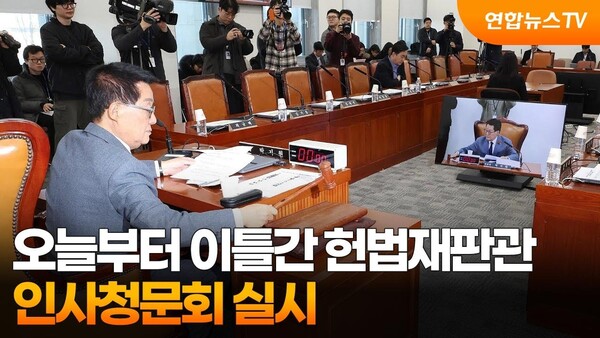
Acting President Han Deok-soo Han, please fulfill your constitutional duties as Acting President
But now, Han Duk-soo is doing the exact opposite of what the Constitution mandates, which is to destabilize the country. He is attempting to veto the Special Prosecutor Act, which is essential to promptly investigate and hold accountable the president and other officials who have committed acts against the Constitution. Instead of respecting and vigorously implementing legislation that is urgently needed to defend and restore the Constitution and that enjoys broad public support, the Acting President is attempting to use his veto power to override it.
On the other hand, the appointment of constitutional judges, which should be expedited to restore the constitution, is also being refused under the pretext that it is not the role of the acting president. It is contrary to the constitutional role of the acting president to deepen the constitutional crisis by ignoring even the basic process of impeachment trial. In the face of the state of emergency caused by the president’s gross abuse of his power and violation of the national constitution, the country’s credibility is at risk of instability that will shake the country to its very foundations, and it is not enough to do our best to restore the constitution to normalcy as soon as possible, but the acting president is doing his best to destabilize the country even more. That is the least that the people can tolerate from a public official who has not abandoned his basic duty.
Kim Jong-cheol Professor
Professor Jongcheol Kim is a constitutional law scholar at Yonsei University School of Law. After graduating from Seoul National University College of Law for his LL.B. and LL.M., he obtained his Ph.D. in law at the London School of Economics and Political Science. He has served as President of the Korean Public Law Association, Vice Chair of the National Constitutional Advisory Committee, and a member of the Prosecutorial Reform Committee at the Supreme Prosecutor’s Office. He views his role as a constitutional scholar as contributing to civic constitutional education, political reform, and judicial reform rooted in the principles of a democratic republic.

댓글