

Korea: “Holding: Yoon Suk Yeol is removed from office”
The Constitutional Court must render a decision to impeach President Yoon by mid-February. This marks a fresh start for democracy in South Korea!
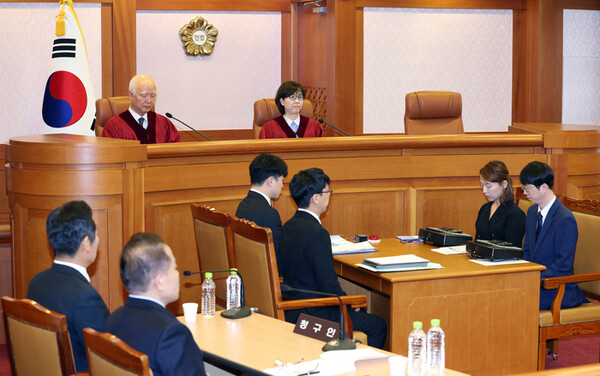
- “주문: 피청구인 대통령 윤석열을 파면한다” lation of a Korean column originally published on January 2, 2025, titled “주문: 피청구인 대통령 윤석열을 파면한다”
The Year Begins with Yoon Suk Yeol’s Impeachment
“The respondent’s acts of violating the Constitution and law are a betrayal of the people’s confidence, and should be deemed as grave violations of the law that are unpardonable from the perspective of protecting the Constitution. Since the negative impact and influence on the constitutional order brought about by the respondent’s violations of the law are serious, we believe that the benefits of protecting the Constitution by removing the respondent from office, who has been directly vested with democratic legitimacy by the people, overwhelmingly outweigh the national loss that would be incurred by the removal of the President.”
This was the Constitutional Court’s statement on March 10, 2017, when it dismissed then-President Park Geun-hye following her impeachment trial. What about President Yoon Suk Yeol’s impeachment trial this year? Many predict that the upcoming Constitutional Court decision on Yoon will align closely with the 2017 precedent.
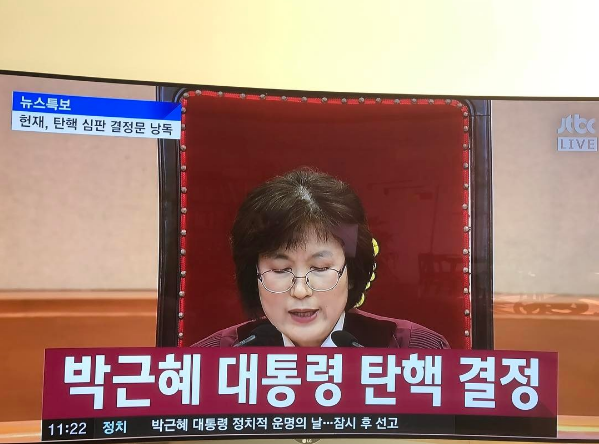
Yoon Suk Yeol’s Impeachment: Separate from Insurrection Charges
At 10:28 PM on December 3, 2024, President Yoon Suk Yeol declared martial law. He directed heavily armed troops to storm the National Assembly premises and chambers, attempting to nullify the Assembly’s demand to lift martial law—a demand guaranteed under the Constitution and Martial Law Act (requiring approval by a majority of all Assembly members). Reports revealed that Yoon ordered the arrest of National Assembly Speaker Woo Won-sik, opposition leader Lee Jae-myung, and numerous lawmakers. Such efforts to unconstitutionally and unlawfully dismantle the legislature’s functions constitute a severe violation of the Constitution.
These actions alone provide sufficient grounds for Yoon Suk Yeol’s removal from office. Whether Yoon is criminally liable for insurrection under criminal law is a separate matter concerning his individual accountability. The determination of insurrection under criminal law does not dictate the grounds for impeachment. Nonetheless, claims by some—including members of the People Power Party—that impeachment requires proof of insurrection reflect ulterior motives.
Obstruction of Impeachment Proceedings and Misjudgment by Ministers
Delays and disruptions in Yoon’s impeachment trial are already evident. One such obstacle involves the appointment of three Constitutional Court justices. The People Power Party leadership has spearheaded efforts to block these appointments. Acting President Choi Sang-mok, aligned with the People Power Party, appointed one justice nominated by the Democratic Party and one by the People Power Party but withheld a second Democratic Party nominee—a blatantly unconstitutional stance.
Choi Sang-mok, who reportedly opposed the martial law declaration internally, has received de facto immunity for his role in the illegal act. Yet, as a minister during the unconstitutional and unlawful martial law declaration, Choi remains culpable for aiding Yoon’s actions. None of the ministers actively opposed or disclosed the martial law declaration to the public. All ministers share accountability for insurrection-related crimes and are no more than anti-constitutional and anti-state actors from the perspective of the Constitution and the people.
Even now, Choi and all ministers must cease unconstitutional and anti-constitutional acts and fulfill their duty to protect the Constitution.
Urgent Need for Constitutional Court Act Reform
The role of opposition parties, including the Democratic Party of Korea, is critical. They must thwart the People Power Party’s attempts to defend Yoon Suk Yeol’s assault on the National Assembly using military forces, its opposition to impeachment, and its baseless claims aimed at preventing Yoon’s removal. Some argue that the expiration of two justices’ terms in April may obstruct new appointments and hinder impeachment proceedings under a six-member court, pinning hopes on this scenario.
Opposition parties should act swiftly to amend Article 7(3) of the Constitutional Court Act, adopting provisions akin to Germany’s Federal Constitutional Court Act, which states: “Judges shall continue their official duties until successors are appointed, even after their term has expired.”
This legislative gap should have been addressed earlier. Despite the delay, this reform is essential to prevent recurring vacancies on the Constitutional Court, avoid state paralysis, and address the current national crisis caused by impeachment delays.
South Korea’s Democracy: A New Beginning
The grounds for President Yoon Suk Yeol’s impeachment are unequivocal due to his severe violations of the Constitution and Martial Law Act. The Constitutional Court has promised a swift trial. It must focus on Yoon’s violation of constitutional and statutory requirements for declaring martial law, his attempt to nullify the Assembly’s demand to lift martial law, and his breach of Article 77(1) and (5) of the Constitution and the Martial Law Act. A decision must be made before mid-February.
The harm caused by Yoon’s unconstitutional and illegal actions has permeated all sectors of South Korea’s political, economic, social, and cultural systems. The sooner the Constitutional Court rules in favor of impeachment, the better.
“Holding: The respondent, President Yoon Suk Yeol, is removed from office.” And once more, South Korea’s democracy must begin anew.
Author:
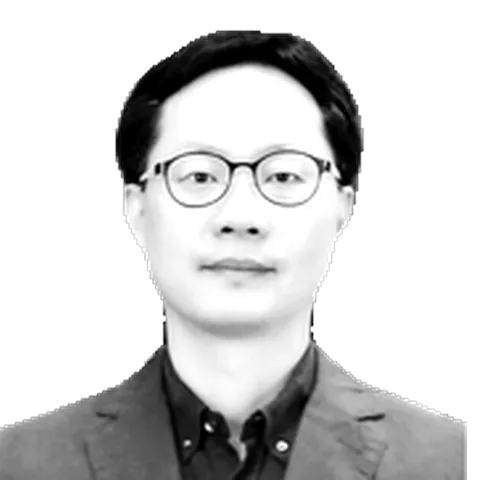
Nam Kyoung-kook, Invited Professor at KwangWoon University, holds a master’s degree in constitutional law from Yonsei University, an LL.M. from the University of Cologne, and completed doctoral coursework. He served as a visiting scholar at the Institute for Philosophy of Law and Legal Policy in Cologne. Nam has taught constitutional law at Dong-A University, Kwangwoon University, Korea National University of Education, Yonsei University, and the University of Seoul School of Law. He is currently the director of the Nam Kyoung-kook Constitutional Law Research Institute, delivering lectures and conducting research. His publications include Throwing Away Kwak Noh-hyun(co-authored), Constitutional Commentary, and Constitution and Reason.


댓글