

“Squid Game Democracy” is Unacceptable
[Eun-joo Chang’s Political Philosophy for Citizens] The Squid Game: A Life-or-Death Survival Competition Liberal Democracy Must Guarantee “Basic Rights” Yoon Suk-yeol’s Misunderstanding of “Squid Game-Style” Democracy The Problem: The Rise of Far-Right Supporters Who Back Such Democracy Impeachment is Essential to Stop Another Yoon Suk-yeol
- This is an English translation of a Korean column originally published on January 7, 2025, titled ’ 오징어게임 민주주의’는 안된다
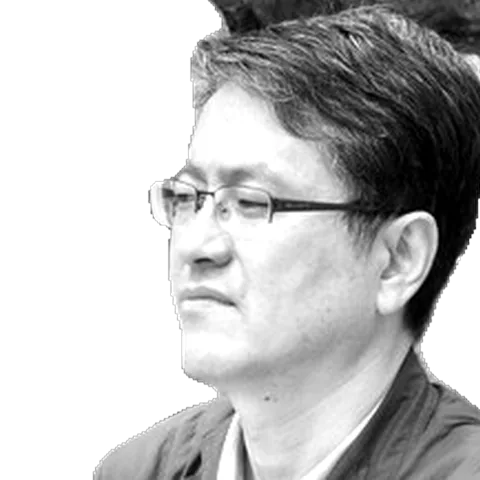
By Professor Eun-joo Chang, Youngsan University, South Korea
The December 3 rebellion incident, which could have led to a horrifying outcome if it had succeeded, also carried a grotesque and tragically ironic element. It justified an outright destruction of liberal democracy in the name of protecting it. From early on, I pointed out that Yoon Suk-yeol misunderstood the concept of liberal democracy and was never truly a liberal democrat (see my column: “Yoon Suk-yeol is Not a Liberal Democrat!”). However, I did not anticipate that his understanding of liberal democracy resembled something like Park Chung-hee’s Yushin system and that his convictions could lead to staging a loyalist coup.
This rebellion has not only seriously shaken South Korea’s liberal democratic system but also thrown the very concept of liberal democracy into disarray. It’s hard to fathom how such a ridiculous and tragic situation occurred.
The version of liberal democracy understood by Yoon Suk-yeol and many rebellion supporters is, in essence, akin to the democracy depicted in the Netflix series Squid Game 2. In this series, participants voluntarily enter the game prison, enticed by the promise of an enormous prize. As the game progresses and they realize they must risk their lives for the money, many wish to quit. At this point, the organizers hold a vote to decide whether to continue, claiming this ensures the participants’ “democratic” choice. But is this really democracy?
Is This Really Democracy?
Although it bears the external form of “majoritarianism,” such a system is by no means proper democracy. In the Squid Game vote, even if one more person votes to continue than to quit, those who oppose are still forced to risk their lives, which cannot be justified by a mere majority decision. The rules were unilaterally imposed by the organizers who controlled the game prison. For the procedure to be truly democratic, any participant who no longer wishes to play must be allowed to leave immediately. This is the kind of democracy we call “liberal” democracy.
What fundamentally distinguishes liberal democracy from “Squid Game democracy” is that all citizens are guaranteed their basic freedoms and rights as fundamental rights. These rights cannot be infringed upon, even by a majority decision. Thus, liberal democracy is not merely a majoritarian democracy but a “constitutionalized” democracy that prioritizes the protection of such rights. It is also referred to as a “democratic republic.”
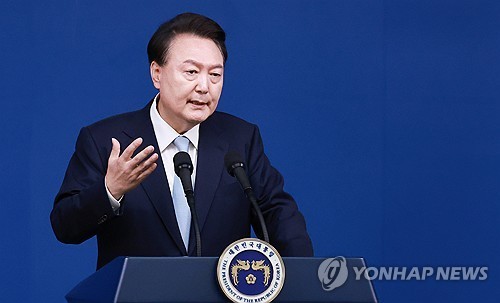
However, Yoon Suk-yeol and the rebel forces supporting him sought to dismantle this democratic constitutional order in the name of liberal democracy. Indeed, Yoon Suk-yeol was elected as President of the Republic of Korea through legitimate democratic procedures. He was elected by a majority vote, narrowly defeating candidate Lee Jae-myung by a margin of 0.73%. As a result, he could exercise the immense presidential powers often referred to as “imperial.” However, he believed this authority included “emergency powers” to suppress and punish opposing forces while restricting citizens’ basic rights. Incredibly, he misunderstood the authoritarian democracy of the Squid Game prison as liberal democracy and acted upon this bizarre notion.
Crisis of Liberal Democracy
We are now in the absurd situation of having to rescue not only the liberal democratic system but also the very concept of liberal democracy from Yoon Suk-yeol’s preposterous coup attempt. As stated in the earlier column, liberal democracy is a “democratic political system based on the rule of law that acknowledges and guarantees individual rights and freedoms.” In this system, “freedom of thought and conscience, freedom of the press, popular sovereignty, a multi-party system, free and fair elections, the basic rights of all citizens, and the separation of powers are guaranteed.” The liberal democracy Yoon Suk-yeol speaks of is not this kind of democracy.
The problem is not simple, as liberal democracy faces massive global challenges and crises today. Yoon’s coup, contrary to his understanding, represents an extreme manifestation of the crisis of South Korea’s liberal democracy. Liberal democracy is showing various limitations that urgently require new approaches to overcome.
One subtype of liberal democracy is “libertarian” democracy, which limits democratic rights and freedoms to the political sphere while relying on the principle of unfettered market freedom in the socio-economic sphere. This conservative model of liberal democracy has been globally imposed, particularly since the rise of neoliberalism in the 1980s in the UK and the US.
Despite its apparent decline, the neoliberal tendencies of modern capitalism persist, undermining social integration and democratic solidarity while exacerbating severe socio-economic polarization. In the US and Europe, this has resulted in the rise of far-right populism. In South Korea, this trend has nurtured Yoon Suk-yeol and his rebellion supporters.
On the other hand, “social” or welfare-state democracy, another subtype of liberal democracy, seeks to guarantee not only political freedoms but also extensive socio-economic rights—what is known as “social rights.” This progressive model, championed by European social democrats, has also been pursued by centrist-left parties like the US Democrats through initiatives like the New Deal. In South Korea, parties like the Democratic Party and the Rebuilding Korea Party have also advocated similar goals, at least in rhetoric.
Globally, the crisis of liberal democracy has emerged as neoliberal forces dismantle and shrink the institutions and trends of “social” democracy. During the height of neoliberal globalization, centrist-left parties in the US and Europe, even those proclaiming to pursue social democracy, capitulated to neoliberalism, leaving their working-class and middle-class support bases vulnerable to far-right populist forces. South Korea’s liberal democracy is no exception to this trend.
Preventing the Return of Another Yoon Suk-yeol
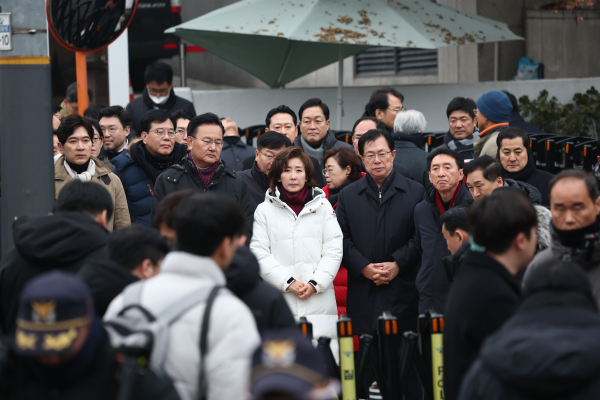
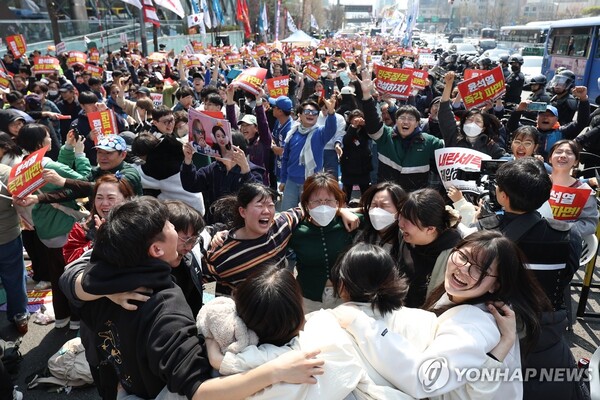
The greatest concern is that, despite the blatant rebellion and insurrection observed by the entire nation, nearly 30% of citizens still support the far-right People Power Party, opposing Yoon’s impeachment and endorsing martial law. This indicates that a significant portion of our society supports “Squid Game democracy,” reflecting the severe structural illness afflicting our liberal democracy.
This phenomenon must be understood in the context of extreme political polarization within our liberal democratic system. The People Power Party and far-right political forces have succeeded in framing even the December 3 rebellion as a partisan issue between conservatives and liberals. Factors such as regionalism, shamanistic Christianity, and generational conflict based on historical experiences also play significant roles.
However, we must not overlook another dimension. Just as participants in Squid Game entered the game prison out of crushing debt and voted to continue despite risking their lives, and as working-class voters in the US and Europe, traditionally left-leaning, fell prey to far-right populism, many economically and socially marginalized citizens in South Korea are vulnerable to far-right agitation by reactionary forces.
Yoon Suk-yeol’s rise to power was fueled not only by support from vested interests but also by the economic mismanagement and neglect of the Democratic Party government after the Candlelight Revolution. Skyrocketing real estate prices, the neglect of small businesses during the COVID-19 pandemic, and the bleak future for young people were all factors driving Yoon’s election. Such failures must not be repeated.
We must now prioritize overcoming the crisis of our liberal democratic constitutional system, mocked and undermined by Yoon Suk-yeol. In addition to promptly arresting and punishing Yoon, his impeachment must be expedited. A new government with democratic legitimacy must be established to stabilize our constitutional order. However, we must also recognize that this is not the end. The crisis of our liberal democracy can manifest in different ways.
While the Sixth Republic’s constitutional system may soon stabilize, failure to address and resolve the root problems undermining our liberal democratic system may lead to the return of another “Yoon Suk-yeol” pursuing “Squid Game democracy.”
To prevent this, we must reform our broken constitutional system while simultaneously addressing the deepening socio-economic pathologies afflicting our society. To defend and stabilize liberal democracy, we must recognize its inherent contradictions and limitations and seek genuine solutions. Our task is immense and weighty.
About the Author:
Professor Eun-joo Chang is a political philosopher teaching at Youngsan University in South Korea. He focuses on refining philosophical insights to stabilize and mature Korean democracy. After earning a degree in Critical Social Theory at Goethe University in Frankfurt, Germany, he has been working to develop a unique theory to understand Korea’s social dynamics. Recently, he has been involved in democratic citizenship education and has authored works such as The Philosophy of Human Rights, The Movement of Politics, and The Future of Confucian Modernity. His latest works include The Betrayal of Justice and The Republican Roh Moo-hyun.


댓글