

Korea: Addiction to YouTube, Cultural “Bullfrog”
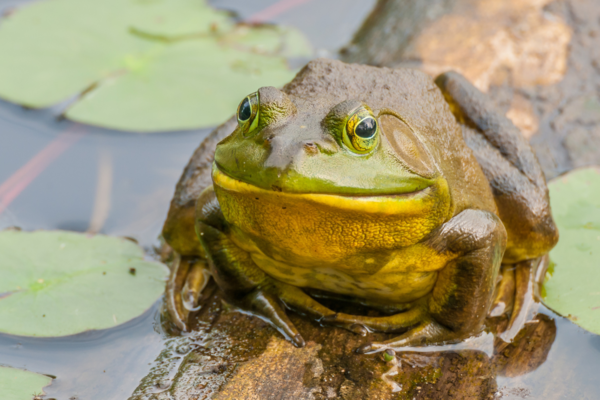
[Psychiatrist Kang Ung-Gu’s “Path of the Mind”] The content world, once defined by its niches, is now dominated by YouTube. YouTube monopolizes by stimulating “human desires.” It degrades into a wasteland with extreme hate speech and low-quality content. Just as invasive bullfrogs were eradicated, YouTube may lose its edge in the future.
- 극우의 중독 유튜브, 문화생태계 ‘황소개구리’ ation of a Korean column originally published on January 13, 2025, titled 극우의 중독 유튜브, 문화생태계 ‘황소개구리’
By Kang Ung-Gu, Professor, Seoul National University College of Medicine
Ecosystems in Biology
An ecosystem is defined as the interaction between organisms and their surrounding abiotic environment, where they influence one another[Wikipedia]. Not only biological organisms but also human-created systems can interact with their surroundings, forming metaphorical ecosystems. For instance, corporations create ecosystems, and so do cultural contents.
Balanced ecosystems host various species. Some compete for the same ecological niche, while others coexist symbiotically by exchanging resources. Certain species occupy unique niches and interact with their environment without competition. In business, these are called “niche markets.”
Species with distinct niches are evolutionarily isolated. For example, humans and wild boars traditionally occupied separate habitats, and humans could live without worrying about boars unless they were hunters. However, environmental changes alter species’ territories and relationships. Humanity’s relentless environmental destruction, or “development,” has drastically reshaped natural ecosystems, forcing some species to lose their habitats and encroach on others’ territories.
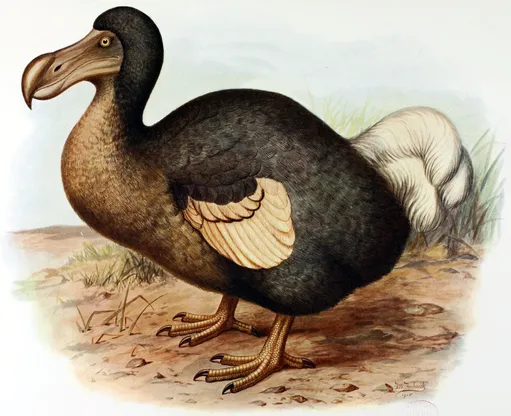
In Korea, wild boars are seen in urban areas, while elephants wander into villages in other countries. This competition over space often leads to extinction. Humans have driven countless species to extinction, not through direct extermination (as with the dodo bird) but through habitat destruction. Species displaced from their native niches by development often lose the ability to survive.
Cultural Ecosystem: From the Human Mind to YouTube
In the cultural ecosystem, the species—cultural content—inhabit a virtual environment rooted in “human desires.” All cultural creations exist to fulfill some type of desire. This ecosystem of human minds comprises broad domains such as “the desire to showcase oneself,” “the curiosity to observe others,” and “the need to share with others.” Cultural content thrives by carving out its niche within these domains. When niches don’t overlap, the content remains independent, much like separate species in a biological ecosystem.
For example, hobby-based desires manifest in niche groups. Classical music clubs and snowboarding enthusiasts exist in separate habitats, thriving without interaction.
Then came YouTube, a monstrous new species disrupting the cultural ecosystem. Initially, YouTube catered to the domain of “the desire to showcase oneself.” But as its reach expanded, it encroached on niches like “the desire for information and knowledge,” turning search engines and specialized knowledge spaces into its own habitat. YouTube has now incorporated news and live broadcasting, taking over spaces once occupied by traditional media.
The success stories of YouTubers have even drawn “the desire to make money” into its realm. Corporations and political organizations have also joined the platform. Consequently, YouTube has evolved from being a collective of niche-specific species into a massive ecosystem. It has become a voracious predator, akin to the invasive bullfrog, devouring not only cultural content but the entire cultural ecosystem. Now, the totality of cultural content no longer resides in the human mind but within YouTube itself.
Why YouTube Has Monopolized the Cultural Ecosystem
Why has YouTube become a monopolistic cultural ecosystem? The most important reason lies in the environmental shift that allows everything to be accessed via mobile devices. The power of mobile lies in its accessibility. From the perspective of cultural consumers (subscribers), the fastest way to fulfill any cultural desire is to open YouTube on a smartphone. Modern people struggle to endure even a few seconds of waiting. Moreover, personalized algorithms anticipate users’ preferences, drawing them in further the more they watch.
The characteristics of cultural suppliers (YouTubers) are even more critical. YouTube has no entry barriers for suppliers, nor regulations on content quality or truthfulness. Furthermore, the YouTube ecosystem has even created a new “desire to become a YouTuber,” which didn’t exist in traditional cultural ecosystems. This desire differs from the “desire to make money”—being a YouTuber becomes an identity. Low entry barriers on the supply side lead to a rich ecosystem, which, in turn, attracts more consumers with diverse desires. YouTube is expanding without limit.
Destruction Within the YouTube Ecosystem
In the YouTube ecosystem, located in cyberspace and accessed online, cultural content (species) has equal accessibility for everyone. As a result, boundaries between niches blur, and species engage in endless competition. In the past, a classical music enthusiast would visit a specialized webpage for information, but after switching to YouTube as an information tool, they might accidentally encounter a snowboarding video while searching for classical music. This resembles a scenario where an elephant appears in a human village. Personalized algorithms work subconsciously, and snowboarding content soon overwhelms classical music. Eventually, the user’s interests shift, akin to villagers being displaced by the growing presence of elephants.
In the YouTube ecosystem, a content’s competitiveness is determined by views. Content must be widely consumed to exhibit high evolutionary fitness. Under such conditions, extreme and hate-driven content becomes highly competitive. The content’s factual accuracy doesn’t matter as long as it’s provocative. These contents thrive not in the domain of “the desire for information or news,” but in the realm of “primal human instincts” such as anger and hatred.
Human anger and hatred provide sustenance and shelter for low-quality content. YouTube’s personalized algorithms, once triggered, continuously suggest similar content, preventing diversity. Subscribers consuming such information end up fostering confirmation bias laden with anger and hatred, which eventually borders on delusion. Content that discusses the beauty of humanity or the intricacies of nature cannot compete with extreme and hate-filled content. As falsehoods and hatred spread like weeds, YouTube’s cultural ecosystem loses diversity and becomes a wasteland.
The Crisis of Diversity
The decline in species diversity signals ecosystem destruction across biological, corporate, and cultural domains. The monopoly of top global corporations destroys corporate ecosystems worldwide and exacerbates polarization. In medical research, monopolization by standardized, cutting-edge techniques leaves no room for genuinely creative grassroots research. In popular culture, the dominance of global idols backed by enormous capital has shrunk the space for indie culture. YouTube, as a powerful medium for disseminating biased information to specific groups, is regressing our political culture.
Low-quality content existed before the YouTube era, but it was confined to limited ecosystems—such as stock market rumors or “their own web”—where it could not widely spread or influence the broader cultural ecosystem. However, in YouTube’s open ecosystem, low-quality content hooks the mentally vulnerable and spreads widely. Collective hysteria now grows and feeds itself in cyberspace without the need for large-scale physical mobilization. Hysteria cultivated online is now manifesting offline. With a few agitators stirring the pot, brainwashed crowds confidently shout slogans at street rallies with surprising vigor. Astonishingly, there was even an incident where the president of a powerful nation attempted to use such content as the basis for national policy.
Bullfrogs, Once Thriving, Now Vanishing
When YouTube first appeared, no one could have predicted that it would grow into such a monstrous force. Just as the evolution of living organisms cannot be foreseen or manipulated, cultural trends cannot be precisely predicted or artificially controlled. We may simply have to watch as the cultural destruction and extinctions occurring within YouTube unfold before our eyes.
However, this monopolistic ecosystem may not last forever. At one time, bullfrogs wreaked havoc on the ecosystems of small streams in South Korea. Today, their presence is negligible—not due to eradication campaigns, but as a result of environmental changes that were neither anticipated at the time nor fully understood now. Thankfully, evolution did not lead to widespread extinction but instead created a new equilibrium. Species that narrowly survived the brink of extinction have gradually reclaimed their niches in small streams.
YouTube, as an absolute dominant force, may similarly lose its competitive edge when newer ecosystems for cultural content dissemination emerge. Content creators who specialize in “showing off” seem to have already migrated to platforms like Instagram and TikTok. As for the “hate-speech agitators”—species that wreak havoc on ecosystems—it remains to be seen what will become of them.
About the Author:
Kang Ung-Gu graduated from Seoul National University College of Medicine in 1988 and completed training in psychiatry. He is currently a professor at Seoul National University College of Medicine. His research focuses on understanding mental disorders from the perspective of “how the human mind operates” rather than genetic abnormalities in the brain. His notable work includes Psychopathology: A Conceptual Approach to Psychopathology (Seoul National University Press, 2021).





댓글