

Korea: Initial Analysis, Why Did the Plane Crash?
[Choi Keeyoung’s ‘Engineering + Education = People’] Exploring all possible causes of the accident: Problems likely related to the installation method of the localizer “It should have been designed to bend without breaking” Analysis expected within months, including scenario assessments
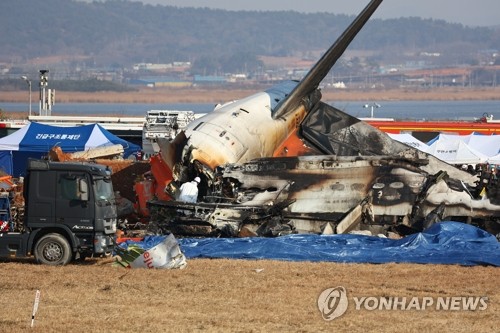
- “초기분석: 로컬라이저를 왜 저렇게 설치했나?” tion of a Korean column originally published on January 5, 2025, titled “초기분석: 로컬라이저를 왜 저렇게 설치했나?”
- A bird strike damaged the right engine. The pilot made an emergency decision to return to the runway. The remaining engine also degraded rapidly and its was insufficient to operate normally. The pilot then decided to abandon the normal recovery process and attempted to return to the runway while maintaining as much of the aircraft’s energy as possible. They had to minimize the time spent in the air. If the aircraft lost energy, it would not be able to reach the runway.
- At this point, the aircraft may have retracted its wheels and flaps to return to a clean configuration. After a sharp turn, it aligned with runway 19 for landing. However, due to hydraulic failure, controlling the aircraft became difficult. Without engine thrust, maintaining the correct distance was also challenging. Since hydraulic power was unavailable, the flaps could not be deployed, and there was no time to lower the wheels. The aircraft remained in a clean configuration, similar to cruise, causing its speed to decrease slowly. The ground effect made it difficult to bring the aircraft down to the runway.
- Despite the limited control, the aircraft managed to land roughly in the center of the runway but with insufficient distance remaining. The only method for deceleration was through friction with the fuselage. Without enough braking power, the aircraft overshot the safety zone and crashed into the localizer mound, resulting in damage.
By Choi Keeyoung, Professor at Inha University
The memory of the tragic incident that occurred on the morning of December 29 last year remains vivid, and media attention is still intense. Since that morning, interview requests have poured in, creating a burden for many individuals in the field, including myself. Speculating in various directions without accurate information only serves to satisfy momentary curiosity with a few drops of water—it hardly offers any substantial help. There’s a complex mix of fear that any conclusions drawn from the currently available data might later prove to be incorrect or that statements might be misinterpreted or misused out of context.
Despite my efforts to avoid interviews, I ended up speaking with a few media outlets for various reasons. While I tried to make statements that seemed appropriate at the time, in hindsight, I regret some of the things I said. There are also points I wish I had mentioned but didn’t, and with additional data made public in recent days, I feel compelled to organize and share my thoughts in writing.
Scale of the Incident
Unfortunately, aviation accidents—both major and minor—occur occasionally. This particular tragedy, however, was one of the most severe in recent times, leading to many questions about why such a catastrophic event happened and whether it could have been prevented.
The accident involved a bird strike that apparently damaged the engine, followed by an emergency descent during a go-around procedure, which deviated from standard protocols. The aircraft then attempted a belly landing without landing gear, touching down approximately one-third of the way down the runway. It failed to stop within a short distance, collided with the localizer support structure, and ultimately erupted into a large fire.
While each of these individual stages is rare, they are not unheard of, and modern aircraft and ground support systems are designed to manage such incidents without significant casualties. However, in this case, the sequence of events aligned unfavorably. If just one of these stages had played out differently, the disaster might have been averted. Tragically, the cascading series of events led to a major catastrophe.
Aircraft wings and fuselage contain substantial amounts of fuel, making them vulnerable to fires. Aircraft are designed to minimize fire risks and allow all passengers to evacuate within 90 seconds in the event of a fire. However, this fire was not ordinary. At the moment of impact, the fuel tanks embedded in the wings and fuselage were damaged, and the spilled fuel came into contact with the overheated fuselage, causing a rapid and extensive fire that led to the large-scale disaster.
Cause of the Bird Strike
Aircraft share the skies with birds, which cannot always be controlled, and it is impossible to completely prevent birds from entering flight paths. Thus, bird strikes happen more often than one might think. In South Korea, there are about 100 incidents of bird strikes annually. In the U.S., over 8,000 bird strikes occurred in 2023 alone, with more than 300 incidents causing damage to aircraft. For U.S. commercial flights, bird strikes occur at an average rate of about 23 incidents per 100,000 flights each year, with approximately 1.27 of these resulting in damage to the aircraft. (Reference: FAA & U.S. Department of Agriculture Wildlife Services, “Wildlife Strikes to Civil Aircraft in the United States 1990-2023”)
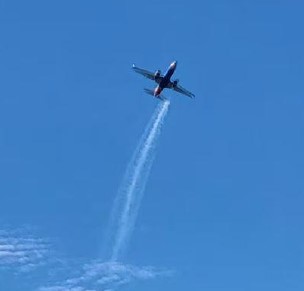
Bird strikes typically occur at low altitudes near airports, where they can cause damage to aircraft structures and engines. In severe cases, aircraft may need to make emergency landings for safety reasons. Similar incidents can be found in numerous online sources.
Aircraft development processes include measures to mitigate potential risks like bird strikes. Even if such incidents occur, aircraft are designed to remain operable. Tests involve shooting objects weighing 1.5–8 pounds at speeds of up to 700 km/h at critical components like the cockpit and fuselage to ensure resilience. As a result, bird strikes alone rarely lead to aircraft crashes.
Cause of Landing Gear Failure?
Landing gear, which supports the massive weight of an aircraft and absorbs the shock of landing, involves advanced mechanical engineering. Specialized companies, primarily in aerospace-leading nations, are dedicated to developing such components. As these structures bear substantial loads, they are heavy and require significant force to operate, which is achieved using a hydraulic system. On the Boeing 737-800, hydraulic power is primarily generated by the engines, but if the engines are not operating, an electric motor can be used to create hydraulic pressure. This system powers the operation of the landing gear.
Each landing gear is independently connected to the hydraulic systems of the left and right engines, enhancing reliability. Therefore, hydraulic system failures rarely cause issues with landing gear operation. However, malfunctions can still occur. In such cases, the landing gear can be deployed manually (although it cannot be retracted). Both hydraulic and manual deployment require at least some time to fully extend the landing gear.
For Jeju Air Flight 2216, witnesses reported seeing the landing gear deployed during the initial landing attempt, as seen in blurry photos. While this remains one hypothesis among several, if the landing gear was initially deployed but retracted during the belly landing, it could suggest that the pilots either intentionally retracted it and did not redeploy it (meaning they did not intend to lower it) or were unable to redeploy it.
If the intention was there but the landing gear was not lowered, it could indicate either insufficient time to lower it or a mechanical failure preventing its deployment.
Go-Around Procedure
The pilot of the aircraft followed protocol by declaring “Mayday” three times and announcing a go-around due to a bird strike. This procedure involves abandoning the descent path, which is typically at a 3-degree angle, to climb back and attempt another landing. A go-around is commonly performed in cases of adverse weather or aircraft issues during approach. After abandoning the descent, the aircraft ascends to a specified altitude, circles to a designated point (for Muan Airport, this would be to 5,000 ft in the west of the runway), and re-enters the original landing pattern under the air traffic controller’s guidance. Essentially, the process resets.
In this case, however, the approach was different. Instead of circling around and re-entering the original direction, the aircraft urgently turned and approached from the opposite direction. In a separate video of the incident, the aircraft is seen passing over the airport without gaining much altitude. It appears that after abandoning the first landing attempt, the aircraft could not follow the standard go-around procedure.
Cause of Engine Failure?
Commercial aircraft are equipped with at least two engines. The engines are under the greatest stress during takeoff when the aircraft is at its heaviest and requires maximum thrust for rapid acceleration. However, during cruising—particularly later in the flight when much of the fuel has been consumed—engines operate with significant performance margins. In fact, an aircraft can maintain cruising altitude with just one functioning engine.
Had Jeju Air Flight 2216 suffered a failure in only one engine during the go-around, it could likely have returned to normal flight conditions. Video footage shows flames emanating from the right engine, suggesting that the bird strike damaged it. However, it’s also possible that the left engine was unable to function properly.
When both engines fail, many aircraft systems cease functioning or degrade significantly. Hydraulic systems, which rely on engine power, must operate on backup hydraulics, leading to slower response times and greater effort required for control. Electrical systems switch to battery power, and non-essential functions are shut down.
For safety reasons, commercial aircraft broadcast their position and speed almost every second using a system called ADS-B. This signal can be received by anyone, and the flight path data available immediately after the accident was captured and stored by civilians receiving ADS-B signals. Reports indicate that this signal was lost at a certain point, which could suggest two possibilities:
The power to the ADS-B system was cut off when the engines failed and the aircraft switched to battery power.
The loss of signal was due to terrain interference near the airport, where appropriate receivers might not have been available.
If the signal loss was caused by the first scenario, it could imply that both engines had failed. However, there are conflicting reports that engine sounds were heard during the landing. It is possible that the sounds were confused with the noise of the fuselage scraping the ground. For now, all of these are merely hypotheses.
Runway Direction – Possible Causes?
Muan Airport’s runways, 01 and 19, have gained attention. The numbers on runways indicate their heading. Runway 01 corresponds to a heading of 10 degrees (nearly due north), while 19 corresponds to 190 degrees (the opposite direction). A single runway is designated by two numbers depending on the approach direction.
Most runways are used in both directions, and the active direction is determined by wind conditions. This is managed by air traffic control, ensuring that departing and arriving aircraft use the same direction. If wind conditions change frequently, the runway direction may switch multiple times in a day. In Korea, where north-south winds prevail, runways are often oriented accordingly. During airport construction, long-term wind studies of the area influence runway alignment.
At the time of the accident, there was reportedly no significant wind except for a slight crosswind. In windless conditions, any direction is generally acceptable for landing. In this case, the decision to approach from Runway 19 instead of the usual Runway 01 likely did not impact the flight characteristics due to the emergency situation.
Touchdown Location – Possible Causes?
Aircraft usually align closely with the runway direction after completing a short turn. In this case, the touchdown point was approximately 1,200 meters from the runway threshold on a 2,800-meter-long runway, almost halfway down. Braking distance depends on weather, aircraft weight, landing speed, and deceleration measures.
Landing at a lower speed is safer and facilitates braking. However, flying too slowly near the ground can reduce lift generated by the wings, increasing the descent rate and impact. To counteract this, aircraft use high-lift devices such as flaps, allowing for slower speeds without losing lift.
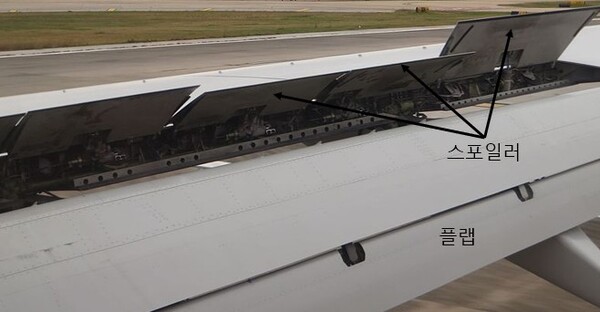
You might have noticed wing devices extending from the rear sides of the wings just before landing—these are flaps. Flaps increase wing surface area, allowing greater lift even at lower speeds. However, using flaps increases drag, reducing efficiency.
Reports suggest that the flaps were not deployed during the accident. If flaps had been used, braking distance would have decreased. However, with reduced speed (especially if the engines were not functioning properly), the aircraft might not have reached the runway. It remains unclear which scenario occurred.
When flying close to the ground, aircraft experience ground effect, where lift increases. While wings generate upward force by deflecting air downward, near the ground, some of this downward air is reflected upward, enhancing lift.
In this case, the ground effect may have contributed to the delayed touchdown. Under normal conditions, pilots can counteract the ground effect and land precisely, but if the aircraft was descending in a streamlined configuration (as in cruise), slowing down sufficiently or maintaining precise control might have been difficult. Thus, counteracting the ground effect to land quickly may have been challenging.
Braking System – Possible Causes?
Although slower than cruising speed, landing speeds for passenger aircraft typically exceed 200 km/h, requiring significant braking force. Three main braking mechanisms are used:
Reverse Thrust: This redirects jet exhaust forward by altering the direction of engine exhaust. The loud engine noise heard immediately after landing inside the cabin is the result of reverse thrust activation.
Aerodynamic Braking: Devices such as flaps and spoilers increase drag by enlarging the wing surface. Both reverse thrust and aerodynamic braking rely on hydraulic systems.
Wheel Brakes: These are part of the main landing gear and provide significant braking force.
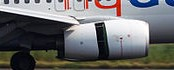
There are conflicting reports about whether reverse thrust was activated. Reverse thrust is only effective if the engine is functioning properly. If reverse thrust was available, it raises the question of why the aircraft quickly initiated a go-around earlier in the sequence. Pilots note that using reverse thrust with only one engine can cause the aircraft to rotate due to asymmetrical force. Thus, when landing with one engine, reverse thrust is generally avoided (rudders can stabilize the aircraft at high speeds, but the risk of imbalance increases at lower speeds). The flight data recorder will clarify whether reverse thrust was used.
If engine thrust was unavailable, making reverse thrust impossible, the aircraft would have relied solely on drag-inducing devices and landing gear brakes. If these systems also failed, the aircraft’s deceleration would depend entirely on the friction between the fuselage and the runway, as seen in the accident footage. This type of landing, where the aircraft’s belly contacts the ground, is called a “belly landing.”
Modern passenger aircraft, with large engines mounted under the wings, do not allow the fuselage to make full ground contact during a belly landing. As in this case, one side of the fuselage is elevated.
Localizer and the supporting structure
The aircraft that had not decelerated sufficiently collided with a mound where the localizer was installed, approximately 300 meters past the runway’s surface. A localizer is a device that assists in precision landing. In cases of night-time or poor weather conditions where it’s difficult to visually confirm the runway, the pilot can approach the runway by following a radio signal sent from the airport.
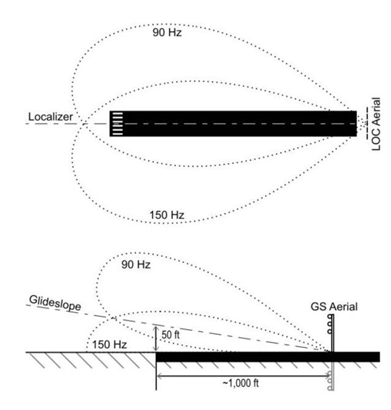
Precision landing requires two directional signals. One is the glide slope, which provides the descent angle, usually around 3 degrees. If the approach is steeper than this angle, the vertical speed increases, and there is a risk of structural damage to the landing gear and aircraft due to the impact during landing. Conversely, a shallower approach would increase the time flying over urban areas before reaching the runway, leading to increased noise pollution. Airports near urban areas may set the glide slope to a slightly steeper angle.
The second directional signal indicates the lateral alignment with the runway’s centerline, which is assisted by the localizer. The term “bearing indicator” is a misnomer, as it does not point to the bearing but instead tells how far left or right of the centerline the aircraft is. The localizer transmits signals at 90Hz and 150Hz, which correspond to left and right deviation, respectively. The pilot adjusts the aircraft to a position where both signals are of equal strength.
The localizer must be positioned on the runway’s centerline. It also needs to transmit a signal that is detectable from over 30 kilometers away, which means the radio waves must be broadcasted into the air. Typically, it is installed at a height above the ground to avoid interference with the ground. Runway 19 at Muan Airport has a slight downward slope. Therefore, the localizer must be elevated above the ground past the runway’s end, and this was done using a concrete support, which resulted in it becoming an obstacle.
The installation of the localizer, not the device itself, is the critical issue. Both the glide slope antenna and the localizer must be carefully installed to avoid shaking due to wind. These devices must be robust enough to handle environmental forces but should also break under excessive pressure to minimize the impact on the aircraft in the event of an accident. Modern technology can facilitate this type of design requirements, but it needs to be verified if this consideration was made during the installation process.
Black Box and Accident Investigation
One reason for the intense focus on this accident is that it may still be ongoing. Similar accidents could happen again due to the same cause.
The safety of air operations we enjoy today is the result of continuous Improvement made with lessons learned. Since it is impossible to anticipate every possibility in a complex system, we rely on past experiences to identify potential issues and take preventive measures. Thorough investigation of accidents like this is crucial to improving safety.
The key to this process is to gather as much reliable data as possible. In addition to widely available video footage, the flight and maintenance records of the aircraft, airport surveillance facilities, and communication logs, data collected on the aircraft, such as cockpit voice recordings and flight data from the black box, are invaluable.
In the early days of aviation, the lack of such devices made it difficult to determine the causes of accidents. With ongoing technological advancements, it has become possible to analyze even complex accidents thoroughly. Today, most causes can be identified if the flight data recorder is recovered. These devices are designed to withstand impacts up to 3600 times the force of gravity and temperatures as high as 1000°C. The voice recorder data has been recovered, but the flight data recorder connector was damaged, so assistance from the manufacturer is required. However, we cautiously expect that the internal memory is intact.
The Aviation and Railway Accident Investigation Board will publish a report after completing the investigation, which will take some time. It is not just about collecting data but also assembling it like puzzle pieces to draw a comprehensive and trustworthy conclusion. While partial data can lead to preliminary estimates, a full investigation requires cross-referencing a wide range of data and input from numerous experts.
It may take several years to conclude an investigation, but with most of the necessary data already secured, this investigation may be completed in months, with an interim report being available sooner.
Scenario for Determining the Cause
We have examined the accident by breaking it down into parts, but there is not enough information to fully reconstruct the entire incident. Initial assumptions right after the accident and the dominant hypotheses after a few days of gathering more information are already different. The conclusions we are drawing now may change after further analysis. Therefore, while it is cautious, we can tentatively reconstruct the scenario as follows:
Many hypotheses exist, and in reality, none of these hypotheses may be entirely correct. There are even reports that engine noise was heard during the landing. Despite the uncertainty, forming such hypotheses and reasoning through them is essential in identifying the cause quickly and taking necessary actions to prevent future accidents.
The purpose of this writing is to help more people understand the technical details of aircraft landing procedures, thereby facilitating a better understanding of the overall context and aiding in a smoother accident investigation process.
A few days ago, police reportedly raided Jeju Air and Muan Airport. Although such investigations were bound to happen eventually, it remains unclear whether this urgent action was necessary while the investigation is still ongoing. The most pressing issue is to accurately determine the cause, explain it to the victims’ families, and take immediate action to recheck airport facilities to ensure safety.
We express our sincere condolences to the victims and their families and wish for a swift recovery for the injured.
About Author:
Professor Choi Keeyoung, is a faculty member at the Department of Aerospace Engineering at Inha University, where he strives to teach complex subjects in an accessible way while adapting to the changes of the technological revolution.





댓글