

Jensen Huang’s 2025 CES Keynote Was a ‘Flop’
[Kim Jung-min’s Friendly IT Story] NVIDIA lacked ‘innovative technology’ The concepts Jensen Huang introduced? Other companies are leading Autonomous driving and humanoids were dominated by Tesla NVIDIA’s position is being threatened by competitors

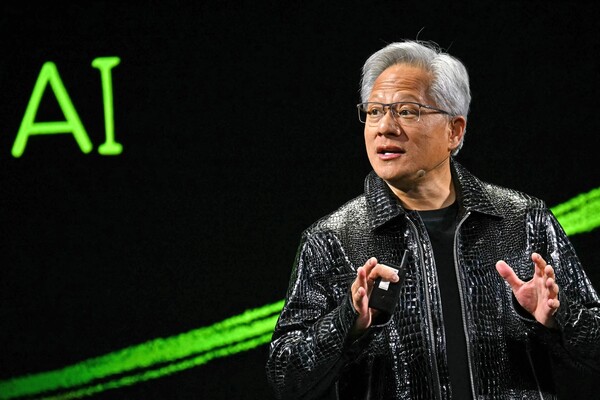
At CES 2025, NVIDIA CEO Jensen Huang delivered a keynote address. While it was met with applause from the audience, criticism from experts followed soon after. Some experts and investors voiced that the presentation failed to meet expectations. NVIDIA’s stock dropped more than 6% immediately after the keynote, reflecting the harsh market reaction.
Although I did not watch the keynote in real time, the ensuing controversies piqued my curiosity. After reviewing the keynote in its entirety, I found myself resonating with the concerns raised by experts. Was Jensen Huang’s 2025 CES keynote truly a ‘failure’? Let us delve into several key points.
1. GPU Computing Innovation
Jensen Huang has long argued that GPUs are reshaping the computing paradigm, accelerating the transition from CPU-centric to GPU-centric computing driven by AI. In this keynote, NVIDIA’s next-generation GeForce RTX 50 series was presented as the company’s flagship product, promising double the performance of its predecessor. Huang also boasted that even entry-level models could deliver high-end performance thanks to DLSS technology, allowing budget-conscious gamers to experience near-premium gameplay.
DLSS, or “Deep Learning Super Sampling,” is a method that uses AI to generate additional frames between existing ones, making games appear smoother and more fluid. For instance, a game running at 30 frames per second (30Hz) could look as if it’s running at 120 frames per second.
Although NVIDIA claims DLSS is hardware-based AI technology, it appears to be an enhancement of existing technology rather than a groundbreaking innovation.
2. Digital Twin and Industrial Innovation
One of the most noteworthy topics in the keynote was the Omniverse platform and Cosmos. Huang emphasized that “digital twin” technology could connect the physical world with AI development, driving innovation across numerous industries. Digital twins create virtual replicas of real-world environments where robots and autonomous vehicles can be developed and trained. In these simulations, AI can autonomously generate scenarios to train and refine robots’ decision-making abilities.
Omniverse digitally simulates real-world environments, while Cosmos integrates AI and physical data to enhance these simulations. Developers can use digital twins to develop robotics and autonomous vehicles safely and cost-effectively. Huang asserted that this technology could optimize industries such as manufacturing, logistics, and energy.
However, digital twins are not exclusive to NVIDIA. While NVIDIA’s strength lies in its integrated solutions of hardware (GPUs), software (Omniverse), AI, and cloud technologies, Palantir’s Foundry dominates the digital twin software field by providing comprehensive data analysis and business decision-making capabilities. While the two companies could complement each other, Palantir seems poised to hold the upper hand. I’d like to take another opportunity to explain in detail what kind of company Palantir is.
3. AI Synthetic Data
Huang highlighted the importance of AI synthetic data, especially for advancing autonomous driving. He claimed that AI models for self-driving cars, constrained by limited real-world data, could use synthetic data to train more effectively. This synthetic data would complement real-world data, enhancing the reliability of these technologies.
Autonomous driving technology is already 99.9% safe, but the remaining 0.1% pertains to edge cases—rare scenarios that are difficult to anticipate. These edge cases are challenging to address because real-world data for such situations is scarce. Huang argued that AI synthetic data could fill this gap.
However, Tesla stands out as a strong competitor. Tesla possesses an extensive library of real-world edge case data for its autonomous driving AI models. While other companies may need NVIDIA’s solutions, Tesla’s vast dataset gives it a significant advantage in this domain.
4. AI and Humanoid Robots
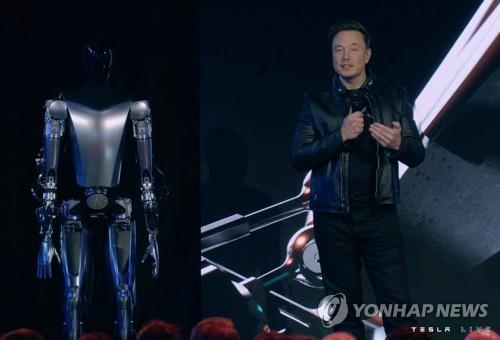
Huang predicted a new era where robotics would combine with AI, leading to robots that collaborate with humans. The focus was on humanoid robots that mimic human movements and could be utilized across various industries. Huang emphasized that AI synthetic data, combined with real-world data, would enable robots to perform increasingly complex tasks.
NVIDIA aims to provide developers with a comprehensive solution combining hardware (GPUs), software (Omniverse), AI, and cloud technologies. However, Tesla’s humanoid robot, Optimus, emerges as a major competitor in this field.
Conclusion
NVIDIA commands attention and maintains high stock prices because it is the world leader in a specific domain—GPUs. Companies like Apple, Microsoft, Amazon, and Meta share similar positions. While Huang presented many ideas during his keynote, there seems to be no area other than GPUs where NVIDIA can confidently claim to be a frontrunner. Most of Huang’s statements revolved around predictions and possibilities, lacking concrete evidence to suggest NVIDIA could dominate these fields.
NVIDIA’s position as the global GPU leader, where demand exceeds supply, has been well-established for over a year, and this has been fully reflected in its stock price. The potential and predictions outlined in Huang’s keynote need to materialize into tangible results. Unfortunately, the keynote failed to present a clear, achievable vision of NVIDIA’s future.
Throughout the keynote, I couldn’t help but think, “That’s not NVIDIA’s domain; another company is leading there.” While NVIDIA might turn possibilities into reality and achieve leadership beyond GPUs, it remains uncertain. For now, NVIDIA is merely the GPU market leader, a position increasingly challenged by competitors.
About the Author:
Attorney Kim Jung-min is the CEO of Witz Inc. and a partner at Law Firm KyeongSe. He holds degrees in Computer Science and Engineering and Law from Seoul National University. After passing South Korea’s fourth Bar exam, he worked as a compliance team leader in an IT company and has served as an advisor in various IT and blockchain-related organizations.


댓글