

Can Putin Be Arrested Too? The Dilemma of Selective Justice

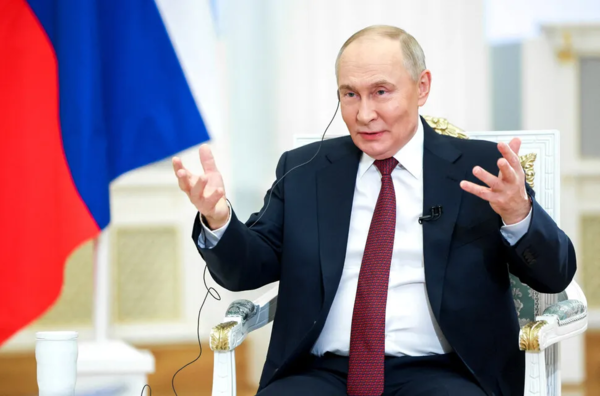
- The Grim Reality of National Interest and Diplomacy Unlike Benjamin Netanyahu, Vladimir Putin and Russia represent critical variables in North Korean nuclear affairs and energy cooperation. Applying an identical, mechanical standard to demand Putin’s arrest could lead to “diplomatic self-destruction” for a middle power like South Korea.
- A Fateful Choice and Strategic Conditions Inequality in law enforcement is an unavoidable reality in international politics. Even if principles must be temporarily suspended, South Korea must establish clear internal criteria to prove this is a strategic calculation rather than blind submission, while consistently building a track record of reinforcing international norms on other fronts.
- The Only Shield for Middle Power Korea Although international law remains imperfect—often toothless against superpowers and applied selectively—it remains the sole weapon South Korea must defend to prevent a barbaric world ruled purely by the logic of raw might.
Editor’s Note: After publishing a legal analysis yesterday regarding the International Criminal Court (ICC) arrest warrant for Israeli Prime Minister Benjamin Netanyahu, criticisms of “selective justice” immediately began pouring in from various quarters. In the international community, selective justice is an inescapable reality.
As someone who has studied international human rights for decades, this issue has long been a deeply troubling dilemma that pricks my conscience. Since it is a phenomenon frequently mirrored in domestic law enforcement, it represents a universal predicament for all legal professionals. Early this morning, I found myself in deep contemplation over this issue. I offer my conclusions here.
“If Putin Visits South Korea, Will We Arrest Him?”
President Lee Jae-myung recently instructed his administration to review the execution of the ICC arrest warrant against Israeli Prime Minister Benjamin Netanyahu. The opposition immediately launched a counteroffensive: “By that logic, the same standard must apply to Vladimir Putin. If Putin visits South Korea, will you arrest him?”
It is a sharp, incisive question. And frankly, it is not an easy one to answer.
Let us cut straight to the conclusion: it is virtually impossible to apply the exact same principle to Putin. Being honest enough to admit this reality is paramount. However, that recognition must not serve as an “absolution” for selective justice. While selective justice may be inevitable, the choices we make must still be guided by a clear set of principles.
Why is it so difficult to apply the same standard to Putin? The bilateral relationship between South Korea and Russia exists on an entirely different dimension compared to our relationship with Israel. Russia is a critical variable in the North Korean conundrum. As a permanent member of the UN Security Council, it wields direct influence over the peace process on the Korean Peninsula. It is also an indispensable partner for energy and resource cooperation.
The diplomatic cost of sending a hardline message to Israel is fundamentally different from doing the same to Russia. For a middle power like South Korea, attempting to enforce rigid principles on every single front simultaneously is a path toward “self-destruction” that completely ignores the national interest.
Is Selective Justice Justifiable? Principles We Must Uphold
Is selective justice justifiable? In confronting this question, we must face an uncomfortable truth: selective justice is an inescapable reality of international politics.
Superpowers are no exception. The United States routinely turns a blind eye to human rights abuses committed by its allies while loudly condemning violations by its adversaries. Europe behaves no differently. The same dynamic plays out domestically; we know from experience that the law does not apply equally to corporate conglomerates and ordinary citizens. In any society where power is unequally distributed, completely equal law enforcement remains nothing more than an ideal. The international community is an arena where this inequality is amplified to its extreme.
Yet, acknowledging that selective justice is inevitable does not mean we are free to make choices blindly without any principles. Even selectivity requires a baseline standard.
First, we must fully comprehend the rationale behind our own choices. We must clearly define internally why a principle is applied in one scenario but suspended in another, even if those reasons cannot be easily articulated on the global diplomatic stage. This internal clarity is the borderline that separates unprincipled capitulation from strategic calculation.
Second, even when a principle is temporarily suspended, we must demonstrate through action that it has not been abandoned. If exerting direct pressure on Russia is too costly, we must consistently contribute to strengthening international norms on other battlefields. Increasing financial support for the ICC, speaking out proactively at the UN Human Rights Council, and providing humanitarian aid to victims of war crimes—these actions must accumulate to prove that the choice to reserve principles is not surrender but a strategy.
Third, even when driven to make selective choices, we must never align ourselves with the powerful to become complicit in weakening international norms. We must meticulously strive to minimize the moral and legal liabilities born from our selective justice.
What Value Does International Law Hold for Us?
This brings us to a more fundamental question: Does an international law that is applied selectively carry any actual meaning?
It is entirely understandable why some argue that international law is useless. If no one can stop superpowers when they violate the law, can it truly be called law? However, I ask you to imagine a world without international law.
The standard itself disappears. Currently, when a superpower violates international law, the vocabulary of “violation” still exists. Criticism is possible, records remain, and it becomes the basis for historical responsibility.
If that vocabulary disappears, nothing remains but the raw “logic of might.” For a middle power like South Korea, international law is the only shield available to the weak.
International law moves at a glacial pace. The Nuremberg Trials established the precedent for punishing war criminals, and only decades later did the ICC come into existence. Even if the ICC appears toothless today and its enforcement remains selective, the accumulation of executed cases will gradually thicken the efficacy of international norms. International law is not a tool designed to dominate reality instantaneously; it is a cumulative process that reshapes reality piece by piece.
Facing the “Fatality of International Law”
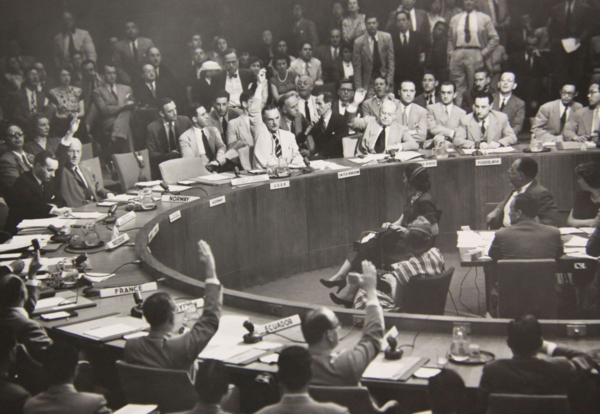
South Korea has been a prime beneficiary of international law and the liberal international order. Had it not been for the UN Security Council resolution during the Korean War in 1950, South Korea’s survival would have been impossible. Within the framework of that order, we achieved both democratization and unprecedented economic development. Beneficiaries bear responsibilities.
We cannot entirely escape selective justice. However, our choices must maintain a strategically consistent direction, and that direction must be toword must lean toward reinforcing international norms. President Lee Jae-myung’s remarks regarding Netanyahu carry weight precisely because they point toward that very direction. The reality that we cannot immediately apply the same principle to Putin does not erase that its meaning.
Selective justice is the fate of international politics. Yet, acknowledging one’s fate is entirely different from surrendering to it. What South Korea can do as a middle power is persisitently contribute to narrowing the margins of selective justice. This is why we must support international law, and why an imperfect international law remains profoundly necessary.
Editor’s Note: For our readers who may be curious about the previous piece written by Professor Chan-Un Park yesterday, we are republishing his first article below.
[Sidebar] President Lee’s Comments on Netanyahu’s Arrest Warrant: A Brief Legal Review
Opinions are currently split across political circles and the media regarding President Lee Jae-myung’s remarks on Netanyahu. I feel compelled to weigh in, as this domain is directly intertwined with my academic expertise; indeed, I wrote my doctoral dissertation on the exact legal issues at play here. Below is my brief review, adapted for social media. (The full text can be accessed via the blog link below).
During a cabinet meeting yesterday (May 20), President Lee Jae-myung made a noteworthy statement. While criticizing the Israeli military’s seizure of a Gaza-bound relief flotilla carrying South Korean activists, he stated, “Let us review and judge for ourselves” the ICC arrest warrant issued against Israeli Prime Minister Benjamin Netanyahu. He explicitly referred to Netanyahu as a “war criminal” and instructed officials to “act according to principle.” While critics anticipate diplomatic ripples, how does this hold up from a purely legal perspective? (Note: This analysis is strictly confined to legal evaluation; political assessments regarding the rhetoric or its public disclosure are separate matters).
1. Substance of the ICC Arrest Warrant
On November 21, 2024, the ICC Pre-Trial Chamber unanimously issued arrest warrants for Netanyahu and former Defense Minister Yoav Gallant based on three established charges:
Starvation as a method of warfare: The deliberate deprivation of food, water, medicine, utilities, and fuel from the civilian population of Gaza. This marks the first time in ICC history an arrest warrant was issued on this specific charge.
Intentionally directing attacks against a civilian population.
Crimes against humanity: Murder, persecution, and other inhumane acts.
2. Obligations of Member States
The Rome Statute explicitly delineates the obligation of state parties to cooperate. Article 86 declares a general obligation to cooperate fully with the Court’s investigations and prosecutions, while Article 89 mandates that state parties must comply with requests for arrest and surrender if the target enters their territory. Crucially, Article 27 explicitly dictates that official capacity as a sitting Head of State or Government does not exempt an individual from criminal responsibility.
Consequently, over 20 nations—including Canada, the Netherlands, Ireland, Switzerland, Belgium, and Norway—have officially declared their intent to arrest Netanyahu should he set foot on their soil. Conversely, Hungary’s Prime Minister Viktor Orbán directly invited him, defying the warrant, drawing fierce condemnation from the ICC. France, Germany, and Italy drew criticism for hedging their stances.
South Korea signed the Rome Statute in 2000 and ratified it in 2003, making it a full state party. Therefore, President Lee’s remarks are a legitimate declaration of intent to fulfill international legal obligations. While diplomatically sensitive, it is legally flawless.
3. Direct Punishment Under Domestic Korean Law is Fully Possible
Furthermore, we must look at domestic legislation. Many legal professionals are unaware of its existence, but in 2007, South Korea enacted the “Act on Punishment of Crimes under the Jurisdiction of the International Criminal Court.”
This domestic statute criminalizes crimes against humanity (Article 9), war crimes against persons (Article 10), and war crimes utilizing prohibited methods (Article 13). The ICC’s charges against Netanyahu—starvation, directing attacks on civilians, murder, and persecution—align perfectly with these domestic provisions.
The decisive factor is Article 3, which establishes “Universal Jurisdiction.” This clause empowers South Korean courts to exercise jurisdiction even when a foreign national commits these crimes outside our territory, provided he/she is currently within the territory of the Republic of Korea. It integrates the international law principle of universal jurisdiction into domestic law, recognizing that war crimes and crimes against humanity are offenses against all mankind, triable by any state regardless of the victims’ nationalities or the locus of the crime.
Conclusion
The moment Benjamin Netanyahu steps onto South Korean soil, South Korea possesses both the legal authority and the binding obligation to surrender him to the ICC. President Lee’s remarks are completely faithful to the principles of international law.
Furthermore, declaring that South Korea would arrest and try him in a domestic court upon entry is legally airtight and beyond question.
Park Chan-un Professor at Hanyang University
Chan-Un Park is a Professor at Hanyang University School of Law and an Attorney at Law. Former Standing Commissioner of the National Human Rights Commission of Korea. Former Chairperson of the Advisory Committee for the Prosecution Reform Task Force.

댓글