

NATO is Needed to Keep Japan in Check

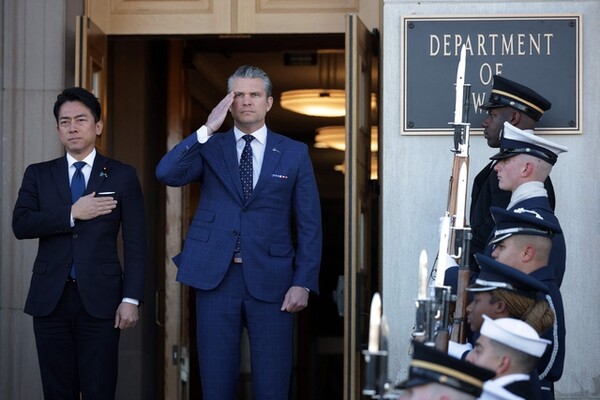
- Japan’s Military Ambitions and the OCEAN Framework The U.S.-Japan-led “OCEAN Framework,” under the guise of containing China, accelerates Japan’s military resurgence and rise as a maritime power, risking the entrapment of South Korea in potential Korean Peninsula conflicts and strategic subordination.
- NATO as a Multilateral Shield To counter the closed, unilateral system led by the U.S. and Japan, South Korea should actively leverage NATO’s aspiration to expand its security influence in the Indo-Pacific to diversify the regional security structure and secure “strategic autonomy” for itself.
- Host a “NATO Defense Industry Consultation Office” in Sacheon By establishing a “NATO Defense Industry Consultation Office” in Sacheon, South Korea can build a substantive defense partnership that complements NATO’s material and military supply chain gaps, thereby securing the diplomatic leverage needed to keep Japan in check and protect South Korea’s strategic autonomy.
The ‘OCEAN Framework’ and a New ‘Security Geometry’
Today, the Indo-Pacific waters have emerged as the most intense battlefield for global hegemonic competition and a geopolitical fault line. The “OCEAN Framework,” recently conceived under U.S. and Japanese leadership, is a massive attempt to fundamentally reshape the regional security environment. (Related Column: Strengthening ROK-U.S.-Japan Intelligence Cooperation: Why We Should Be Vigilant)
This initiative, which aims to establish a consistent and comprehensive strategic execution system, resembles a grand blueprint for transplanting the collective security system of the North Atlantic Treaty Organization (NATO)—which guarded the Atlantic during the Cold War—into the Indo-Pacific. This is precisely why China is sensitive to Japan’s proposal.
Until now, the Indo-Pacific security landscape has operated primarily on tight “bilateral alliances” such as the U.S.-Japan and ROK-U.S. alliances. Recently, various forms of “minilateral” quasi-alliance systems—including AUKUS, the Quad, and U.S.-Japan-Philippines trilateral cooperation—have formed overlapping webs. These diverse cooperative bodies have functioned as flexible platforms projecting the overlapping yet unintegrated security interests of each participant.
However, the U.S.-Japan-led “OCEAN Framework” seeks to transform these fragmented ties into a single, massive collective security system. While theoretically an optimal coalition for maximizing regional deterrence, it carries the high risk of reproducing the inherent limitations of the “NATO-style collective security model” in this region.
First is the decline in operational efficiency and potential discord stemming from the “bigness” inherent to collective security systems. As the body grows larger, harmonizing each nation’s interests becomes exponentially more difficult. In particular, a decision-making structure based on consensus is fundamentally at odds with military security situations where rapid decision-making is paramount.
An even greater problem is the high probability that this giant system will be planned and operated strictly according to the strategic interests of the United States and Japan. This could impede democratic decision-making among allies and create structural side effects that constrain the security sovereignty of other participants, including South Korea.
In April 2026, Philippine Defense Secretary Gilberto Teodoro clearly drew a line regarding the U.S.-Japan-Australia plan to bundle the East and South China Seas into a single operational theater, stating, “The Korean Peninsula should be excluded from these discussions.” This reflects a strict “national interest-first” stance, aimed at preventing the Philippines from being entangled in a Korean Peninsula conflict while focusing on the defense of the South China Sea. In an environment where regional states act based on cold calculations of national interest, South Korea must secure its “strategic autonomy” rather than blindly following the U.S.-Japan strategy.
Japan’s ‘OCEAN Strategy’ Goal: Breaking the Shackles of the Peace Constitution to Become a ‘Maritime Power’
The reason we must not take the U.S.-Japan-led “OCEAN Framework” lightly is that this system provides Japan with immense geopolitical benefits and a stepping stone for its military resurgence.
Traditionally, Japan was bound by Article 9 of the Peace Constitution (the principle of “exclusive defense,” limiting the exercise of defense power and its scope to the minimum necessary). For Japan, which was denied the right to possess an army and the right of belligerency, the projection of military power abroad was an eternal taboo.
However, Japan’s military moves, which began with the amendment of security legislation under the Abe administration, finally bore fruit through the OCEAN Framework and U.S. endorsement. The Self-Defense Forces declared the entire East and South China Seas as legitimate operational zones, effectively breaking their long-standing shackles.
Ultimately, the U.S. secured a proxy for containing China, and Japan used this opportunity to leap forward as a global military power and a maritime grand power, completely liquidating the post-war system. In other words, the U.S. pushed Japan to the forefront to contain China, and Japan seized this chance to become a “nation that can wage war,” completely casting off the constraints of the post-war Peace Constitution.
Conversely, this strategic tightening of U.S.-Japan relations imposes a fatal “Double Burden” on South Korean security. The U.S. and Japan prioritize only the containment of China, while South Korea faces the independent and existential threat of North Korean nuclear weapons and missiles directly on the peninsula. The reality is that in the U.S. and Japan’s macroscopic China strategy, the risk level of North Korea has been consistently downplayed.
If South Korea fails to secure “strategic autonomy” to decide for itself whether to intervene in conflicts within this vertical hierarchy, it will be relegated to a “spoke” rather than a central axis, alongside Australia and the Philippines, eventually falling into the trap of strategic subordination where it receives strategic instructions from the U.S. and Japan even on Korean Peninsula issues.
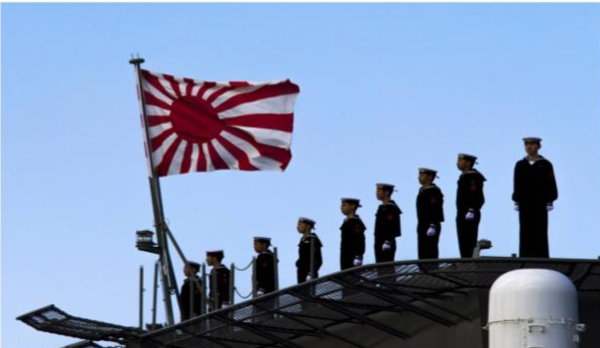
NATO’s Obsession with Indo-Pacific Participation and U.S.-Japan Resistance
A massive variable we must pay attention to, to break the solid unilateral system built by the U.S. and Japan and diversify the decision-making structure, is “NATO.” During my time as a Research Fellow at the NATO Defense College (NDC) last year in 2025, the security atmosphere regarding the Indo-Pacific in Brussels and Rome was far more fervent than imagined. NATO clearly recognizes that the fate of Atlantic security is now fully synchronized with the stability of the Indo-Pacific waters.
In particular, North Korea’s large-scale military participation in the Russia-Ukraine war and its enhanced hybrid warfare capabilities are causing deep concern for NATO regarding the spread of new security crises. The scenes of Putin and Kim Jong-un standing side-by-side with Xi Jinping at China’s 80th anniversary of the victory in the War of Resistance Against Japan in September 2025, and the full opening of North Korea-China border trade following Xi Jinping’s visit to Pyongyang in June 2026, vividly proved the existence of an authoritarian continental alliance threatening Europe.
For NATO, the Indo-Pacific is no longer a distant sea but an extension of the front line directly linked to the safety of its own territory. Therefore, NATO does not wish to remain merely in diplomatic rhetoric or as an observer in Indo-Pacific strategy. They possess a strong will and intention to secure a stake in the actual “Governing Structure” of Indo-Pacific security and exercise influence.
However, a subtle geopolitical struggle arises at this exact point. Japan, which is pushing for the military enlargement of its Self-Defense Forces while holding regional leadership, and the U.S., which intends to manage the China containment network exclusively, are unlikely to welcome NATO participating in the substantive Indo-Pacific decision-making structure and sharing that stake. They do not want their grand OCEAN strategy to be interfered with or diluted by the diverse interests and complex decision-making principles of NATO member states. This subtle gap—the collision between NATO’s intense desire for entry and the exclusionary resistance of the U.S. and Japan—is the optimal geopolitical space for South Korean diplomacy to penetrate.
A Shift in Public Perception and a ‘Clever Invitation’ to NATO
It is true that until last year, the majority of the Korean public expressed significant resistance toward NATO. A “neoisolationist perception” dominated, arguing that there was no need to invite unnecessary risks from the Ukraine war or complicate the East Asian security front by being tied to a military alliance in the geographically distant Europe.
However, in 2026, with the opportunistic ties between North Korea, China, and Russia crossing the threshold and Japan reviving as a maritime grand power, the past conventional view of security only serves to isolate South Korea. In the tightening structure of U.S.-Japan relations, the only real counterweight left to broaden our diplomatic reach and buffer against excessive U.S.-Japan pressure is “NATO.”
This is why a paradigm shift in our thinking—actively “inviting” NATO into the Indo-Pacific—is urgent, not because we want it, but to protect our survival and “strategic autonomy.” Sharing universal values such as “democracy,” “rule of law,” and “guarantee of free seas,” NATO can be an excellent “multilateral shield” to effectively check and buffer when U.S.-Japan forces push regional allies too hard militarily or attempt to drag them into unwanted conflicts.
We Must Host a ‘NATO Defense Industry Consultation Office’
Japan has already moved swiftly to agree on the installation of a NATO Indo-Pacific liaison office in Tokyo. Although the final intergovernmental agreement is not complete, it is understood to be in the final stages.
In this situation, South Korea attempting to overturn existing agreements without giving up on diplomatic regrets is not only impractical but may appear diplomatically immature. Therefore, even if South Korea concedes the political and diplomatic “window” role to Japan, it must pivot to a thorough “realist strategy” that preempts the “material and military supply chain” that NATO needs most urgently.
The core alternative is to host the “NATO Defense Industry Consultation Office (tentative name),” the Indo-Pacific supply base for NATO and the practical axis of its massive defense supply chain, in Sacheon, Gyeongnam.
Currently, NATO member states are under omnidirectional pressure from the U.S. to increase defense spending, but they are unable to respond with agility militarily due to the limitations in manufacturing capacity and production capabilities within Europe, which have shrunk over the decades since the end of the Cold War. The market objectively evaluates South Korea—which has preserved the world’s highest level of rapid production capacity and advanced defense industrial lines—as an “irreplaceable” partner to NATO, which lacks the industrial base to procure weapons and ammunition in a timely manner.
Japan, in particular, has clear limitations in providing this practical and material foundation to NATO due to the constraints of its Peace Constitution and the limitations of its defense manufacturing ecosystem. If Japan takes on a role centered on political and diplomatic networks, South Korea must consider a plan to provide a practical foothold by satisfying NATO’s most urgent task: defense and military procurement capabilities.
By hosting the “NATO Defense Industry Consultation Office” in Sacheon, Gyeongnam—the mecca of Korea’s aerospace and defense industry—South Korea should absorb NATO’s demand for Indo-Pacific entry and secure strategic autonomy on the Korean Peninsula through a quid pro quo approach based on this.
Suing for Autonomy on the Korean Peninsula Through Realistic Defense Cooperation
In conclusion, the OCEAN Framework conceived by the U.S. and Japan harbors structural risks that could utilize South Korea as the vanguard of the anti-China front and weaken our strategic autonomy on Korean Peninsula issues.
If South Korea is to avoid being reduced to a “spoke” in Japan’s massive military plan to revive itself as a global military power by bypassing its Peace Constitution, the diversification of the regional decision-making structure is not a choice, but a survival imperative.
We must actively utilize NATO’s aspiration to participate in the Indo-Pacific and promote a plan to invite them into the region through South Korea’s core defense supply chains. When we firmly establish our status as an irreplaceable military and material partner to NATO, we can secure powerful diplomatic leverage to keep the unilateral pressure of the U.S. and Japan in check.
Inviting NATO into Indo-Pacific waters is not about denying or weakening the existing cooperation system centered on the U.S. and Japan. Rather, by expanding the closed configuration into an “open multilateral system,” it is a sophisticated strategy for coexistence that broadens the scope of the ROK-U.S. alliance and promotes stability and prosperity for the entire region.
“Defense diplomacy” that yields flexibly on nominal issues while preempting actual benefits will be the card that keeps in check the runaway ambition of Japan, which dreams of becoming a maritime grand power. Furthermore, it is expected to become a practical diplomatic shield that protects South Korea’s “strategic autonomy” amidst the pressure of the U.S. and Japan.

About Author:
Choi Soo-jung is currently a doctoral candidate in law at the University of Hamburg, Germany, specializing in maritime security law and cyber security law. She served as a senior researcher at the Korea Maritime Institute (KMI) for 11 years. She has conducted research on the UN Convention on the Law of the Sea, including maritime environment, international fisheries norms, and the Dokdo territorial dispute.
She has experience as a visiting researcher at the NATO Cooperative Cyber Defence Centre of Excellence, a panelist at the NATO Maritime Security Centre, and a Research Fellow at the NATO Defense College.


댓글