

ROK-U.S.-Japan Intelligence: A Strategic Dilemma

- U.S.-Led Indo-Pacific Intelligence Integration and the Rise of Japan The U.S. is pressuring for real-time trilateral coordination between the ROK, U.S., and Japan via institutionalized “Indo-Pacific intelligence cooperation.” Japan has presented the “OCEAN” strategy to the U.S., solidifying a structure where the U.S. plans and Japan executes. Consequently, South Korea faces the complex variable of potential Japanese intervention in Korean Peninsula security.
- The Risk of “Technological Subordination” under the Guise of Cooperation Under the pretext of cooperation, the U.S. seeks to absorb South Korea’s communication and technology infrastructure into the U.S. system by demanding the abolition of network separation on the Korean Peninsula and restricting access to AI intelligence. The underlying intent is to subordinate South Korea as a sub-system within the U.S.-led information hegemony.
- A Strategy of “Conditional Participation” to Secure Security Leadership While intelligence sharing is essential to counter North Korean threats, unconditional integration undermines information sovereignty. South Korea must negotiate conditions: the codification of “information sovereignty,” limitations on Japan’s scope of intervention on the Peninsula, and the maintenance of its own independent technology infrastructure policies.
U.S. Congress Legalizes Indo-Pacific Intelligence Cooperation and Pressures for Real-Time Intelligence Sharing
In June 2026, the U.S. Senate Intelligence Committee made visible its move to strengthen Indo-Pacific intelligence cooperation through Section 691 of the Intelligence Authorization Act for Fiscal Year 2027. This bill directs the Office of the Director of National Intelligence (DNI) and other agencies to significantly deepen intelligence cooperation with key allies in the Indo-Pacific region. Specified target countries for cooperation include South Korea and Japan, along with Australia, New Zealand, the Philippines, and Thailand.
Specific areas of cooperation include maritime security within the ROK-U.S.-Japan trilateral framework, early warning of military provocations, joint operational planning and training, responses to contingencies such as in the Taiwan Strait, and the expansion of regional information-sharing systems.
This development is not temporary. The necessity for this had already reached the level of public discourse via a 2025 official press release from the office of U.S. Congressman Ami Bera. At the time, Rep. Bera sought to institutionalize a “U.S.-Japan-South Korea Trilateral Cooperation Act” based on bipartisan consensus between Democrats and Republicans. The objective was to secure stable, official trilateral parliamentary dialogue channels regardless of regime changes in respective countries.
Attention must also be paid to the recently released Congressional Research Service (CRS) report on U.S.-South Korea cooperation (The U.S.-South Korea Alliance: Issues for Congress). The report states that North Korea’s nuclear and missile threats have reached a critical threshold. It points out that to counter North Korea’s hypersonic missiles and mixed-trajectory missiles, ROK-U.S.-Japan intelligence coordination must be connected in real-time to defend the U.S. West Coast.
Here, the U.S. is admitting that its own intelligence capabilities alone have reliability limitations in responding rapidly to crises in the Indo-Pacific region, such as contingencies involving Taiwan and North Korea. It is precisely at this point that the U.S. desires to share HUMINT (Human Intelligence) collected by South Korea and Japan.
Japan’s ‘Theater Concept’ and OCEAN, the Sub-Mechanism of the Indo-Pacific Strategy
Amidst these macro-movements, one must keenly observe the recent changes occurring in the Indo-Pacific strategy. The U.S. Indo-Pacific strategy aims for the freedom of navigation in key sea lanes, including the Malacca Strait and the Taiwan Strait, and its core consists of “maintaining the status quo” of the existing maritime order and ensuring security.
As a concrete strategy for this, it is moving toward the completion of a comprehensive security consultative system, centered on the “OCEAN” (One Cooperative Effort Among Nations) framework, which is currently an alliance security negotiation initiative.
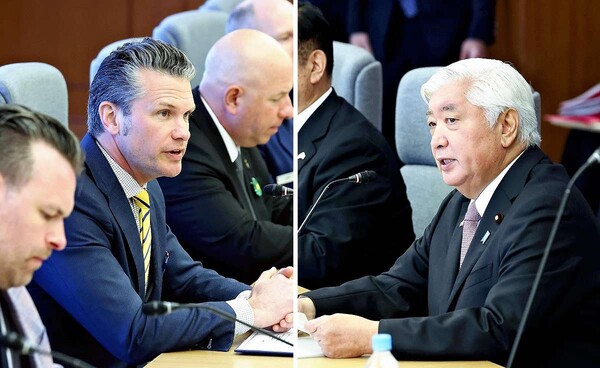
Here, OCEAN evolved from the “Theater Concept” directly proposed by Japanese Defense Minister Gen Nakatani to U.S. Secretary of Defense Pete Hegseth during the latter’s visit to Japan in March 2025. At the time, Secretary Hegseth greatly welcomed Japan’s proposal to bundle individual Indo-Pacific conflict zones—the East China Sea, South China Sea, Taiwan Strait, and the Korean Peninsula—into a single, integrated war zone and respond with a collective security concept.
Subsequently, Japan rebranded this as OCEAN at the Shangri-La Dialogue (Asia Security Summit) in May, and it was adopted as the official strategy for the Indo-Pacific.
The core of this strategy is maximizing the interoperability of militaries between value-sharing nations. By doing so, it seeks to exercise Integrated Deterrence by responding collectively to attempts to “change the status quo” in the Indo-Pacific. Consequently, South Korea, the U.S., Japan, Australia, the Philippines, etc., will implement a strategy of integrating information-sharing systems from peacetime and increasing the frequency and intensity of combined military exercises to unify command and control systems.
Variables Posed to South Korean Security by the ‘U.S. Planning, Japan Executing’ Structure
The practical implementation aspect of this strategy lies in the fact that it is “U.S. planning and Japan executing.” Through this initiative, the Japanese Self-Defense Forces (JSDF) have completely shattered geographical constraints on their actions. They have secured justification to legally intervene and exercise counterattack capabilities in the event of a contingency on the Korean Peninsula or a conflict in the South China Sea.
This is a structure where, instead of the U.S. directly confronting China—which is designated as the primary status-quo-changing state in the Indo-Pacific region—Japan steps to the forefront of conflict resolution. Japan’s desired expansion of its operational zone to the East and South China Seas signifies the “internationalization of the JSDF,” prepared to directly confront China at the First Island Chain on behalf of the U.S.
The “integrated deterrence strategy” led by Japan under U.S. sponsorship may be effective in terms of tightly checking China’s expansion of maritime power. However, it poses very complex variables for South Korea, which must prioritize the security guarantee of the Korean Peninsula.
This is especially true when applying the principle from the U.S. National Security Report presented in January 2026, which states that “each nation must be directly responsible for its own security.” South Korea must bear the dual burden of assuming direct responsibility for a Korean Peninsula contingency while also providing collective security support alongside other allies in situations such as a Taiwan contingency.
Furthermore, carrying out the Indo-Pacific strategy under Japan’s overall command implies including the possibility that Japan’s intervention will become possible even in the realm of guaranteeing the security of the Korean Peninsula.
U.S. Information Pressure: The Risk of ‘Institutionalizing Subordination’ Beyond Intelligence Cooperation
In a situation where the Japan-centric Indo-Pacific strategy is taking root, what benefits will the strengthening of ROK-U.S.-Japan intelligence cooperation actually bring to South Korea? Here, we must pay attention to two measures recently taken by the U.S. regarding information and communication within the Korean Peninsula.
First, as retaliation for Unification Minister Chung Dong-young’s mention of ‘Guseong’ as a likely suspected area for a North Korea nuclear test in April 2026, the U.S. has thus far refused to provide SIGINT (Signals Intelligence), its highest-grade intelligence asset.
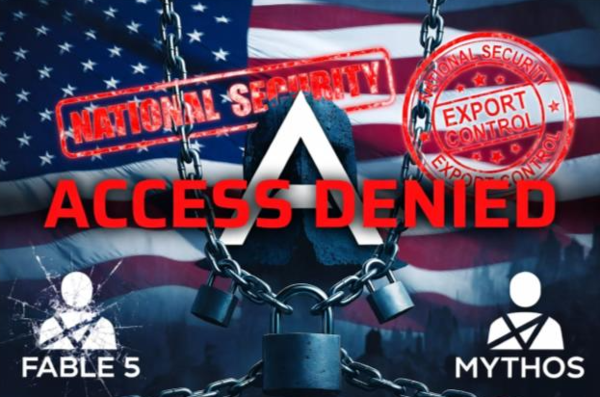
Second, in June 2026, while banning foreigner access to U.S.-based Anthropic’s ‘Mythos 5’, the U.S. raised the issue of ‘Contaminated Network’ concerning specific South Korean backbone telecommunication networks. Furthermore, it specifically pointed out the physical network separation policy stubbornly maintained by the South Korean government as an “obstructive factor to global technological cooperation.”
The implication of this pressure from the U.S. government is clear. It is pressure to accept U.S.-led telecommunication information policies and to enter under the umbrella of U.S. information assets. The intent is to force intelligence cooperation in the way the U.S. desires, while receiving intelligence conceptualized and provided by the U.S.
Strictly speaking, this may be closer to the “institutionalization of intelligence subordination” rather than the deepening of intelligence cooperation. The moment South Korea is completely subsumed into the information infrastructure designed by the U.S., the intelligence it collects and analyzes itself will be processed through U.S. systems, and the decision on whether to share it will be determined under U.S. judgment. As in the case of the denial of access to ‘Mythos 5’, intelligence access rights can be closed at any time if it does not suit the U.S.’s taste.
Even though South Korea holds the status of an important intelligence source that shares North Korean HUMINT information, the trap lies in the fact that the access method demanded by the U.S. is very unilateral.
Ultimately, there is a very high risk that South Korea will be degraded to the position of a consumer even while being a producer of intelligence, and that South Korea’s intelligence capabilities will be subsumed as a sub-system of the ROK-U.S.-led Indo-Pacific intelligence cooperation system.
‘Strategic Conditions’ for Active Participation Instead of Passive Incorporation
The U.S. demands—openly pointing out the possibility of classified military information leakage and network contamination, demanding the abolition of network separation, and entering the U.S. network—and the ROK-U.S.-Japan intelligence alliance are actually heading toward the exact same destination. It is “subordination to the U.S. information hegemony.” So, how should we respond to this subordinating demand packaged under the name of intelligence cooperation?
At this point, it is necessary to look back at Japan’s case. Japan did not simply respond passively to U.S. demands. It first grasped what the U.S. wanted and then negotiated in a way that exchanged this for its own strategic interests.
The aforementioned OCEAN initiative itself was a proposal from Japan. The expansion of the JSDF’s operational scope was a result designed by Japan and approved by the U.S. In other words, Japan acted as an active co-planner, not a passive cooperative partner.
Under the current situation, it is difficult for South Korea to openly reject the Indo-Pacific intelligence cooperation framework itself. If it cannot reject it, it must participate, but it must place conditions on the negotiation table that can maximize our strategic autonomy.
First, the codification of information sovereignty is necessary. Even if the expansion of intelligence cooperation with the U.S. is accepted, South Korea’s independent decision-making power regarding the processing, sharing, and utilization of information collected by South Korea must be explicitly stated in the agreement document.
If South Korea cannot directly set the conditions and scope of intelligence provision, South Korea’s intelligence capabilities will be reduced to assets provided free of charge for U.S. strategic goals.
Second, the scope of Japan’s intervention in Korean Peninsula affairs must be clearly defined. If the OCEAN framework is designed in a way that structurally allows for the intervention of the JSDF in the event of a contingency on the Korean Peninsula, South Korea must strongly demand a separate agreement that limits the scope and conditions of such intervention.
This is not an emotional anti-Japan issue, but a matter of national survival concerning which country holds the initiative in the security of the Korean Peninsula.
Third, ‘technological sovereignty’ must not be bartered in exchange for intelligence cooperation. U.S. criticism of the network separation policy and restrictions on AI intelligence access are read as attempts to absorb South Korea’s digital infrastructure policies into U.S. standards.
‘Cyber security’ and ‘information infrastructure’ are core areas of national sovereignty. Giving up South Korea’s independent technology policies for the sake of intelligence cooperation is committing the contradiction of digging up the foundation of security in order to protect security.
Securing Security Leadership through Conditional ‘Participation’
The U.S.’s strengthening of its Indo-Pacific intelligence strategy certainly has aspects that open a new window of opportunity for South Korea. This is because real-time intelligence sharing on North Korean nuclear weapons and missiles is an inevitable benefit directly linked to South Korea’s survival.
However, unconditionally walking into that window may be a dangerous path leading not to opportunity, but to intelligence subordination.
Therefore, the path South Korea should choose must not be unconditional “incorporation,” but conditional “participation” that protects our sovereignty. We must resolutely reject a negotiation structure that accepts real-time intelligence but surrenders South Korea’s information sovereignty, technological autonomy, and initiative in Korean Peninsula security in exchange.
The U.S.’s strengthening of its Indo-Pacific intelligence strategy can be either a boon or a bane, depending on how we handle it. Now is the time for South Korea to decide on a clear answer to protect its security leadership and act strategically.
This article is a strategic proposal regarding Indo-Pacific regional intelligence cooperation established while the author served as a Research Fellow at the NATO Defense College (NDC) in 2025, viewing the Indo-Pacific strategy from a European perspective and studying information and communication security and cyber infrastructure.
Amidst the macro-trend where Atlantic security and Indo-Pacific security are intensely synchronizing, specific analysis and academic rationale regarding the grand strategy South Korea should pursue will be dealt with in more detail through a research paper scheduled to be published in the latter half of this year.
Furthermore, in order to secure South Korea’s security autonomy within the narrow Indo-Pacific strategic framework structured around the U.S. and Japan, the author will consecutively contribute columns proposing a new arrangement of the Indo-Pacific strategy through an ‘Indo-Atlantic solidarity and Korean-style bridging strategy,’ such as inviting NATO as a new multilateral counterbalance and establishing a ‘NATO Defense Procurement Cooperation Office (tentative name)’ in Sacheon, Gyeongnam.

About: Choi Soo-jung
Majoring in Maritime Security Law and Cyber Security Law in the doctoral program in law at the University of Hamburg, Germany. Served as a Senior Researcher at the Korea Maritime Institute for 11 years. Has conducted research on the UN Convention on the Law of the Sea, including the marine environment, international fisheries norms, and the Dokdo territorial dispute.
Experienced visiting researcher at the NATO Cyber Center, panelist at the NATO Maritime Security Center, and Research Fellow program at the NATO Defense College.


댓글