

Korea: The ‘NK Threat’ Build-Up Used in the Coup Crisis
Difference between Coup Crisis and 12.12: THE DAY and Hunt Persistent Exploitation of Anti-North Korea Sentiment and War Risks Korean Democracy Threatened Without Peace

This text is a translation of a column(내란 사태에 이용된 ‘북한 위협’ Build-Up) originally published on December 22.
The Coup Crisis: A Parallel to Two Films Starring Woo-sung Jung
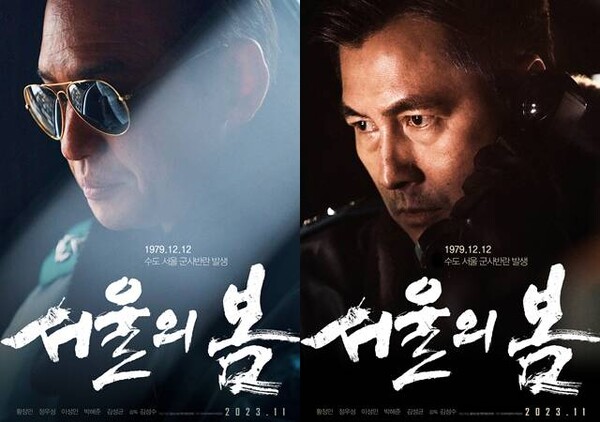
The sudden coup crisis left everyone in a state of shock. Now, with a brief moment to catch our breath, we can reflect on this dramatic event, which was far more intense than any film. Let’s analyze the flow of the crisis by drawing parallels to two films starring Woo-sung Jung that once dominated the news: 12.12: THE DAY (2023) and Hunt (2022).
Many may first recall 12.12: THE DAY. I would like to add Hunt, a spy thriller also starring Woo-sung Jung, to this comparison. This will help us better understand the structure and development of the coup crisis.
Generally, suspense films reveal the incident and the culprit to the audience from the start, while mystery films only unveil the full story and secrets at the end. In 12.12: THE DAY, the audience is shown the entire plot and the identity of the villain upfront. In contrast, Hunt builds tension by keeping the existence of a high-ranking spy infiltrating the national intelligence agency a mystery until the very end, revealing an unimaginable conspiracy.
The Coup Crisis: From Suspense to Mystery
12.12: THE DAY leans towards suspense, while Hunt is a mystery film. Until December 14, when the impeachment motion was passed in the National Assembly, reality resembled the suspense-driven 12.12: THE DAY. However, the story didn’t end there. The coup crisis has since transitioned into a mystery akin to Hunt, filled with deeper intrigue.
Beyond their narrative styles, the two films differ in another significant way: the presence of North Korea. 12.12: THE DAY essentially excludes North Korea, yet still effectively evokes tension. In contrast, Hunt incorporates North Korea as an essential element, using its hidden presence to complicate the story and heighten unpredictability, maximizing the audience’s anxiety.
How North Korea Was Exploited in the Coup Crisis
The December 3 coup crisis is gradually being resolved, with revelations surfacing about the motives, masterminds, fabricated justifications, and execution plans of the coup. Tracing back through the build-up, which systematically concealed the true nature of the unconstitutional coup under emergency martial law, one consistent thread emerges: the exploitation of the risk of war with North Korea.
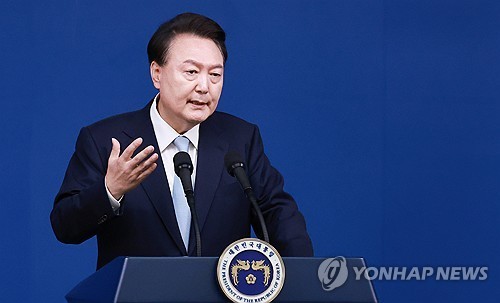
Under the current administration, one peculiar trend stood out: North Korea was mentioned in every major national address by the president. On occasions like the March 1st Independence Movement Day and August 15 Liberation Day, critical media and citizens were labeled as pro-North, anti-state forces, inciting the narrative that they were subversive elements threatening national order.
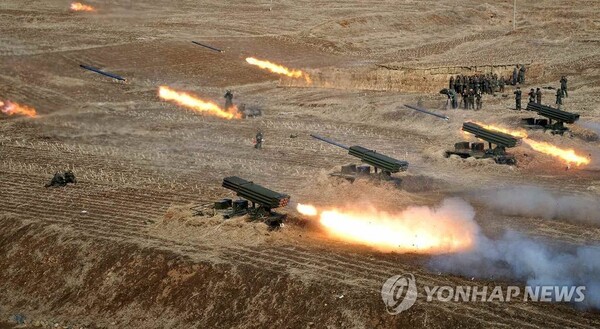
From the early days of the administration, it preemptively allowed the dissemination of propaganda leaflets to North Korea and resumed loudspeaker broadcasts along the northern borderland. These actions provoked North Korea into retaliating with balloon-borne waste. This escalated public suffering and intensified animosity toward North Korea. By June 2024, the largest artillery drills reminiscent of the Yeonpyeong Island shelling incident were conducted in the West Sea.
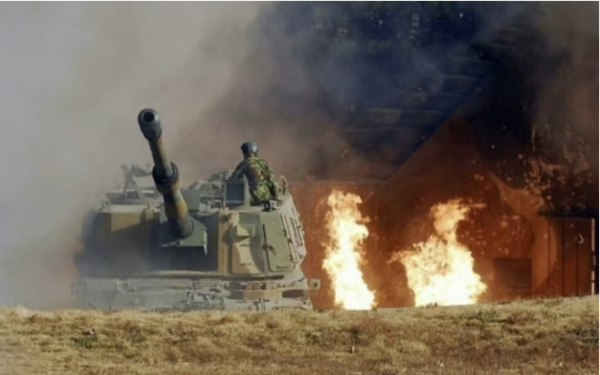
In October this year, there was a bizarre incident where South Korean forces opened fire on North Korean troops constructing defensive barriers facing the South. Tensions escalated to the brink of localized military conflicts when South Korea sent drones into Pyongyang’s airspace. Reports even suggested discussions about striking North Korea’s waste balloons at their source.
The Persistent Utility of Anti-North Korea Sentiment and War Risks
Such military actions appear to have served not only as provocations to incite localized conflict but also as means to heighten hatred and fear of war with North Korea. In hindsight, these actions seem to have been part of a calculated build-up to justify illegal martial law by risking citizens’ lives to trigger war.
On December 3, martial law was declared under the pretext of “defending the Republic of Korea from North Korean communist forces and eradicating pro-North, anti-state elements.” Even in the December 12 statement following the coup, North Korea was mentioned five times, accusing the opposition of undermining constitutional order by allegedly colluding with North Korea, which was said to have hacked the election commission.
Investigations are revealing allegations of a plot to disguise South Korean special forces as North Korean soldiers to stage a military emergency that would necessitate martial law. Even more shocking were claims of plans to assassinate ruling party leaders, kidnap opposition politicians and broadcasters, and provoke U.S. retaliation by equipping drones with North Korean weapons to attack American troops.
Democracy Threatened Without Peace
How should we view this repeated tragedy of martial law on the Korean Peninsula? One clear lesson from this crisis is that South Korean dictators have consistently exploited the North Korean threat and the unstable situation on the peninsula to dismantle democracy by force.
Without peace, and ultimately without overcoming division, South Korea’s democracy remains perpetually and fundamentally vulnerable. The 2024 martial law crisis underscores that in an unstable environment without peace, South Korea’s democracy can always be uprooted.
If North Korea had responded militarily to South Korea’s provocations and a war had broken out in any form, the consequences would have been horrifying. The youth and citizens of the Korean Peninsula would once again have lost their lives to war. Martial law would likely have succeeded and persisted for an extended period, leading to bloody crackdowns on citizens resisting the regime. Not only would our democracy have been devastated, but the nation’s credibility and the overall economy would have plummeted to irreparable depths. The prolonged suffering and humiliation would have been borne entirely by the people of South Korea.
North Korea’s Perspective
It is worth reflecting on this situation from North Korea’s perspective. A particularly striking comment came from Maria Zakharova, the spokesperson for Russia’s Ministry of Foreign Affairs, who analyzed the incident through the lens of North Korea’s security concerns.
On December 4, the day after the incident, Zakharova stated, “A thorough analysis of the situation makes it clear why North Korea is so focused on strengthening its security. Its neighbor, South Korea, is an unpredictable country. The recent events in Seoul demonstrate that the party responsible for causing tension and instability on the Korean Peninsula is South Korea.”
From North Korea’s standpoint, the South appears unpredictable, with regimes often failing to complete their terms and policies toward the North oscillating between extremes. Despite continuous provocations, North Korea refrained from overreacting militarily, which is absolutely fortunate.
This measured response could help shift the international perception of North Korea from being an irrational, belligerent state to a more rational actor.
A New Hope: The MZ Generation Leads Impeachment Protests
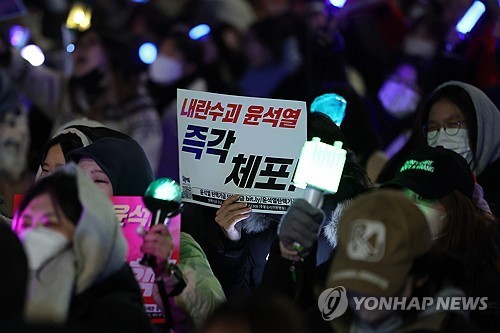
Unlike the two films, the 2024 reality featured a powerful protagonist: the citizens who blocked martial law forces with their bare hands on the night of December 3. Among them, the MZ generation, waving light sticks and chanting K-pop songs, stood out as another key player in the impeachment protests.
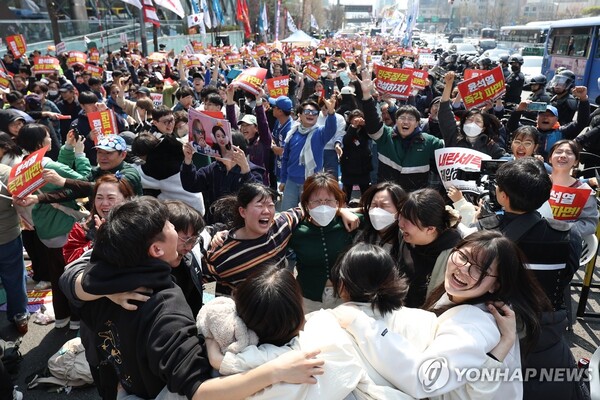
On the evenings of December 7 and 14, despite the biting cold, citizens filled Yeouido, with a particularly striking presence from the MZ generation. Waving light sticks and singing K-pop songs, they passionately called for impeachment, emerging as another key protagonist in this unfolding drama.
In this movie-like reality, we all found new hope. The youthful fervor of these young people, who combined the anger of demanding impeachment with the festive energy of K-pop, astonished the world once again. Armed with K-culture and light sticks, the MZ generation brought an end to the unlawful martial law crisis.
Can the Dead Save the Living?
Let us revisit the two films that vividly portrayed the grim and harrowing realities of the post-1980s era. How did Hunt (released in 2022) and 12.12: THE DAY (which drew 13 million viewers in 2023) impact us, faced with the martial law crisis of 2024, and what influence did they have on the MZ generation?
During the time the two movies were screened, Han Kang received the Nobel Prize for her novel Human Acts, which captures the horrors of Gwangju in 1980. Having sold over a million copies, how does this book resonate with us today, facing the martial law crisis, and with the MZ generation? At the Nobel Prize ceremony held at the Swedish Academy on December 7, Han Kang said:
“Can the past help the present?
Can the dead save the living?
Later, as I was writing what would become Human Acts, I sensed at certain moments that the past was indeed helping the present, and that the dead were saving the living.”
Park Gee-chan Scholar of North Korean Studies
The author, Geechan Park, is a financial expert who completed an MBA from Washington University in St. Louis after graduating from Seoul National University in Economics. As a North Korean researcher who approaches the issues on the Korean Peninsula based on a global and future-oriented perspective. He is working as a member of the development cooperation committee at the Korean Sharing Movement, and obtained his Ph.D. in the University of North Korean Studies.


댓글