

The Leader KNB Needs Now

- Superficial Illusion & Creative Bankruptcy While Korean ballet enjoys a golden age of world-class dancers, the Korea National Ballet (KNB) has stagnated during a 12-year tenure, relying strictly on imported foreign licenses without producing original choreography—essentially becoming a tax-funded, first-rate copy machine and import agency.
- Closed Governance & Personnel Turmoil This lack of original content stems from an insular, pedigree-driven internal cartel that views dancers merely as artistic components. This structural decay has led to administrative incompetence, managerial failures, and a dismissive attitude toward innovations by private companies.
- The New Era’s Leadership Demands Driven by a new generation of millennial and Gen Z audiences, the next artistic director must look beyond past crowns or elite lineage. KNB now requires a cold-eyed “cultural designer and artistic strategist” capable of developing original repertoires to break foreign dependence and building transparent governance.
The Light and Shadow of Kang Sue-jin’s 12-Year Tenure
Controversy continues to brew over the appointment of the next artistic director for the Korea National Ballet (KNB). Seeing such intense public interest makes one realize how deeply people care about the nation’s premier ballet company. Because it is funded by taxpayers’ money, it is impossible not to view this leadership crisis with a mixture of affection and concern.
It has been twelve years since KNB brought in the world-renowned ballerina Kang Sue-jin to lead the company. But what shadows has her long-term management cast over the institution? What systemic flaws have lingered behind the brilliant spotlight of her stardom?
Korean ballet is currently evaluated to be living in a dazzling “optical illusion.” From Park Sae-eun, who captured the coveted Étoile title at the Paris Opera Ballet, to Jeon Jun-hyuk, a principal dancer at the Royal Ballet, and Kim Ki-min of the Mariinsky Ballet—the marquee stars of the world’s elite stages are Koreans.
Furthermore, thanks to precise, systematic prodigy training pipelines like the Korea National Arts University (K-Arts), Korea’s twenty-something dancers possess physical proportions and ferocious technical prowess that rival, if not surpass, their Western counterparts. Sweeping international competitions has long since become a routine reality. Judged purely by the physical language of the body, South Korean ballet appears to be basking in its absolute golden age.
Yet, the moment we dim these glamorous lights and confront the uncomfortable reality backstage, we face a stark, ailing truth hidden behind the prestigious title of a “national” institution.
A Mere Venue for Imported Works, Devoid of Creation
The most painful realization is that KNB is not acting as the cultural face that projects Korea’s unique ballet identity to the world. Funded by public taxes, the national company has degenerated into a mere “licensing agency,” simply purchasing famous foreign masterpieces and putting them on stage instead of cultivating original choreography. Throughout a 12-year regime, it is hard to find a single piece of original choreography or a signature repertoire unique to KNB.
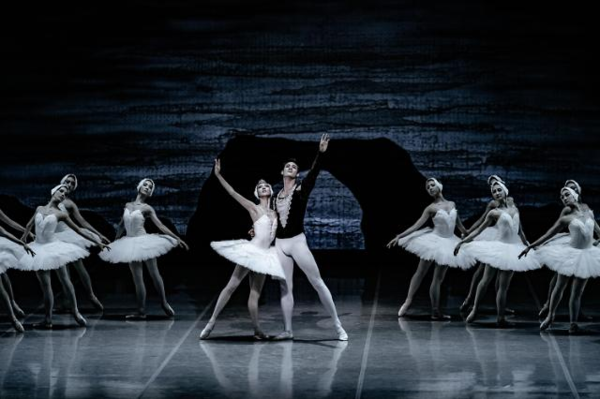
Even timeless classics like Swan Lake have been imported as exact foreign replicas. In settling for safe, comfortable carbon copies, the company has squandered the precious opportunity cost required to develop its own narrative-driven creative engine.
This stagnation and artistic insignificance become glaringly obvious when contrasted with the neighboring musical theater market. In the past, Korean musicals were also nothing more than assembly plants for licensed foreign megahits like The Phantom of the Opera. However, driven by the brutal logic of capital, the musical industry underwent a fierce restructuring. Today, it has evolved into a powerhouse K-culture industry, developing original intellectual properties (IPs) like Frankenstein and Marie Antoinette and exporting them back to global markets.
In contrast, KNB—which receives 15 billion KRW annually in taxpayer subsidies—remits hundreds of millions of KRW in royalties to foreign estates for productions that run for just a few days each year. On top of that, under the guise of preserving “artistic purity,” taxpayers foot the entire bill for first-class accommodations and daily stipends for foreign production staffs dispatched to supervise the staging.
While the musical industry transformed itself through aggressive investment in original works, KNB has comfortably repeated a passive loop of “licensed artistry”—polishing and practicing foreign imports under the protective umbrella of public funding.
A Cartelized Ballet Community and Management Failures
Critics argue that this severe lack of domestic content stems directly from the organization’s insularity. Because ballet is a highly specialized domain, a sense of elitism has formed a defensive shield within KNB, operating under the assumption that outsiders understand nothing.
While other cultural institutions strive for open communication, KNB has built a fortress of exclusion, interacting strictly within an internal network of former dancers and specific personal lines, allowing the pool to turn stagnant. Within a space that has lost both objective perspective and the capacity for self-regulation, a vacuum of leadership became an inevitable tragedy.
Fame as a world-class dancer did not guarantee capability as an administrative leader or artistic director. The failure of human resource management and the emotional neglect of dancers—occurring behind the authority of a star director—reveal a painful reality: the organization’s basic safety nets failed to function.
Persistent internal noise, including workplace bullying and opaque evaluations, vividly exposes the administrative incompetence masked behind the glamorous veil of artistic achievements.
Furthermore, critics point out that KNB has fallen into a trap of dogmatic arrogance, believing it is the best simply by virtue of its “national” title. In truth, the innovative attempts and contemporary experiments expanding the spectrum of Korean ballet have been spearheaded not by KNB, which monopolizes budgets and infrastructure, but by private professional companies bleeding and sweating in harsh environments.
Despite this, the national company has remained comfortable recycling safe, imported works while remaining dismissive of the artistic breakthroughs achieved by independent groups. It mirrors a bloated conglomerate disparaging the disruptions of agile tech startups.
The Erasure of a Dancer’s Artistic Identity and Interpretation
At the heart of these systemic issues lies a regressive, 19th-century mindset that views dancers not as “artistic comrades,” but merely as instruments to execute a director’s vision. Individual artistic personality and interpretation are overridden; dancers are treated like mechanical parts performing dictated movements.
Even when injured, they face a structure where they are treated as replaceable consumables, and if they fall out of favor, they are stripped of opportunities to step onto the stage—a dynamic that thoroughly crushes an artist’s self-esteem. Ultimately, the current KNB faces a total crisis: stagnant without original content, trapped within a closed web of personal connections, and neglecting its dancers under a fragile leadership while resting on its monopolistic status.
The Leader Required for KNB’s New Horizon
As a national institution sustained by public funds, the qualifications required for its new leader are neither a faded, glamorous crown from the past nor a badge of institutional pedigree. Yet, arguments insisting that “the new director must come from a professional ballet background” still hold significant sway within the community.
Today, the core audience driving ballet consumption is the 2030 generation (millennials and Gen Z). They take a “world-class technical standard” for granted; what they crave is a fresh narrative. They demand meticulous, sophisticated preparation for the era after the aura of Kang Sue-jin.
The leader the stage so desperately awaits must be a cool-headed “cultural designer and artistic strategist,” regardless of their institutional lineage. KNB no longer needs a replica factory; it requires a sophisticated artistic blacksmith who can design a century-long blueprint for Korean ballet while establishing a transparent system that young dancers and audiences can genuinely trust.
The institution requires a leader with the vision to forge an original creative engine to break free from foreign royalty dependence, the ability to dismantle dictatorial authoritarianism in favor of clean governance where young artists can run at full throttle, and the communicative sensibility to translate the noble physical language of ballet into clear, resonant narratives for today’s public.
Now that the technical artistry of our dancers has reached absolute perfection, it is the precise moment for the Korea National Ballet to purge its chronic pathologies and step into a new dawn.





댓글