

‘A True Ally’ Forged by Sharing Meals in Exile
The Politics of Trust Asked by the Film “The King and the Man Who Lived With Him”

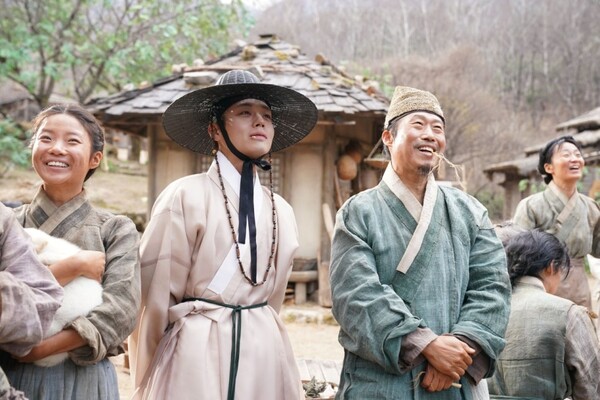
- [One-Minute Key Summary] The film <The King and the Man Who Lived With Him> examines the “reconstitution of relationships” that takes place in the extreme space of exile. When lavish court ritual disappears and what remains is the rough, everyday care of preparing meals and safeguarding one another’s well-being, the old loyalty of command and obedience dissolves, and a human trust begins to take root. At a time when authority is asserted while trust is absent in contemporary Korean politics, the film poses a direct question: where does your politics now stand?
- [The Insight -- Reading Between the Lines] Everyday politics: Politics does not begin with the glittering rhetoric of Yeouido ( note -In Korean political discourse, criticism of “Yeouido politics” refers to the National Assembly district in Seoul and functions much like “Westminster bubble” or “Washington Beltway” in English.) , but with the “sharing of responsibility” that attends to the basics of life—having compassion for one another’s circumstances and making sure there is food on the table.
- The paradox of authority Just as a king gains a “true ally” only after losing everything, politics earns trust only when it relinquishes vested privilege and restores eye-level encounters with those below.
- The qualifications of leadership What our leaders need today is not a baton of command, but ui-ri(의리, 義理), the righteous principle), the willingness to remain at someone’s side, enduring together the cold wind of an isolated dwelling.
Jang Hang-jun’s “The King and the Man Who Lived With Him”
I watched the film The King and the Man Who Lived With Him(note- The film reimagines the exile of King Danjong (15th century Joseon dynasty), a boy-king deposed by his uncle. While rooted in Korean history, the film is not a documentary but a work of ethical and political reflection.). Director Jang Hang-jun’s rich imagination is striking, but the performances—Yoo Hae-jin(as Eom Hong-do), Park Ji-hoon(as Prince Nosan, King Danjong), Yoo Ji-tae(as Han Myeong-hoe), and Jeon Mi-do(as the court maid Maehwa)—expand the work beyond a simple historical drama into a space for reflection on relationships and ethics. The characters move beyond schematic divisions of good and evil, loyalty and betrayal, continually questioning how authority operates and how relationships acquire meaning.
From the perspective of someone trained in sociology, what makes this film particularly intriguing is the way it dismantles and reconstructs, through highly micro-level scenes, the concept of “loyalty”(chung, 忠) between king and subjects that is presupposed by traditional authority. (note- In Confucian political culture, loyalty to the ruler was considered a supreme moral duty, analogous—though not identical—to fealty in medieval Europe. It was both an ethical ideal and an institutional expectation.)
In traditional society, loyalty was understood as a self-evident virtue and norm. The film, however, reveals how formal and fragile the foundations of this supposed self-evidence actually are.
Does Loyalty (Chung 忠) Really Exist?
At the center of power—the royal palace—loyalty is sustained largely through institutions, customs, contracts, and interests. The officials represented by Han Myeong-hoe show how easily formal loyalty can be converted into the language of calculation and strategy. Loyalty to authority is directed not toward a person, but toward a position of power, and when circumstances change it can readily flip into betrayal. At this point, the film starkly exposes the hollowness of the loyalty demanded by traditional authority.
When the story shifts to the place of exile, a completely different relational order unfolds. Between the exiled king and the commoners charged with caring for him, the hierarchy of command and obedience no longer functions. Instead, relationships slowly take shape through repetitive daily routines, shared responsibility, and wordless care. In this space of micro-level interaction, loyalty is transformed from an obligation imposed by institutions into an attitude grounded in human trust.
Sharing the Same Table with Commoners
This form of loyalty is neither coerced nor proclaimed. It is generated over time through living together and recognizing one another as human beings. The king is revealed not as a symbol of absolute authority, but as a fragile being in need of protection; the commoners emerge not as mere subjects, but as agents capable of judgment and choice. In this process, the status boundary between the king who receives loyalty and the commoner who practices it becomes blurred, and the vertical relationship is reconstituted into a personal relationship of inter-subjectivity grounded in trust.(note- In Korean culture, eating together carries strong ethical and relational significance, comparable to “breaking bread” in Judeo-Christian traditions but even more central to everyday moral life.)
Recall the scenes in which Eom Hong-do(Yoo Hae-jin), in the isolated quarters of exile, prepares meals for Prince Nosan(Park Ji-hoon) and watches over his well-being with rough, unadorned care. When the splendid rituals of the palace vanish and what remains is the mutual gaze of two humans who pity each other’s circumstances, the lips that once issued commands and the knees that once knelt in obedience disappear, and personal trust begins to grow.
In this sense, the loyalty presented by the film is closer to a more fundamental ethic than to the formal loyalty idealized by traditional society. It is not obedience to authority, but responsibility formed within relationships—something closer to a pre-institutional human promise. The film asks: toward whom is loyalty directed, and on what basis does it become a meaningful value?
‘Response’ That Emerges Within Relationship
This question does not sound foreign when translated into the language of religion. Across major religious traditions, the core insight is repeatedly emphasized: relationships and trust come before law and institution; responsibility toward the poor and the weak, rather than loyalty to authority, is the starting point of communal ethics. An understanding of loyalty centered on trust-based relationships is repeatedly confirmed even in modern society, and retains persuasive power when translated into social and ethical language beyond religion.
Not loyalty toward the king, but responsibility toward those with whom one lives; not obedience to institutions, but responsiveness that emerges within concrete relationships. This is precisely the point at which the film locates loyalty.
“The King and the Man Who Lived With Him” is not a film about the fall of a king. It asks about the meaning of relationships that become visible only after authority collapses, and about how interaction between human beings is transformed into ethics.
Loyalty is not a command handed down from above, but trust that grows from below. And in a society where such trust has disappeared, no institution or authority can endure for long. The film states this quietly, yet unmistakably.
The Ethics of Contemporary Korean Politics
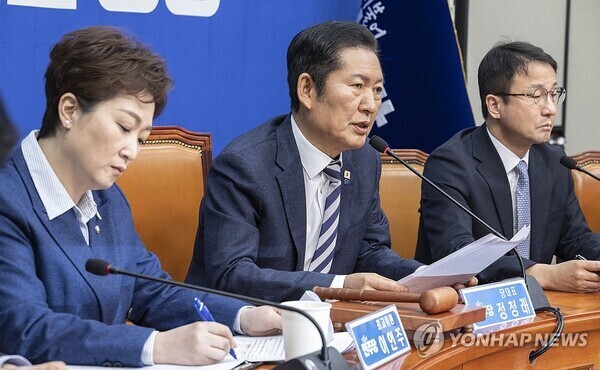
This work overlaps in striking ways with scenes confronting Korean politics today. The recurring conflicts within political parties, or the tensions among party, presidency, and government, raise a more fundamental question than simple power struggles: how is the relationship between authority and trust configured?
Political parties and political power are, of course, groups premised on a certain degree of power struggle. In democratic societies, conflict, competition, and differences in platform are not pathologies to be eliminated, but everyday realities to be institutionally managed. The problem lies not in power struggle itself, but in the relational ethic on which it is conducted.
As the film shows, under authority lacking trust, even small conflicts quickly escalate into hostility and catastrophe. In relationships premised on trust, by contrast, clashes and friction become opportunities to adjust and realign the relationship.
The loyalty formed in exile is not a state of perfect consensus. Misunderstandings arise, and emotional fractures occur. Yet that loyalty is grounded not in eliminating or subjugating the other, but in explaining again, persuading, sharing responsibility, and resolving conflict. Trust-based loyalty is distinguished from ‘institutional loyalty’ precisely because it does not collapse the moment conflict appears.
A ‘True Ally’ Grounded in Trust
In democratic societies, the relationship between a president and the ruling party, or within a political party itself, is not a vertical relationship of command and obedience. Yet when only institutional authority remains and the ethic of trust is absent, cooperation turns into tension, and organizations fall silent and begin calculating. This is no different from the fragility of ‘formal loyalty’ shown by the palace in the film.
The same applies to opposition parties. When leadership clings to techniques of discipline and control rather than the capacity to mediate differences, internal tensions are frozen into the binary of ‘loyalty’ versus ‘defection.’ Unity maintained without trust may appear strong on the surface, but it inevitably collapses like a sandcastle in the face of crisis.
Ultimately, the loyalty questioned by “The King and the Man Who Lived With Him” is not something imposed by leaders, but something earned within relationships. Without the arduous process of explaining, persuading, and sharing responsibility, factional politics and the language of stigmatization come to dominate. In a community where trust has disappeared, no authority or moral justification can be sustained.
The film goes beyond the tragedy of a king to ask about the essence of politics. Politics is not the technique of maintaining authority, but the capacity to sustain relationships. Are we repeating the old loyalty of the palace, or are we prepared to confront the ethic of trust that took root in exile?
Jung Tai-sik Kyungpook National University
Tai-Sik Jung received his PhD in social theory and sociology of religion and politics from the Graduate Faculty of Political and Social Science at the New School for Social Research in New York. He has served as a research professor and lecturing professor in sociology at Kyungpook National University, and is currently a visiting research fellow at the university’s Institute of Humanities Studies. His publications include Sacred Empire: America·Religion·Nationalism(2015) , and most recently Religion and Politics of the 21st Century Empires: Trump and ‘American White Christian Nationalism,’ Putin’s ‘Russian World,’ and Xi Jinping’s ‘Chinafication’(2025).




댓글