

How a “Hegemonic” China Seeks to Enfold Korea
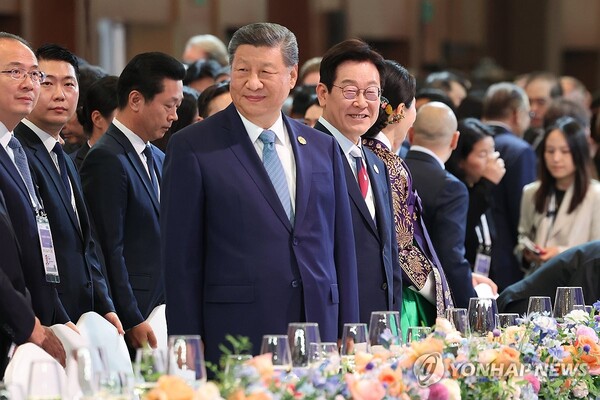
The Korea-China summit was superficially amicable, emphasizing the restoration of bilateral relations. In substance, however, the meeting was marked by chilling rhetoric regarding the international landscape. Chinese President Xi Jinping stated that “ice three feet thick is not frozen by a single day’s cold,” adding that Korea must “stand firmly on the right side of history and make the correct strategic choice.” Some in Korea interpreted these remarks as a move to pressure the nation to “depart from the U.S.-led order,” disguised as a gesture of friendship. They pointed out that while China employs amicable diplomatic rhetoric and expresses an intent to recover relations, it is essentially imposing a China-centric international order. Yet, such interpretations highlighting China’s “duplicitous attitude” are hardly surprising.
The word repeatedly invoked in debates surrounding China is “hypocrisy.” On one hand, China emphasizes “sovereign equality,” while on the other, it employs language that implies “hierarchy.” Consequently, from a Western perspective, China is easily perceived as an actor that “appears to respect the rules while attempting to change them.” However, this interpretation risks bypassing the critical question by simply reducing China’s language to a “contradiction.” The issue may stem not from China’s sincerity, but from the very conceptual grammar we use to interpret China.
President Xi Jinping has emphasized sovereignty, territorial integrity, and their extension—“non-interference in internal affairs”—which are core principles of the modern nation-state system. Simultaneously, he repeatedly mobilizes vocabulary with Confucian undertones, such as a “Community with a Shared Future for Mankind” and “Responsible Great Power.” The language of sovereign equality and vocabulary evocative of relational hierarchy coexist within the same discursive space.
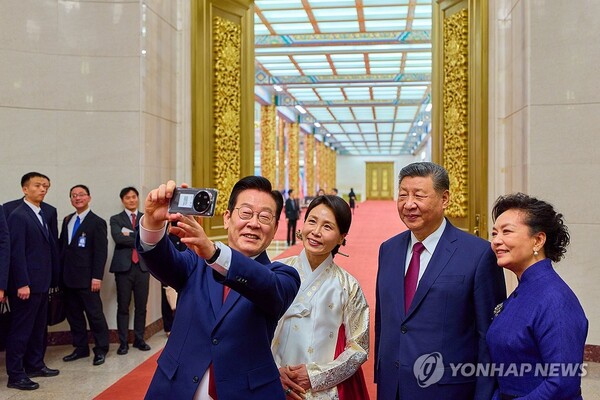
The reason the West reads this as hypocrisy is clear. It is interpreted as China attempting to restore the hierarchical order of the historical tributary system while masking that intent behind the normative language of sovereign equality. This suspicion does not rely solely on conjecture. In fact, expressions predicated on the distinction between “great powers” and “small nations” frequently appear in Chinese diplomatic discourse. For instance, the “New Model of Major-Power Relations” professes to pursue mutual respect and cooperation while avoiding conflict between great powers. Furthermore, the term “Responsible Great Power” implies that a great power equipped with immense military and economic capabilities must bear international responsibilities and roles commensurate with its strength. The linguistic structure itself explicitly distinguishes between great powers and small nations.
However, it is precisely at this point that a question arises. Is China truly sharing the same normative grammar and merely changing its rhetoric as needed? Or is China operating with two different layers of grammar simultaneously? Is it because of the West’s singular grammar that this is read as a “contradiction”? In this process, I connected this to an exploration of China’s unique perspective on international relations through the book A Relational Theory of World Politics (Cambridge University Press, 2018) by Chinese foreign policy scholar Qin Yaqing.
There is a common counterargument here: that Western international relations theory has also analyzed “relations” through various lenses such as institutionalism, constructivism, interdependence, networks, and norm diffusion. This is true.
The issue is not whether Western theory deals with relations, but where it situates them. Contemporary international relations theory generally begins from the starting point that “independent states (actors) exist first, and relations between states are formed thereafter.” Relations function as the external environment of the actor or as institutional mechanisms that coordinate choices.
In contrast, Chinese relational theory takes a more radical direction. It posits that it is not that the state comes first and the relationship second, but rather that the identity and role of the state are formed and reconstructed within the relationship. In other words, the relationship is not an appendage but the underlying structure that defines the actor. Unless this difference is acknowledged, China’s diplomatic language—speaking of sovereignty while also mentioning roles and hierarchy—will likely continue to appear only as a “contradiction.”
Therefore, the core argument I intend to make in this article is not a moral defense stating that “China is not hypocritical.” To be precise, it is that China employs a dual grammar that maintains the language of sovereignty while emphasizing relational hierarchy and roles, and this duality may not necessarily be regarded as a contradiction within China’s own perception of international relations.
First, sovereignty is a language of the international legal and institutional dimension. It signifies the minimum norms of statehood, such as independence, territorial integrity, and non-interference. On the other hand, terms like great power/small nation, responsibility, and role are the language that defines the principles of managing relationships—how states will position and coordinate each other—after sovereignty is presupposed.
Living in an international order created by Western nations, we tend to develop logic in a direction that excludes the language of hierarchy the moment we speak of sovereign equality. However, in the Chinese grammar, while sovereignty remains a norm of state qualification, a differentiation of roles and responsibilities can be presented above it as a “relational order.” Consequently, the possibility arises that China’s language—speaking of both sovereignty and hierarchy—is not immediately judged as a “self-contradiction” within China. (Of course, this does not mean it guarantees legitimacy. It merely explains why that language might feel valid to China.)
At this juncture, the logic becomes blurred if “Great Power ” is understood merely as a synonym for material power. A great power is not just a strong country, but a nation that possesses the language to explain the world, presents moral justification, and has the ability to define and coordinate relationships. In other words, a great power is a concept that includes not only military force or economic scale but also the ability to justify and give meaning to that power (the ability to design the rules of the relationship).
The sovereign system grants formal equality to states. However, as seen in the relationship between the United States and Korea, the capabilities and practical hierarchies of states in contemporary international politics are not identical. This is a political reality before it is a matter of morality.
China’s “Responsible Great Power” discourse packages this reality in the normative language of “responsibility,” performing the function of justifying its own role through the logic that a great power possesses the obligation and qualification to manage relationships. This problem becomes clearer through the “relational” perspective of Chinese academia.
The aforementioned Chinese scholar Qin Yaqing explains this simply through the metaphor of “Chess” and “Go (Baduk).” In Western chess, each piece is endowed with a unique role and hierarchy (King, Queen, Bishop, etc.) from the beginning. That is, in Western chess, equality among pieces is excluded, and only roles and hierarchies exist. Conversely, in Go, all stones are inherently equal, and their value and role are determined only within their arrangement and connection with other stones (equality and differentiation of roles coexist). If chess is a world centered on attributes (identity), Go is a world centered on relations (arrangement). The implication that international politics can be understood like a Go board in Chinese relational theory stems from here.
The implications of this perspective are significant. The moment a relationship is presupposed, conflict does not necessarily result in a scorched-earth total war. To put it simply, even if a parent and son hold irreconcilable political views, as long as they love each other, it will not pose a major problem to the functioning of the family community. Conflicts within a relationship often increase the possibility of being managed through the adjustment of partial interests. Furthermore, if it is difficult to assume an entirely independent self and interest outside of a relationship, then “pure self-interest” also becomes difficult to establish. Interests are connected to the interests of others and eventually take the form of “co-interest.” This is also why Qin Yaqing cites the Cold War’s Mutually Assured Destruction (MAD) as an example. As the Cold War and the Cuban Missile Crisis demonstrated, the moment both sides share a survival interest even in the most extreme adversarial relationship, the relationship cannot be explained by a simple zero-sum logic alone.
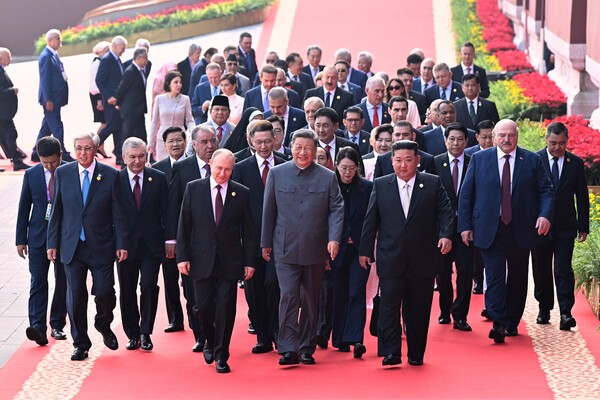
The concept of power also changes. Relational theory does not view power merely as “power over” others to make them submit. Rather, power appears as the ability to design the rules and meanings of a relationship, form the structure of choices, and define which actions constitute “responsibility” and which constitute “betrayal” (power to). At this point, the Chinese dual grammar gains explanatory power once again. This is because it becomes possible to leave sovereignty as the underlying norm of state qualification while attempting to redefine the operating principles of the relationship above it.
Qin Yaqing’s “Kinsperson’s Dilemma” is a representative device illustrating this. If the Prisoner’s Dilemma is a problem of calculating cooperation and betrayal, the “Kinsperson’s Dilemma” is a question of what principle to follow when one must choose between two equally important relationships. The classic question, “If your mother and your wife both fell into the water and you could only save one, whom would you save?” asks for the priority of relationships.
Qin Yaqing quotes the traditional Chinese question: “If your mother and your wife fell into the water at the same time and you could only save one, whom would you save?” Chinese dynasties defined and hierarchized relationships according to Confucian principles. In this context, someone would use these Confucian principles to conclude that they must naturally save the mother. This is because the mother-son relationship is a fate determined by heaven and bound by blood, whereas in the case of the wife, it is right for her own son to save her.
The Chinese scholar argues that this dilemma is a practical problem frequently faced by states in complex international relations, such as the case of Singapore being forced to choose between the U.S. and China. In this dilemma, suppose there is a person, A. A wants to cooperate with both sides, but cooperation with one side inevitably signifies betrayal of the other. In this situation, if there is someone who holds discursive hegemony to define the relationship, this kinsperson’s dilemma can be resolved much more easily.
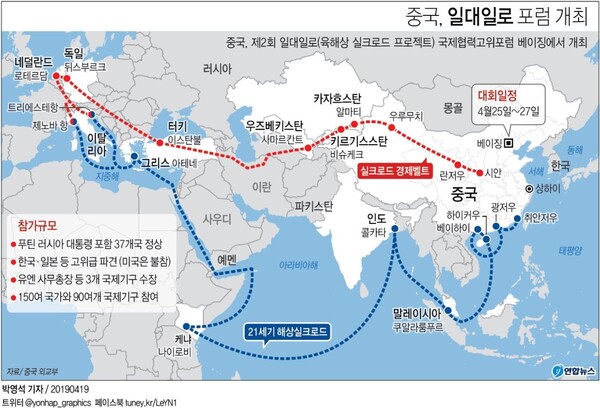
Thus, if the perception of the system differs, the form of expansion also changes. In the West, expansion is generally understood as the process of projecting power outward or conquering through territory, military force, and institutions. However, from the perspective of relational theory, China’s expansion does not necessarily manifest as territorial occupation. Rather than ruthless external expansion like the ancient Chinese Tianxia (All-under-Heaven) system, it can be an expansion through designing relationships, as in the tributary system, and making those relationships fixed in a form that is difficult to depart from. In other words, if Western expansion is an “outward movement,” Chinese expansion can sometimes be imagined as an “inward expansion” seeking to internalize the relationship by reducing externality.
The debate surrounding the “Belt and Road Initiative” (BRI) illustrates this well. In the West, this is often defined as a neo-imperialist expansion of spheres of influence. Of course, as long as massive capital and infrastructure are mobilized, considerations of power politics cannot be excluded. However, the core point captured by relational theory lies elsewhere. It is about connecting ports, railways, communication networks, and digital platforms to make it difficult for the counterpart to separate from the central node that is China, and making the cost of departing from the network excessively high even without a military presence. China’s ambitious pursuit of the BRI is closer to designing a game for leadership through the redesign of relationships rather than a game for spheres of influence or material competition as discussed in the West.
However, the power to design relationships does not always operate benignly. Relational power is both a power that enables cooperation and a power that forces choices. The pressure of “tightrope walking” experienced by middle powers demonstrates this. Therefore, one should not jump to the conclusion that a relation-based order is inherently a “virtuous order.” What is important is how the relationship is designed, to whom the costs of that design are transferred, and who is pushed to the periphery.
Ultimately, the question changes as follows: Before concluding whether China pursues hegemony or not, one must first ask what the order China speaks of means and in what way it changes the structure of international politics. That the language of speaking of hierarchy while speaking of sovereign equality becomes a contradiction is an interpretive result that occurs when one understands the two languages on the same plane. In the Chinese dual grammar, sovereignty remains the underlying norm, and roles and responsibilities can be presented as the principles of operating the relationship above it.
Thus, what is needed to evaluate China is not moral haste, but conceptual clarification. Whom does China’s expansion draw into the relationship, and whom does it push to the periphery? Does that network actually create common interests, or does it solidify a new structure of dependency? The debate surrounding China is, in the end, a task of reflecting upon ourselves. Do we still understand international politics only as a game centered on “territory and armies,” or are we prepared to place the new dimension of “designing relations and networks” at the center of our analysis? The China debate may perhaps be one axis of a larger debate over what form power will take in the 21st century.
Jung Dae-sung
By Jung Dae-sung The author, of Korean-American descent, graduated from the Department of Political Science at UC Berkeley and received his Master’s degree from the School of International Studies at Peking University as a top-ranked government scholar. After serving as a research student at the Institute for Advanced Studies on Asia at the University of Tokyo, he is currently a doctoral student in the Department of History (East Asian Diplomatic History) at the University of Chicago, aspiring to be a researcher spanning diplomatic history, international politics, and comparative politics.


댓글