

Korea: If Yoon Suk-yeol Returns
[Lessons from History by Woo-yong Chun] If the military restores Yoon Suk-yeol, they may initially share power with him but will soon eliminate both Yoon and Kim to pursue permanent authoritarian rule.
The Privileged Forces Opposing Yoon Suk-yeol’s Impeachment
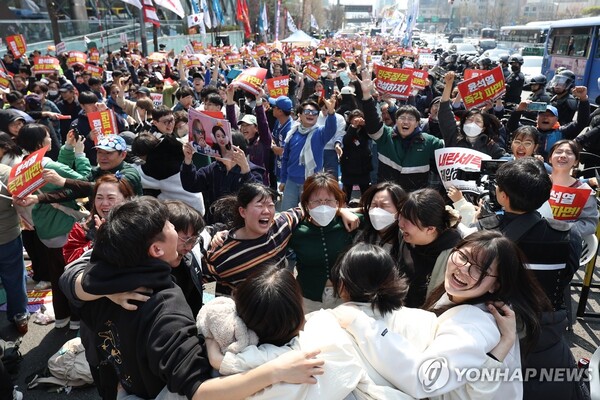
On the day Yoon Suk-yeol’s impeachment motion was passed, tens of thousands of people held a rally against the impeachment at Gwanghwamun Square. The following weekend, they staged another large-scale protest demanding the nullification of the impeachment and calling for a “second martial law.” Wreaths expressing wishes for the impeachment to be overturned were lined up in front of the Constitutional Court. According to Gallup, 21% of the public opposes the impeachment.
No member of the Cabinet has acknowledged Yoon Suk-yeol’s declaration of martial law or the military’s entry into the National Assembly as “rebellion” or taken responsibility for failing to prevent it.
The People Power Party, which calls itself the ruling party, not only opposed the impeachment but also resisted additional appointments to the Constitutional Court and the establishment of a “special investigation into rebellion.” Despite the entire nation witnessing armed soldiers storming the National Assembly on live TV, the Chief Justice of the Supreme Court, appointed by Yoon Suk-yeol, has remained silent on whether these actions constitute rebellion. His silence sends a public message that it “might not be rebellion.”
It is clear that the entrenched powers controlling the executive, legislative, and judicial branches, along with some of their supporters, are hoping for the Constitutional Court to overturn the impeachment.
A Real-World Reactionary Example from Egypt
In 2011, the people of Egypt ousted Hosni Mubarak, a dictator who had ruled for 29 years, through bloody protests. The transitional government established during the emergency drafted a new election law, leading to parliamentary and presidential elections. In June 2012, Mohamed Morsi became the first democratically elected president in Egypt’s history.
However, just before the election, Egypt’s Constitutional Court ruled the new election law unconstitutional and invalidated the parliamentary election. The court claimed that the proportional representation system infringed on the voting rights of citizens not affiliated with political parties.
The Constitutional Court’s hostility toward Morsi was so intense that it deemed the “party-list proportional representation system,” widely used in democratic countries worldwide, unconstitutional. This decision plunged Egypt back into chaos. Amid widespread protests for and against Morsi, the economic situation deteriorated, and his approval ratings plummeted.
In July 2013, Defense Minister Abdel Fattah el-Sisi staged a military coup, suspended the constitution, and appointed the Chief Justice of the Constitutional Court, Adly Mansour, as interim president. Morsi was ousted and arrested by the very defense minister he had appointed. In June 2014, el-Sisi dismissed the interim president, held a formal election, and assumed the presidency. He remains Egypt’s president to this day.
Who Benefits from Yoon Suk-yeol’s Return?
What would happen in South Korea if the Constitutional Court dismisses the impeachment and reinstates Yoon Suk-yeol as president? Would the political situation stabilize and the nation return to “normal,” as claimed by the People Power Party? Could those who opposed the impeachment continue to enjoy their privileged status safely?
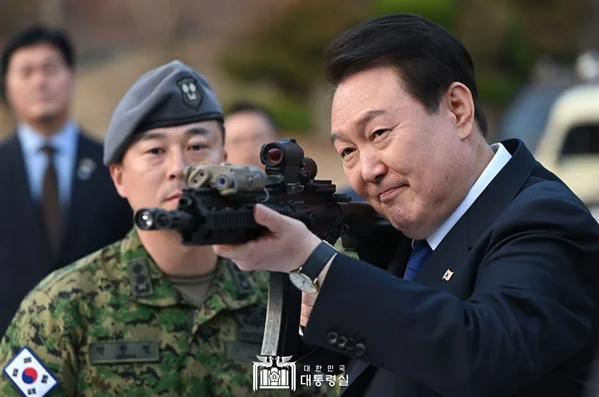
For Yoon Suk-yeol, the most urgent task upon his return would be to block investigations and indictments for treason. Since the evidence and testimony of his crimes are clear, the only way to stop this would be to suspend the constitutional order once again. There is no real choice between facing a death sentence or life imprisonment and sharing power with the military. As those rallying at Gwanghwamun for the “nullification of the impeachment” wish, he would declare martial law once more.
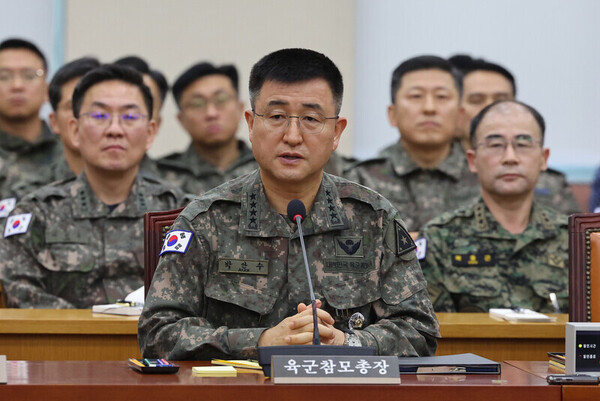
The actions of senior military officers involved in the rebellion reveal their deep-seated desire to rebuild the military as a political force, which had been dismantled following the purge of the Hanahoe faction. Having witnessed the privileges enjoyed by those who participated in the May 16 and December 12 coups, these generals would find it hard to resist the temptation of seizing power through a coup.
Yoon Suk-yeol has stated that the purpose of declaring martial law would be to “eradicate pro-North anti-state forces.” Who exactly are these “pro-North anti-state forces” he refers to? Would they include Democratic Party members, members of the Korean Confederation of Trade Unions (KCTU) and the Federation of Korean Trade Unions (FKTU), members of the Korean Peasants League, other democratic civil society organizations, participants in the Yoon Suk-yeol resignation campaign, and those who joined protests calling for his impeachment? How many among them would be free from accusations of being “pro-North anti-state forces”?
Even if the joint investigation headquarters established under martial law detained just 1% of the “suspects,” the number of arrests would exceed 100,000. Could the martial law forces return to their “original duties” after arresting, imprisoning, and torturing so many people? How would they deal with the resentment and grief of the victims, their families, and others affected? Guns and bayonets alone would not be enough to suppress such a tide of anger.
A Shift from Prosecutorial Dictatorship to Military Dictatorship
Why would anyone risk becoming a target of such resentment and continue to remain loyal to Yoon Suk-yeol? Syngman Rhee’s 1952 self-coup succeeded because the U.S. military controlled operational command during the war, and Chung-hee Park’s 1972 self-coup succeeded because he represented the military. No one undertakes actions punishable by death without expecting a reward. Power is something people do not share, even with their own children. Why would the military, having seized the opportunity to dominate the government, remain loyal to a prosecutorial regime?
After eliminating the “pro-North anti-state forces,” the next step for the martial law military would be to eradicate “corrupt forces” to win public favor. Both Chung-hee Park and Doo-hwan Chun branded opposition politicians and pro-democracy activists as “communist forces” and labeled political elites as “corrupt forces” to justify their crackdowns. Eliminating the “communist forces” does not enrich the military, but removing as many political elites as possible opens up positions for the military to occupy.
Economic Fallout and Military Justification
The economic situation, which would inevitably worsen under martial law, would deepen public disillusionment with Yoon Suk-yeol’s regime. The military would use this discontent to justify its actions. The signal for the reestablishment of a military dictatorship would likely be the arrest and punishment of Kim Keon-hee and Yoon Suk-yeol on corruption charges. Even if the previous martial law attempt had “succeeded,” events would likely have unfolded in this manner.
Even for the Establishment, It Would Be a Disaster
The return of Yoon Suk-yeol would inevitably spell disaster even for the current political establishment, including the People Power Party and the prosecution. Martial law is essentially a declaration of governance under military rule, and it leads directly to one-man lifelong rule and a military dictatorship. This is a fact proven by the history of martial law not only in our country but around the world.
In today’s society, the debate over impeachment is not an “ideological issue.” It is a question of how our society’s common sense should deal with the “extreme folly” of those who neither understand what they desire nor the consequences of their actions. We must firmly reduce the space for such folly to exist, ensuring that both our generation and the next can avoid a future where we live as prisoners under the threat of guns and bayonets.
About the Author:
Professor Woo-yong Chun is a historian who courageously speaks out on political issues to correct the historical consciousness of our time. He is the author of Our History Is Deep, History Within Me, and The Hero of Our Nation, Ahn Jung-geun.


댓글