

What North Korea Would Trump Face?
Taking a Fresh Look at a Changing North Korea Through Beyond the Parade
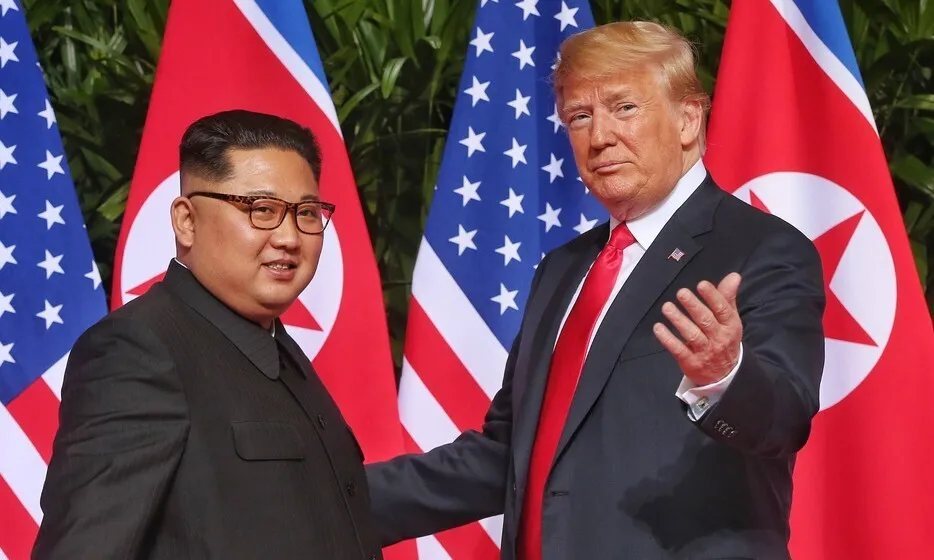
On the 18th and 19th, the Asia-Pacific Economic Cooperation summit will take place in Shenzhen, China. U.S. President Donald Trump has repeatedly signaled that he could meet North Korean leader Kim Jong Un again. It remains uncertain whether a meeting will take place. But even the prospect of another Trump–Kim meeting raises an important question.
If the two men sit down together again, what kind of North Korea will Trump encounter? The same country he faced in Singapore in 2018? Or one that has changed considerably over the past eight years, both internally and in its relationships with the outside world?
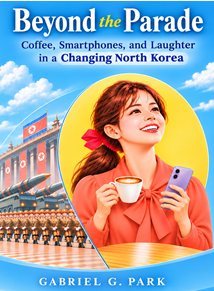
I recently published an English-language book, 『Beyond the Parade: Coffee, Smartphones, and Laughter in a Changing North Korea』, under the name Gabriel G. Park.
As the title suggests, what I most wanted to do in writing it was to look beyond the military parades. When we think of North Korea, nuclear weapons and missiles, military parades and Kim Jong Un are often the first things that come to mind. All are real features of the country. But they are not the whole of it.
When the parades are over, life goes on. People read novels, marry and divorce, and worry about their children’s futures. They buy snacks and choose cosmetics. They drink coffee in cafés and play games on smartphones. Businesses have begun paying attention to consumer choices, banking services are moving onto smartphones, and universities and research institutes are studying artificial intelligence. This is the other North Korea I wanted to explore.
What Can a Cup of Coffee Tell Us?
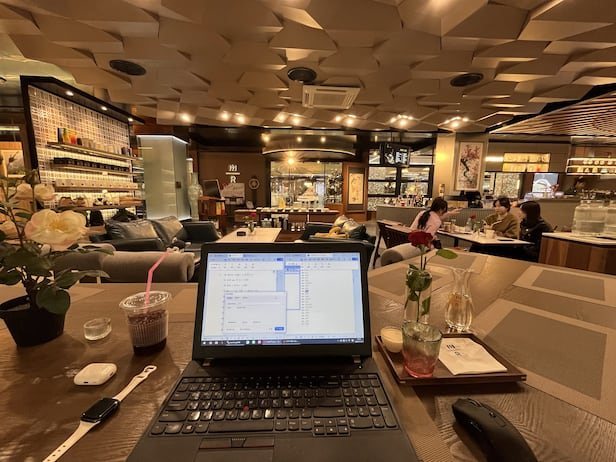
To explain how North Korea is changing, I started with a cup of coffee. In Pyongyang, there is a café called Mirae Reserve that brings Starbucks Reserve to mind. It is not an official Starbucks outlet, but both its name and its atmosphere feel familiar.
The story extends beyond a single café. South Korean instant coffee mixes supplied to North Korean workers at the Kaesong Industrial Complex became more widely known through marketplaces, or jangmadang. North Korean instant coffee products subsequently appeared as well. North Korea’s Sambok Coffee was even included in a small-scale blind tasting in South Korea. At one café in Pyongyang, a barista trained in China prepares cappuccinos and caramel macchiatos.
The important change is not simply that North Koreans are drinking coffee. People compare tastes, consider brands, and choose cafés for their atmosphere and service. Cafés, in turn, compete for those customers. A different kind of consumer is emerging: someone who chooses according to personal preferences rather than simply accepting what the state supplies.
A cup of coffee is a small but useful economic clue. Look at what people choose and how businesses respond to those choices, and you begin to see where North Korea’s economy is heading.
How Unfamiliar Is North Korea’s Digital Life?
Smartphones are even more intriguing.
North Koreans use them to find their way around and look up public transportation routes. They play games, study foreign languages, and edit photographs. An app called Bomhyanggi, or “Spring Fragrance,” even offers photo-editing tools that make skin look smoother and eyes look larger.
A South Korean broadcaster who visited Pyongyang recounted a conversation with a female North Korean guide. She worried that children were becoming so absorbed in smartphone games that they were wasting time they should have spent studying. The story has a strangely familiar ring. The story has a strangely familiar ring. When it comes to children’s gaming habits, the worries sound much like our own.
There is online shopping, too. Electronic marketplaces such as Manmulsang have emerged, while mobile financial services and QR-code payments are becoming more widespread.
Of course, North Korea’s digital environment is different from ours. Most services available to ordinary residents run on a domestic intranet cut off from the global internet. Digital services are expanding, but state control over information remains.
In the book, I ask: could the real surprise about North Korea’s smartphones be that the everyday life they reveal is far more familiar than we expect?
The changes in cafés and smartphones amount to more than intriguing developments in daily life. Behind them are structural shifts in the North Korean economy: a growing role for markets and consumers, alongside greater enterprise autonomy and competition.
Is North Korea’s Economy Really Changing?
In June this year, The Wall Street Journal published an article with a provocative headline: “The World’s Most Surprising Economic Success Story Is…North Korea.”
The report described a guide in Pyongyang using a smartphone app to call a taxi and restaurant customers scanning QR codes with their phones to pay. It also identified expanded cooperation with Russia, recovering trade with China, and growth in construction and manufacturing as factors behind North Korea’s economic recovery.
According to estimates by the Bank of Korea, North Korea’s economy grew by 3.1 percent in 2023, 3.7 percent in 2024, and 3.5 percent in 2025. Given international sanctions and the country’s limited external economic ties, these are developments worth taking seriously. But the more consequential changes lie not in the growth figures alone, but in how the economy operates.
The jangmadang began as informal markets where people traded to survive the economic crisis of the 1990s. They now play an important role in the production and distribution of goods. Under Kim Jong Un, enterprises and farms have gained considerable autonomy, along with stronger incentives tied to performance. In restaurants, shops and other service businesses, individuals invest their own capital and manage businesses operating under the names of state institutions or enterprises. In practice, these arrangements come close to private management.
Consumer choice has become increasingly important. Even snack producers now have to think about taste, quality, price, packaging and branding. Businesses pay attention to competing products and consumer preferences, developing new products and improving quality and design. Change that began in the marketplace is spreading into production and technology.
None of this means that North Korea is moving toward a fully fledged market economy along the lines of China or Vietnam. Recently, the authorities have tightened state control over markets and distribution. Yet markets have grown over decades and become so deeply embedded in livelihoods and the movement of goods that turning back the clock appears difficult.
A simple contrast between marketization and central planning does not fully explain how North Korea’s economy works. It is following a distinctive path, combining market dynamism and a degree of autonomy for businesses with continued state control.
Seen in this light, today’s North Korea is difficult to regard as exactly the same country it was at the Singapore summit in 2018. Its economy and society have changed, as has the international environment around it.
If Trump Meets Kim Again
Chapter 26 of the book is titled “If Trump Meets Kim Again.”
At the Singapore summit in 2018, the world’s attention was fixed on nuclear weapons and missiles, sanctions and denuclearization. The following year’s Hanoi summit ended without an agreement. Another meeting might therefore seem, at first glance, like an opportunity to resume the negotiations left unfinished then.
But over the past eight years, both North Korea and the world around it have changed.
U.S.–China competition has intensified considerably. Since the war in Ukraine began, Russia has become an important partner for North Korea. With Russia providing an additional channel of cooperation alongside China, Pyongyang has more diplomatic room to maneuver than it did in 2018. It may therefore feel less urgency about improving relations with the United States.
At the same time, another possibility deserves consideration. If North Korea could improve relations with the United States while maintaining ties with China and Russia, it could reduce its dependence on any single country and expand its diplomatic autonomy. For Washington, better relations with Pyongyang could also offer greater flexibility in its East Asian strategy, particularly in its dealings with China and Russia.
The important point is that any renewed summit should not proceed on the assumption that North Korea is still the country it was in 2018. Even if the same two leaders sit across the table from each other, the countries they represent—and the world around them—have changed.
What Needs to Come Before a Summit
Whether another U.S.–North Korea summit will take place remains uncertain. But even if it does not happen on this occasion, the question will remain.
Whenever the two leaders meet again, we will once more focus on their handshake and facial expressions, and on the wording of statements about denuclearization and sanctions.
Yet a summit is more than a meeting between two leaders. Behind them are two countries and two societies. If the United States hopes to build a different relationship with North Korea, it needs to understand more than nuclear weapons and missiles. It also needs to understand how North Koreans live today, what they consume, and where their society and economy are heading.
Nor can understanding be demanded of only one side. If North Korea continues to view the United States, South Korea, and the outside world through fixed images inherited from the past, there will inevitably be limits to how much those relationships can change.
This was a thought I kept returning to while writing Beyond the Parade: we sometimes misunderstand North Korea because we know too little about it. But at other times, we misunderstand it because we think we already know it so well.
North Korea is the country we know. It possesses nuclear weapons, exercises strong political control, and is involved in serious conflicts with the international community.
But it is also a country we have yet to understand fully. It is a society where people compare the taste of coffee in cafés and play games on smartphones, where businesses pay attention to consumer choices and researchers study artificial intelligence.
That is why I called the book Beyond the Parade. The parades are part of North Korea—but there is also a North Korea beyond them.
When the time comes for another U.S.–North Korea summit, the first task may involve more than deciding what to demand of the other side. It may also require taking another look at the country we thought we already knew.
Perhaps that is where a new relationship can begin.
Book Information
Beyond the Parade: Coffee, Smartphones, and Laughter in a Changing North Korea
By Gabriel G. Park
Available on Amazon
About the Author
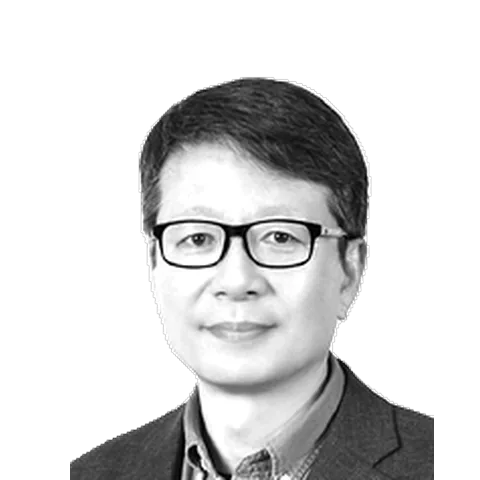
Geechan Park holds a Ph.D. in North Korean Studies. He earned his MBA in the United States and served as Chief Credit Officer (CCO) at Shinhan Bank America in New York. For more than a decade, he has studied North Korea’s economy, society, and culture. His new English-language book, Beyond the Parade, explores the country’s everyday life and ongoing changes. It was published through Amazon under his pen name, Gabriel G. Park.


댓글
댓글은 회원만 쓸 수 있습니다. 로그인 · 회원가입