
English
-
 Kim Jong-cheol · Professor
Korea: Is President Yoon entitled to absolute immunity against Insurrection Charges?
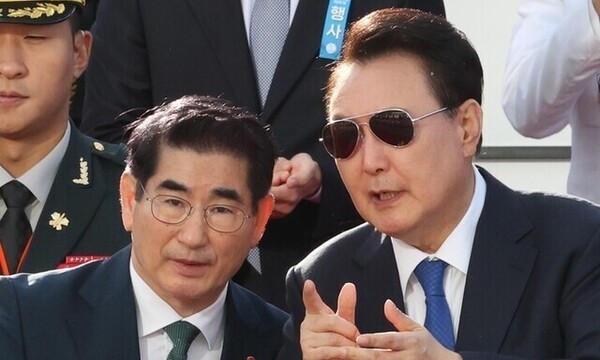
This text is a translation of a column( 내란혐의자가 면책대상이라니! ) originally published on December 13. President Yoon Suk-yeol has effectively admitted to leading a self-coup insurrection. His sudden December 12 statement appears to have been intended as a multi-purpose counteroffensive, but instead, it has only exposed his incompetence and recklessness. It also laid bare the fallacy of People Power Party leader Han Dong-hoon’s impractical and unprincipled proposal for an “orderly resignation.” If the People Power Party, after witnessing this statement, continues to elect pro-Yoon leadership and insists on opposing impeachment, it will bear undeniable legal and political responsibility as an accomplice to insurrection.
-
Hong Seok-kyung
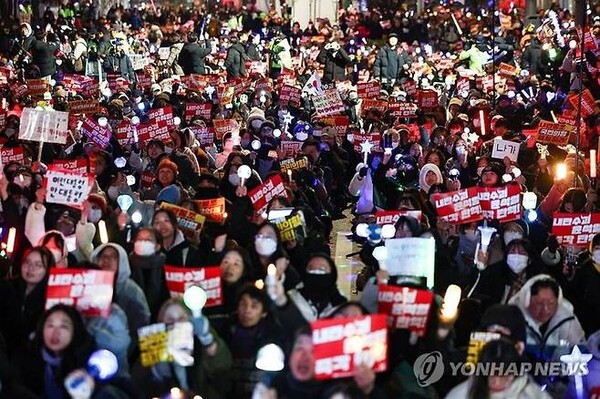
Korea: The Meaning Behind K-Pop Fandoms Wielding ‘Impeachment’ Light Sticks
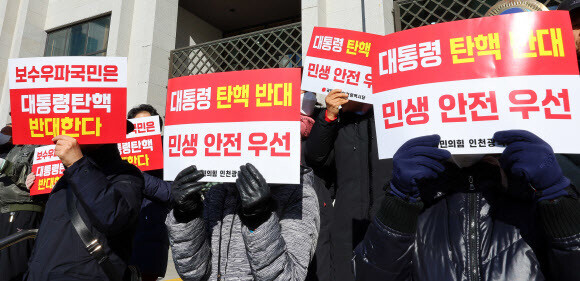
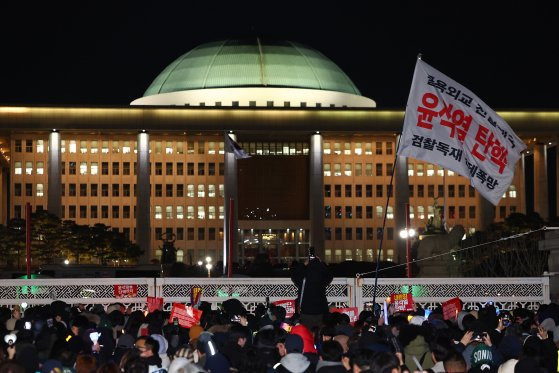
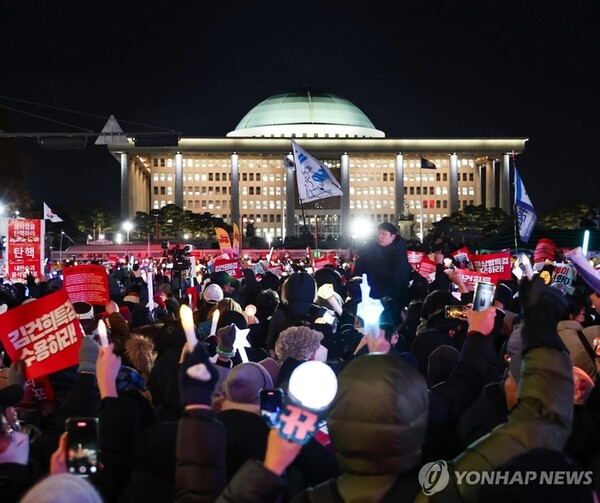
On Saturday, December 14, South Koreans mobilized a massive peaceful protest to pressure the National Assembly, successfully leading to the impeachment of the President. However, this marks just the beginning of a prolonged impeachment process. Finalizing the impeachment requires the Constitutional Court’s ruling, an early presidential election, and managing the year-end parliamentary schedule, all under the looming tensions with prosecutors and judiciary systems widely suspected of sympathizing with President Yoon Seok-yeol’s alleged insurrection.
-
Park Yong-soo
Korea: ‘Yoon Suk-yeol’s Madness in Context
Around 10:30 PM on December 3, most citizens were horrified, and fear persisted throughout the night. It seems that not only Koreans but also people worldwide were shocked. This was because the president of South Korea declared martial law on live television, followed by armed military forces storming the National Assembly, leading to a standoff between the military, police, and citizens surrounding the legislature.
-
thecolumnist
Korea:”We will eternally document the coup forces”
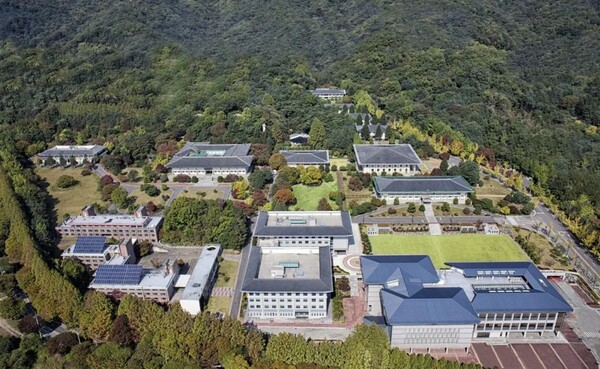
Under the Ministry of Education, the Academy of Korean Studies is led by President Kim Nak-nyeon, known as a New Right historian. Political science researchers at the academy have issued a declaration on the current state of affairs. On the 12th, six researchers, including Ko Yoo-hyun, expressed their determination in the declaration: “As political science students researching Korean studies, we will study these pro-coup forces, document them in history, and translate our findings to inform the world.”
-
 Woo Hee-jong · Emeritus professor at Seoul National
Korea: Democracy for Everyone, by Everyone, of Everyone
The declaration of martial law by President Yoon Suk-yeol, an act that no one in our society could have anticipated—let alone imagined—has vividly reminded everyone how easily and suddenly the peace and comfort of everyday life can be shattered. The shock was immense, as it marked the return of martial law after more than 40 years. In some ways, this shock might be the price of forgetting the old truth that the tranquility of everyday life is as fragile as glass abandoned on the street.
-
the columnist
Declaration by Korean Political Scientists: “Impeach Immediately”
Call for an Immediate Reintroduction and the Passage of the Impeachment Bill to Restore the Constitutional Order The emergency martial law declared by President Yoon Suk Yeol on December 3rd, 2024, is, without a doubt, an insurrection. The unconstitutional and anti-democratic emergency martial law renders irrelevant the differences in the political parties we support, our political values, or our beliefs. Yoon threatened the fundamental rights of citizens with the martial law declaration that did not meet the constitutional requirements, and attempted to dissolve the National Assembly, which even emergency martial law does not allow. Fortunately, Yoon Suk Yeol’s attempted insurrection was thwarted thanks to the collective efforts of vigilant citizens, some conscientious military service members and police officers, and some members of the National Assembly. However, Yoon Suk Yeol must be prosecuted for his actions—the nation yearns for accountability. There is no other way but impeachment. Those who prioritize protecting the president’s spouse over safeguarding the country and its people are now attempting to deceive the public with a claim of “orderly exit.” However, Yoon is a flagrant, active instigator of the insurrection, a crime which even the sitting president—who is typically immune from criminal prosecution—cannot escape. Having an unqualified person in the president’s office only brings misfortune to the country and its people, even if he retreats to the back room. In a presidential system, what constitutional authority allows the Prime Minister and ruling party to lead state affairs? Even if all the existing parties tried to form a new cabinet in unison, who would accept a letter of appointment with the name of an insurgency mastermind on it? The president’s retreat to a background role is merely a deception. Having someone other than the president conduct presidential duties is illegal and is a manipulation of state affairs. A shortened term or a promise of resignation in a few months are precarious solutions, given that the nation will continue to be in the hands of an unqualified individual. Not even a few days or weeks is acceptable. We have already seen that Yoon Suk Yeol is capable of doing anything for himself and his wife. What possible reason is there to believe that Yoon would keep his promises? Impeachment is not a “suspension of constitutional order,” as the ruling party argues, but rather its restoration. Presidential impeachment is a device to rectify the state when the president, tasked to defend the country, the constitution, and the prosperity of the people, instead betrays the trust of the people. It is the act of committing an insurrection yet remaining in the presidential office that truly amounts to a suspension of constitutional order and makes a mockery of the country and its people. The ruling party, the People Power Party, cites possible social instability as grounds for refusing the impeachment, but this is nothing more than a flimsy excuse to put the party’s and their personal interests over democracy and the protection of the constitution. Any lawmaker who denies the legitimacy of or obstructs the impeachment is nothing but an obstacle to the restoration of the constitution. In our classrooms, we will teach about the anti-democratic behavior of Yoon Suk Yeol and the ruling party lawmakers who boycotted and invalidated the impeachment vote. We will warn our students that tolerating such behavior equates to opening the door to dictatorship, and we will urge that politicians who engage in anti-democratic behavior be held accountable through elections. We will teach our students not to be deceived by false supporters of democracy again, because true democracy recognizes and defends the freedoms and rights of even those who disagree with them. Furthermore, we will educate aspiring politicians not to follow in the footsteps of these anti-democratic politicians, but to become politicians who defend the constitution and democracy. We demand the following: 1. All members of the National Assembly must promptly reintroduce the impeachment motion. 2. The People Power Party lawmakers must apologize to the public for invalidating the impeachment vote on December 7th. 3. The People Power Party lawmakers must participate in and vote in favor of the impeachment motion when it is reintroduced. 4. After passing the impeachment motion, all members of the National Assembly must work together with the public to deliberate on and implement measures to restore and strengthen democracy. December 8th, 2024 573 Political Scientists of South Korea **************************** List of International Signatories in Support (in alphabetical order) - as of 7:00 PM KST, December 9, 2024 Armando Chaguaceda (GAPAC) Ashish Vaidya (Colorado State University-Pueblo) Benjamin Goldfrank (Seton Hall University) Berk Esen (Sabanci University) Bonnie M. Meguid (University of Rochester) Boram Lee (London School of Economics) Casey Kearney (LSE) Chad Rector (Marymount University) Chan Ka Ming (Newcastle University) Chang-Ling Huang (National Taiwan University) Charmaine Willis (Skidmore College) Chelsea C. Chou (National Taiwan University ) Chelsea Chou (National Taiwan University ) Chiu-Wan Liu (National Taiwan University) Christopher M. Federico (University of Minnesota ) Chuan-hsien Chang (Institute of Political Science, Academia Sinica) Chueiling Shin (Department of Political Economy, National Sun, Yat-Sen University, Taiwan) Chung-min Tsai (National Chengchi University) Daniel Stockemer (University of Ottawa) Donghyun Kim (Chung-Ang University) Dongwook Kim (Korea University) Dr Gerard Toal (Virginia Tech. USA) Eduardo Henrique B. Vasconcelos (State University of Goiás (Brazil)) Edward Goldring (University of Melbourne) Eunsook Jung (Univ. of Wisconsin ) GILSUN JEONG (University of Sussex) Geoboo Song (송거부) (University of Arkansas) Gerardo Munck (University of Southern California) Gustavo Diaz (Northwestern University) Hans Schattle (Yonsei University) Hans Tung (National Taiwan University) Hata Masaki (Osaka university of economics) Hsin-Hsin Pan (Soochow University in Taiwan) Hyungmin Park (University of Warwick) Indrajit Roy (University of York) Inhwan Oh (William & Mary) JONGSEOK WOO (University of South Florida ) Jack Kennedy (Hertie School of Governance) Jack Zhang (University of Kansas) Jaewook Lee (Leiden University) Jaeyoung Lee (University of Illinois, Urbana Champaign) James Bisbee (Vanderbilt University) Jamie Doucette (University of Manchester) Jason Kuo (National Taiwan University) Jenny Jun (Georgia Institute of Technology) Jeongho Choi (University of Iowa) Jinhyeok Jang (National Sun Yat-sen University) Jiyoung Cho (New School for Social Research) Jiyoung Cho (New School for Social Research) Joan Cho (Wesleyan University) Jon Chu () Joshua Ferrer (University of California, Los Angeles ) Jungbae An (Ohio State University) Kevin Hockmuth (Akita International University) Kun (Byeonggeun) Heo (LSE) Lee Morgenbesser (Griffith University) Lindsay Nielson (Fors Marsh) Lisa Dellmuth (Stockholm University) Lorena Estupiñán-Pedraza (Universidad San Buenaventura Cali) Maija Mattila (Formerly University of Tampere) Michael Chwe (UCLA) Michael Elwell (University of North Texas Graduate Student) Mikko Poutanen (Tampere University, Finland) Mohd Faizal Musa (Senior Research Fellow, Institute of the Malay World and Civilization, National University of Malaysia (UKM)) Mutuku Kamau (Social Development Officer (Kenya) and KDI School Alumnus) Narrelle Gilchrist (Princeton University ) Nathan Kar Ming Chan (Loyola Marymount University) Niels Søndergaard (Institute for International Relations, University of Brasília) PETITJEAN Clément (Université Paris 1 Panthéon Sorbonne (Cridup, CESSP)) Piero Stanig (Bocconi University) Rakhyun E. Kim (Utrecht University) Randy Leahey (Sunnyvale) Raudiel Peña Barrios (Iberoamerican University, Mexico City) Rena Sung (Kyung Hee University) Robert Franzese (University of Michigan) Robert Kubinec (University of South Carolina) Ronan Tse-min Fu (Academia Sinica (Taiwan)) Saemyi Park (University of Wisconsin-Stevens Point) Sanho Chung (University of Arizona) Seobin Han (Ohio State University) Seoungwon Lee (Seoul National University) Shengqiao Lin (Harvard University) Stephan Haggard (UCSD) Sultan Mehmood (New Economic School) Sungjin Park (GNUE) TOGASHI Ayumi (Toyoeiwa University) Taehyun Nam (Salisbury University) Tariq Modood (University of Bristol) Udoi Rateng (University o Michigan, Ann Arbor) Vivianne Y.-C. Weng (National Chengchi University) Wonjeong Jo (University of California, Davis) Yeaji Kim (California State University Dominguez Hills) Yong Jae Kim (Hawaii Pacific University) Yuan He (University College London ) Yusaku Horiuchi (Dartmouth College) mauro calise (Univeristy of Naples Federico II Italy) 오가타 요시히로 (후쿠오카대학) 임정현 (노스캐롤라이나대학교) ****************************