

Korea: Democracy for Everyone, by Everyone, of Everyone
[Woo Hee-jong’s Good World Column] Now is the time to strengthen everyone’s role as active political agents. Look to citizens’ assemblies in countries like the UK and France.

Fragile Peace in Daily Life
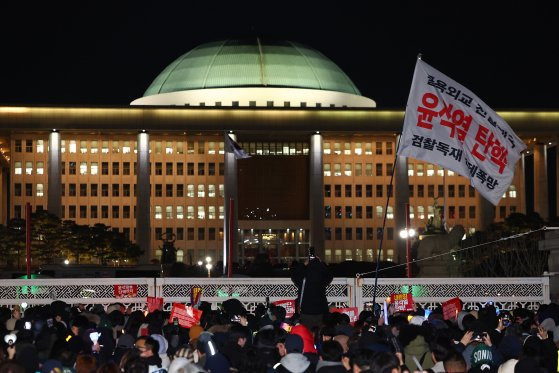
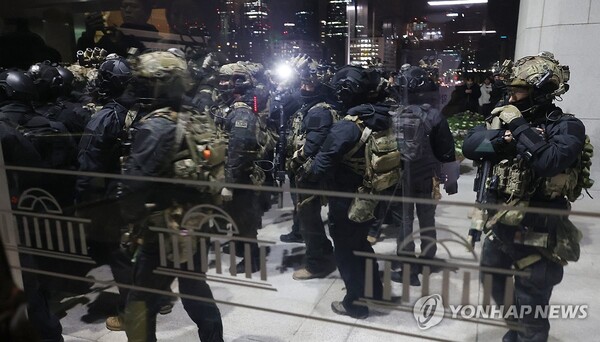
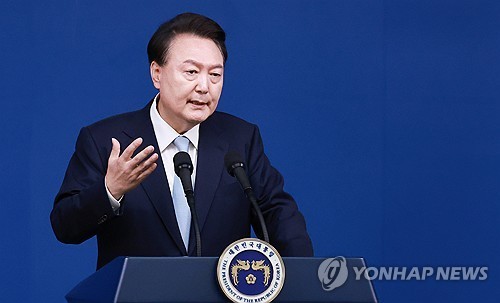
The declaration of martial law by President Yoon Suk-yeol, an act that no one in our society could have anticipated—let alone imagined—has vividly reminded everyone how easily and suddenly the peace and comfort of everyday life can be shattered. The shock was immense, as it marked the return of martial law after more than 40 years. In some ways, this shock might be the price of forgetting the old truth that the tranquility of everyday life is as fragile as glass abandoned on the street.
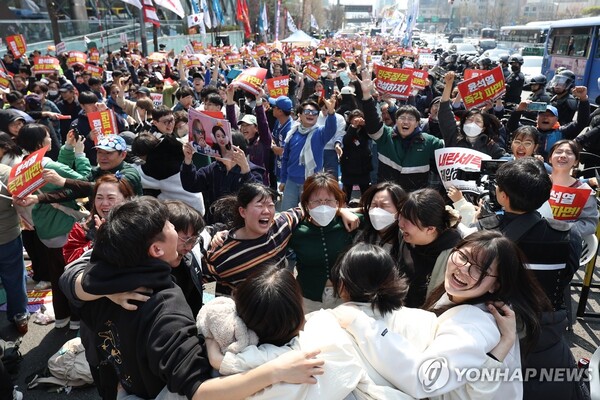
The presence of many young people holding cheering sticks rather than candles at rallies demanding the president’s impeachment reflects a newfound awareness of the vulnerability of peaceful daily life. They have come to realize that situations where soldiers could point rifles and bayonets at civilians—once thought to be mere stories of a distant past—can happen anywhere, at any time.
In a peaceful and stable society, the president’s incomprehensible act of declaring martial law amounts to treason that shakes the foundations of the nation. The Republic of Korea, which now appears to have regressed to the era of military dictatorship from 50 years ago, is an unfamiliar sight to the international community.
From a stable and peaceful democratic society, Korea has descended into an immature and unstable state where, under the guise of martial law, the president suppresses the functions of the National Assembly and the press through military control. Foreign dignitaries are canceling visits to Korea, and the era of a full-fledged “Korea discount” on the global stage has begun. The devaluation of the Korean won reflects the declining national prestige, which will continue to affect the domestic economy in numerous ways. The nation’s hard-earned achievements in economic growth and international recognition—fueled by K-pop, K-culture, and other global successes—have been brought to the ground in an instant.
Why Can’t Things Be Restored to Their Original State?
The public’s call for the impeachment of a president who unconstitutionally declared martial law in a peaceful society has been thwarted by the ruling party lawmakers’ actions, which fall far short of their responsibilities as elected representatives. Even though a democratically elected president who commits such a grave act of treason should be impeached as per the law, those currently shielding him, including exercising personnel authority on his behalf, have unlawfully declared that the prime minister and a specific party leader will govern the nation instead. This is a blatant insult to everyone, disregarding the law entirely and acting with reckless arrogance.
Ironically, it is the same judiciary that once dissolved the Unified Progressive Party under the pretext of inciting rebellion based solely on verbal discussions during protests. If mere words warranted dissolution, then those who have committed explicit acts of armed insurrection and the political party that shields them should likewise be disbanded. In 21st-century Korea, we are witnessing the shameless progression of “national disruption” by a president who has undermined the constitution and “state manipulation” by a specific ruling party. For these individuals, neither the nation nor society holds any significance; their sole focus is on the interests and power of a particular political faction.
In 2017, everyone succeeded in impeaching President Park Geun-hye through the Gwanghwamun Candlelight Revolution, which embodied their desire for social reform. With the Moon Jae-in administration of the Democratic Party gaining executive power, and a near-landslide victory in the 2020 general election that secured nearly 180 seats for the ruling party, they also gained legislative power. The candlelight demonstrators hoped this would lead to comprehensive reforms, including dismantling the entrenched pro-Japanese elite structure that had persisted since liberation. Instead of achieving reform, however, the current administration, led by a former prosecutor general known for his authoritarian tendencies, came into power. The failure to achieve reform despite holding both executive and legislative authority has led to the rise of the Yoon Suk-yeol government—a consequence of unfulfilled expectations.
President Yoon carried out an unconstitutional martial law declaration that no one could have imagined. Shocked by this, everyone rushed to Yeouido to defend the National Assembly from the martial law forces. Thanks to this collective effort, the Assembly was able to swiftly annul the authoritarian martial law declaration. However, the impeachment of the president failed due to the ruling party’s collective actions, which betrayed public expectations. Following the bloodless removal of a president in 2017, the failure to advance toward a progressive society through social reform has now led to the emergence of martial law and, subsequently, the failure to impeach an unconstitutional president.
The Longstanding “Pendulum Politics of Opportunism”
Looking back, the political culture and structure in Korea have been significantly shaped by the imperial judicial and prosecutorial system left by Japan during its colonial rule and the two-party political system introduced by the U.S. occupation forces after liberation. In a two-party system, political parties tend to focus less on developing good policies to improve the existing social order and more on attacking and criticizing the weaknesses or mistakes of the ruling party. Since no government can be flawless, highlighting the shortcomings of the opposing party is an easy way to attract voter support without putting much effort into their own accomplishments.
This tendency to gain power opportunistically by attacking the other party’s vulnerabilities, regardless of whether they excel themselves, is observed on both sides of the political aisle. As a result, state power oscillates like a pendulum between the two major parties, solidifying the culture of “pendulum politics of opportunism.” For these parties, rooted in outdated party laws, societal progress and reform are always secondary concerns.
In this political culture, the focus inevitably shifts from policy differences between parties to the personalities within them, laying the groundwork for what is often called fandom politics. Basic support for certain parties becomes entrenched as “political tribalism,” while the culture of pendulum politics, driven by relentless criticism of opponents, leaves only popular figures as the distinguishing factor in party support. Such a system amplifies animosity toward opposing parties and deepens societal divisions. The American-style two-party system transplanted after liberation has only strengthened a culture of politics based on “hatred and negation.”
The heightened political awareness displayed by everyone during the impeachment of President Park Geun-hye has not translated into societal progress but has instead highlighted the shortcomings of representative democracy. Rather than addressing social conflicts and divisions, the failure of party politics to meet these expectations has resulted in the regression of Korean society, marked by the globally shocking declaration of martial law in the 21st century.
Ultimately, the opportunistic pendulum politics of the two-party system reveal the limitations of representative democracy, where lawmakers prioritize personal and party interests over the public’s demand for social reform. Representative democracy has devolved into a culture of elite politics among elected officials.
A New Era: Transforming Political Culture
The unprecedented martial law crisis is not merely the fault of a particular party or politician. Fundamentally, it stems from our political culture, which is constrained by representative democracy and the two-party system, leaving little room for alternative political imagination. This is not unlike the storming of the U.S. Capitol by supporters of former President Trump after his election loss. In the negative environment fostered by two-party politics, the resulting political disillusionment among everyone is inevitable. This disillusionment creates a vicious cycle that reinforces the pendulum politics of opportunism, driven by conflict and division.
To overcome the flaws of the two-party political culture, we need to either change the two-party structure, remove opportunistic politicians who focus on personal gain from the National Assembly, or devise complementary measures to reflect the changing times. Attempts at a multi-party system have been made in the past, including efforts by the Democratic Labor Party and now the Innovation Party of Korea (symbolized by the Jo Kuk Innovation Party). However, introducing new alternatives in the deeply entrenched two-party structure remains a formidable challenge.
Though modest, the implementation of a recall system to gradually remove self-serving opportunists from the political scene is one way to address the problem. However, this too has limitations when it comes to transforming the current political culture and structure. After the 2020 general election, politicians promised to amend election laws to prevent satellite parties, but no one took action to revise the election law or reconsider the single-member district system. The upcoming 2024 general election will proceed under the existing laws, as no politician, regardless of party, was willing to alter laws that might disrupt their privileges.
This is the reality of politics in Yeoui-do, but the times have changed. The era when the values and systems of democracy were solely represented by representative democracy is fading. With advances in personal communication technologies like smartphones, everyone can now express their opinions in real time. There is less justification for sticking to a system where elected lawmakers focus more on personal and party interests than representing the public.
In addition to the current parliamentary system, we can introduce complementary mechanisms that allow everyone to directly influence policies and systems. A hybrid of representative democracy and semi-direct democracy is achievable, especially after the COVID-19 pandemic, which established a culture of remote communication. Technology and systems enabling real-time participation via smartphones are now firmly in place, allowing everyone to voice their opinions and see them reflected in governance.
Realizing Everyone’s Political Empowerment
It is time to establish institutional changes that reflect the evolved Korean society of the 21st century and the heightened political awareness of everyone. No longer should the public be swayed by opportunistic pendulum politics. Instead of a culture where individuals plead and petition elected politicians, we need a system that enables everyone to take the lead as active participants in shaping policies and social structures. This means solidifying and legalizing mechanisms for political empowerment—where everyone becomes the driver of democracy.
This concept of “political empowerment” would strengthen grassroots and deliberative democracy, transforming these into more concrete and stable frameworks. Furthermore, it would bridge the gap between civic movements and actionable policies, enabling real-world implementation. This reflects the global rise of “citizen assemblies” since the 2010s.
Achieving the political empowerment of everyone requires overcoming the public’s disillusionment with politics, a sentiment fueled by elite-driven manipulation. However, this is not about everyone becoming politicians; rather, it is about ensuring their voices and perspectives are effectively reflected in the political sphere. Lessons from the remote engagement necessitated by the COVID-19 pandemic have already prepared and demonstrated how this can work.
Such participatory politics is evident in the “citizen assemblies” of countries like Ireland, the UK, the Netherlands, Iceland, Belgium, France, Finland, and Canada. These assemblies integrate each nation’s unique traditions and cultures into political processes. How much longer must we endure the failures of elite-driven representative democracy and the opportunistic pendulum of two-party politics?
The times are changing. Only by stepping forward as political agents can everyone break the cycle of absurd martial law declarations in the 21st century. Such abuses of power are a stained blossom of domestic representative democracy and the rotten fruit of two-party politics. The future demands that everyone takes a leading role in shaping a more just and responsive political system.
Woo Hee-jong Emeritus professor at Seoul National
Woo Hee-jong is the head of Reset Korea Action, a think tank, and a former professor at Seoul National University. He has actively participated in various reform movements and serves as a voice for progressive change in Korean society.


댓글