

Korea: ‘Yoon Suk-yeol’s Madness in Context
What Enabled the December 3 Insurrection? Yoon’s actions were not a momentary deviation
Around 10:30 PM on December 3, most citizens were horrified, and fear persisted throughout the night. It seems that not only Koreans but also people worldwide were shocked. This was because the president of South Korea declared martial law on live television, followed by armed military forces storming the National Assembly, leading to a standoff between the military, police, and citizens surrounding the legislature.
Many are repeatedly asking why Yoon Suk-yeol did this, a question that implicitly suggests that the declaration of martial law was an incomprehensible deviation on Yoon’s part. While this situation cannot be explained without addressing Yoon’s extreme and reckless tendencies, it is equally crucial to focus on the conditions that allowed such an act to happen. Even if it was driven by “impulsive madness,” the fact that it was executed and not prevented highlights the conditions that enabled and failed to check this act, serving as both the cause and backdrop of the incident. While media coverage has largely emphasized the event’s exceptional nature as a one-off aberration, it is essential to examine it from the perspective of contextual continuity.
The Beginning of “Anti-State Forces” Rhetoric
From his candidacy days, Yoon Suk-yeol repeatedly made hateful remarks against the Moon Jae-in administration and the Democratic Party during public appearances. After assuming the presidency, he labeled any political parties, media, civil organizations, or individuals critical of his government as “anti-state forces.” If the declaration of martial law and military mobilization constitute rebellion, then Yoon has effectively been repeatedly inciting rebellion through his rhetoric.
Yoon has consistently used prosecutorial governance to carry out his intentions, and as December 3 approached, it appears that political circumstances were escalating beyond what could be managed through prosecutorial control. In the lead-up to the event, Myung Tae-kyun, who was under investigation by prosecutors, demanded a special investigation by the National Assembly. Meanwhile, new media outlets such as News Tomato and Sound of Seoul were preparing to release additional evidence. The “imminent crisis” described in the martial law declaration reflected not the state of the Republic of Korea but rather Yoon’s personal situation.
Thus, the December 3 martial law was effectively a loyalist coup. It was both an extension of Yoon’s prosecutorial governance and the fulfillment of his repeated threats.
Exploiting “Security Strategy” for Political Ends
The seriousness of the December 3 martial law declaration has become increasingly evident through media coverage following its failure due to the swift response by the National Assembly and citizens. Former Defense Minister Kim Yong-hyun reportedly attended a Joint Chiefs of Staff tactical meeting on countering North Korea’s use of balloons, where he strongly advocated for military actions, including preemptive strikes. Claims also emerged within the military alleging that Kim had instructed reconnaissance drone deployments over Pyongyang, although the Ministry of Unification and military declined to confirm or deny this.
Additionally, in November, Kim had dispatched an observation delegation to Ukraine, raising the possibility of phased support for lethal weapons, which escalated tensions with Russia and North Korea. Prior to this, Yoon had actively dismantled systems meant to prevent accidental military clashes between the two Koreas, dismissing them as part of a “false peace narrative.” These actions reveal that the conditions for martial law under the guise of foreign threats were already embedded within Yoon’s “value diplomacy” and “security strategy.”
Although conditions for martial law, such as war or rebellion, were not met, Yoon seemed intent not only on declaring martial law but also on directly commanding military operations. Reports suggest that Yoon instructed the National Intelligence Service’s deputy director to arrest certain politicians and dismissed him when he failed to comply. Moreover, military hospitals were reported to have trained for wartime triage the day before the martial law declaration, anticipating a surge in casualties irrespective of localized conflicts.
Attempting to Recreate the Gwangju Crackdown
This martial law plan appears to have been an attempt to replicate the suppression of the May 18 Gwangju Uprising, involving the arrest of key politicians, resistance from citizens, and military suppression. This intent is consistent with Yoon’s speech on June 28, 2023, at the Korean Freedom Federation, where he stated, “There are so many forces denying the identity of the state… they have built organizations and networks everywhere to destroy free Korea.” These sentiments were echoed again in his December 12 public address.
The deployment sites of martial law forces and the list of arrest targets reveal the intent of the plan. Targeted locations included the National Assembly, the National Election Commission, and the News Factory building, while those identified for arrest included the Speaker of the National Assembly, leaders of both ruling and opposition parties, and media figures. Notably, the inclusion of the National Election Commission and News Factory suggests an effort to frame the April 13 general election as fraudulent, thereby justifying the dissolution of the National Assembly.
A Coup Prevented by Citizens, Ignored by the Ruling Party
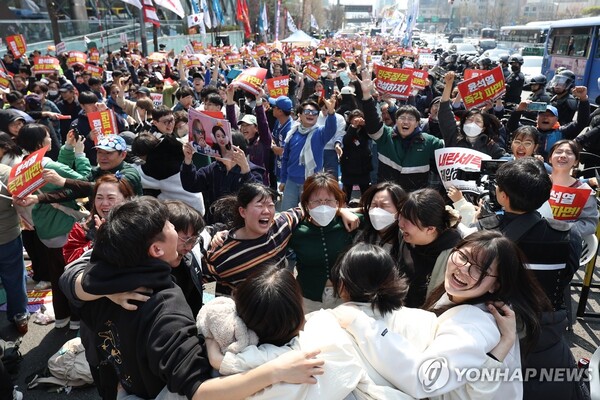
One week has passed since the December 3 coup attempt was thwarted by the courage of citizens and the swift actions of the National Assembly. Despite the evident act of rebellion witnessed by many, Yoon Suk-yeol refuses to step down from the presidency. This is primarily because the ruling People Power Party has refrained from participating in impeachment proceedings. By perpetuating a constitutional deadlock, the ruling party has allowed a figure accused of rebellion to remain in office.
The procedural irregularities of Yoon’s martial law declaration, which lacked both legal and constitutional basis, have become evident. Martial law can only be declared under extreme conditions such as war or rebellion, and even then, the president is obligated to immediately report the declaration to the National Assembly. Yoon’s actions failed to meet these requirements, rendering his martial law declaration illegal.
Unchecked Illegality, Enabled by Complicity
The problem lies in the fact that Yoon has repeatedly exercised presidential authority illegally. He has exploited powers such as vetoes and pardons to protect family members implicated in corruption scandals and for political gain. From the beginning of his administration, prosecutorial governance has been implemented by disregarding relevant laws, as evidenced by the indefinite raids and indictments targeting opposition leaders.
Such procedural violations would not have been possible without the cooperation or acquiescence of officials responsible for enforcing them. With public pressure mounting, the impeachment motion against Yoon—initially unsuccessful—now appears increasingly likely to pass. Growing numbers of People Power Party lawmakers have signaled their support for impeachment, reflecting the influence of public opinion.
Democracy as a Deliberative Process
This extreme situation underscores a broader issue: while South Korea’s democratic institutions include mechanisms to prevent illegality, the actors operating within these institutions have failed to uphold them. Democracy is not a simple automated system that functions on its own; it requires the intent and effort of those who operate it. Representative democracy, in particular, depends on the principle of accountability. Failures arise when those entrusted with governance neglect to fulfill their responsibilities.
--------------
Author:
Park Yong-soo is a senior researcher at Yonsei University’s Institute of State Governance. He holds a doctorate in political science from Korea University and specializes in Korean presidential systems. He has published papers on topics such as chronic legislative gridlock in post-democratization Korea, critiques of Korea’s imperial presidency, and the leadership of past administrations in addressing nuclear crises.


댓글