

To Chung Yong-jin, Who Flouts the Solemnity of the Commercial Act
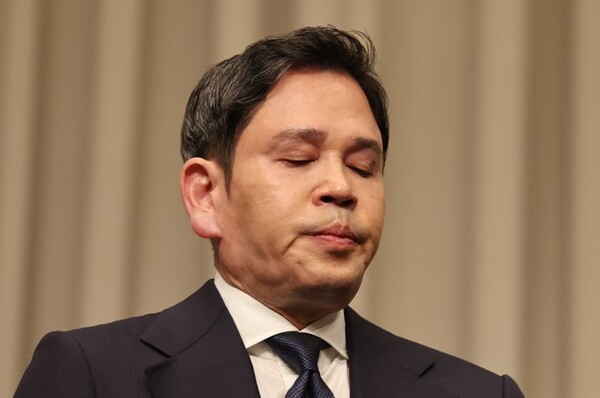
- [Summary]
- The Tyranny of an Unauthorized Chairman Although Chairman Chung Yong-jin is not a registered board member of either Starbucks Korea or E-Mart, he summarily dismissed a CEO, acting as if he is above the law. This is a textbook evasion of responsibility by an “unregistered owner,” creating a mere “illusion of corporate governance.”
- Shareholder Sacrifice vs. Royal Family Compensation While E-Mart inflicted severe pain on its shareholders with a dismal 1% net profit margin and a Price-to-Book Ratio (PBR) of 0.2x, three unregistered members of the ruling family bypassed shareholder approval to pocket a combined 9.5 billion KRW in compensation, solely through the rubber-stamp approval of the board’s compensation committee.
- The Strict Judgment of the Revised Commercial Act Since the revised Commercial Act, which explicitly mandates a “fiduciary duty of directors to shareholders,” took effect last year, registered directors who blindly rubber-stamped the chairman’s orders, alongside Chairman Chung who directed the business without legal authority, cannot escape legal liabilities, including breach of trust and shareholder derivative suits.
The ‘Illusion’ of an Unregistered Owner Dismissing a CEO
Following the fallout from the “Tank Day” crisis at Starbucks Korea, Shinsegae Group Chairman Chung Yong-jin abruptly dismissed CEO Son Jung-hyun. He then stepped into the public spotlight to issue a personal apology, declaring, “All responsibility lies with me.” Here, we are prone to falling into an illusion—mistaking his declaration of total responsibility for a possession of total authority. However, this is a clear illusion of corporate governance.
As a private individual, Chung Yong-jin might be able to act this way among friends or acquaintances, as if managing a social golf club. But a corporation is governed by law—a formidable one known as the Commercial Act.
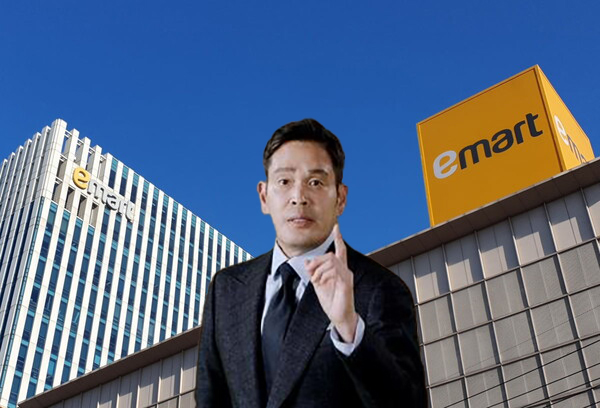
A closer look at Shinsegae Group’s corporate governance reveals the archaic realities of its nepotistic management. Chairman Chung officially holds only two things: an 18.56% stake in E-Mart and the title of “Shinsegae Group Chairman.” Among these, the title of “Chairman” carries no statutory weight under the Commercial Act; it is merely an customary honorific used internally among executives and staff. The only legal anchor backing Chairman Chung’s authority as a manager is his 18.56% equity in E-Mart.
Pocketing 9.5 Billion KRW as an ‘Unregistered Executive’
Conversely, what Chairman Chung lacks is surprisingly vast. First and foremost, he does not own a single share in Starbucks Korea (legally registered as SCK Company). His stake is zero.
Furthermore, he is not even an inside (registered) director on the board of Starbucks Korea, nor its parent company, E-Mart. Simply put, he does not have a seat at the boardroom table. He is neither a member of the board nor possesses any statutory authority to interfere with board decisions under the Commercial Act. He is the epitome of an unregistered owner who wields de facto control over major corporate decisions due to his status as the largest shareholder, while circumventing all legal liabilities.
To him, such conduct may seem entirely natural. His parents, Lee Myung-hee and Chung Jae-eun, have ruled Shinsegae Group in the exact same fashion. Despite having gifted their shares to their children, Lee Myung-hee, who remains active as the “Total Chairperson,” and Chung Jae-eun, who holds the title of “Honorary Chairman,” both serve as full-time, unregistered executives of E-Mart and Shinsegae. It is a bizarre structure where they show up to work every month and exercise supreme authority, yet evade the blade of legal accountability by refusing to register as directors.
This is a form of deception. The deception becomes baffling when juxtaposed against E-Mart’s report card from last year, exposed by the Korea Corporate Governance Forum. Last year, E-Mart recorded a meager net profit margin of 1% and a Return on Equity (ROE) of just 1%. The company’s valuation collapsed to a PBR of 0.2x—a fifth of its book-value liquidation worth—leaving shareholders weeping in financial agony.
While the corporation was pushed to the brink, barely avoiding a deficit, E-Mart’s compensation committee shamelessly raised Chairman Chung Yong-jin’s pay by a staggering 58% compared to the previous year. As a result, Chairman Chung received 5.85 billion KRW, while Chairperson Lee Myung-hee and Chairman Chung Jae-eun each took home 1.84 billion KRW. Combined, the three members of the ruling family raked in 9.5 billion KRW from E-Mart and its affiliates. Because they operated under the cloak of “unregistered executives,” this exorbitant compensation completely bypassed the stringent approval process of the general shareholder meeting, authorized instead by a rubber-stamp vote of the board’s internal compensation committee.
What If CEO Son Jung-hyun Demands Compensation?
Up to this point, general shareholders might not have perceived this as a direct hit to their pockets. However, analyzing the specific legal mechanics reveals a much more alarming reality. Article 385 of our Commercial Act strictly protects the tenure of directors. If a company dismisses a director before the expiration of their term without justifiable grounds, it must not only pass a special resolution at a shareholder meeting but also compensate that director for the full amount of salary and bonuses they would have received during the remainder of their term.
If CEO Son Jung-hyun’s term was still active and Chairman Chung forced his dismissal arbitrarily, Starbucks Korea must legally reimburse Son for damages potentially amounting to hundreds of millions or billions of won. Instead of the owner paying for his own impulsive actions, the corporate entity of Starbucks Korea is forced to foot the massive bill for damages. This inherently inflicts financial harm on E-Mart, the majority shareholder. Market observers suspect that to evade this legal risk, the company likely extracted a “voluntary resignation” from Son by promising a hefty severance package and an advisory role. If this was decided by the owner without a proper board resolution, it constitutes a flagrant, unlawful interference in corporate execution.
Breach of Fiduciary Duty by Starbucks Korea’s Directors
Ultimately, the root of the problem lies with the directors of Starbucks Korea, who acted as mere parrots transcribing the chairman’s orders. These board members could have easily anticipated that the owner’s abrupt dismissal order would incur unjustifiable damage payouts or financial outlays for the company. By abandoning independent judgment and executing the order simply because it came from the “owner,” they have clearly breached their duty of care as prudent managers (Bonus Paterfamilias), making them liable for the damages inflicted upon the company.
Recently, the capital market witnessed a meaningful boardroom rebellion that stands in stark contrast to this servility. Early last February, when Choi Shin-won—the cousin of SK Group Chairman Chey Tae-won, who had previously served prison time for embezzlement and breach of trust—attempted to return as Honorary Chairman of SK Networks, the board erupted with dissenting votes and abstentions. Independent Director Lee Moon-young (a professor at Duksung Women’s University) voted against the owner’s return, stating that “additional review regarding the compensation structure is required.” Another Independent Director, Jang Geun-bae (a professor at Handong Global University), abstained, noting that “judgment must be reserved regarding the scope of the role and its potential impact.” This was an independent brake applied by a board that recognized the owner’s return conflicted with the spirit of the Commercial Act. In the end, Choi Shin-won succumbed to the pressure, agreeing to fulfill the honorary role without receiving any compensation.
The board members of Starbucks Korea should have taken a similar stand. Excluding the dismissed CEO Son Jung-hyun, the inside directors of this board consist of Shin Dong-woo (Senior Vice President of Shinsegae’s Corporate Strategy Office) and Jang Jae-hoon (Executive Vice President of E-Mart’s Value Management Office), both staunch loyalists to the owner. However, sitting behind them are Ong Chung-siang and Lim Ji-yong (Head of GIC Korea), who represent the second-largest shareholder, the Government of Singapore Investment Corporation (GIC), as non-standing directors. If these two foreign investor-backed directors had pushed back, arguing that an unjustified dismissal would trigger breach-of-contract lawsuits and corporate fund leakages, thereby invoking personal liability for breach of trust under the Commercial Act, the situation would have taken an entirely different turn.
The De Facto Director’s ‘Joint Liability’
Article 401-2 of the current Commercial Act (Liability of Person who Directs Execution of Business) exists precisely to restrain oligarchic owners who, like Chairman Chung Yong-jin, dictate corporate management from the shadows without holding registered board seats. The law explicitly warns that anyone who uses their influence over a company to instruct a director to execute business shall be held jointly liable for damages inflicted upon the company or its shareholders, carrying the exact same legal accountability as a registered director. This incident represents a textbook case of explicit management intervention by Chairman Chung. If this intervention devalues the brand and inflicts financial losses upon shareholders, he should rightfully stand as a defendant in a multi-billion-won derivative lawsuit under this statutory provision.
Crucially, there is an unyielding legal reality that we must face. Since July of last year, the capital market has been operating under a revised Commercial Act. Article 382-3 (Fiduciary Duty of Directors) now explicitly states that “A director shall perform their duties faithfully for the benefit of the company and its shareholders.” For the first time, “shareholders” have been explicitly included as beneficiaries of a director’s fiduciary duty. Furthermore, a newly established Paragraph 2 provides a dual safeguard, mandating that directors “shall protect the interests of all shareholders and treat the interests of total shareholders equitably.” The scope and target of fiduciary duties have been comprehensively expanded to protect the shareholder base at large.
Despite this, the ruling family of Shinsegae Group remains trapped in the obsolete mindset of the old Commercial Act, which presumed that directors only needed to serve the corporate entity while completely disregarding the interests of general shareholders. They have paralyzed the board, wielding absolute power without an ounce of fear regarding legal penalties. However, now that the law has changed, if a board blindly ratifies an owner’s dictates without independent evaluation and consequently harms the company and its shareholders, the registered directors face criminal charges for breach of trust and civil liability through shareholder derivative suits.
Moreover, under the revised Commercial Act framework, every single statement and resolution passed during a board meeting must be meticulously recorded in the minutes and disclosed to shareholders. If the Starbucks board minutes explicitly state that the dismissal was executed “upon Chairman Chung’s orders,” Chairman Chung becomes legally ensnared under de facto director liability. Conversely, if the minutes falsify the event as a “voluntary resignation,” the directors face personal administrative fines under Article 635 of the Commercial Act, alongside criminal prosecution for misstatement and fraudulent disclosure. It is an inescapable catch-22. Chairman Chung Yong-jin put on a theatrical display of responsible management before the public, but under the lens of the Commercial Act, his essence is laid bare: an unregistered patriarch wielding authority without accountability, while externalizing the financial costs to general shareholders.
The Blind Spot in the Oligarch’s Mind: The Weight of the Law
There is a deeper truth we must confront. Chairman Chung did not orchestrate this deceptive drama out of a calculated, malicious intent to circumvent specific clauses of the Commercial Act. Rather, like almost all chaebol chairmen, the very concepts of “statutory duties mandated by the Commercial Act” or “the rights of general shareholders” simply do not exist within his worldview.
In a modern capitalist society where ownership and management are strictly separated, helming a public corporation is a sacred fiduciary obligation to honor the trust delegated by shareholders. He has simply never been taught this reality since birth. To an oligarchy intoxicated by absolute power and accustomed to reigning above the law, the Commercial Act has long been dismissed as nothing more than an annoying bureaucratic formality.
Yet, the Commercial Act cannot function as a private secretariat safeguarding the prosperity of a single dynastic family. It is a fundamental social contract designed to protect the wealth of countless general shareholders who risked their capital, and to ensure that anyone who wields corporate authority is met with commensurate legal accountability.
This is precisely why we must maintain an unwavering vigil over the “fiduciary duty to shareholders” clause enacted last July. This statutory provision, now deeply embedded and actively operating within our legal code, must transform the Commercial Act—once entirely ignored by oligarchs—into a concrete, enforceable power that serves as an institutional bulwark against arbitrary corporate tyranny. To ensure the successful integration of the revised Commercial Act, financial regulators and tax authorities must also scrutinize these corporate maneuvers with microscopic precision.
Teaching Chairman Chung Yong-jin the “true weight of responsibility” under the authority of the current Commercial Act—and rectifying a rubber-stamp board that has forgotten the law under the shadow of the owner. This is the ultimate essence that we all must approach with open eyes, looking past the immediate shareholders of Starbucks and E-Mart, to confront the archaic realities of this outdated brand of crony capitalism.

댓글