

Outlook on Trump’s Energy Policy: Part 2
[Jay Kwon’s “Understanding Energy”] What Will Happen to the U.S. Renewable Energy Industry? Is Trump’s Climate Policy Anti-Environmental and Unscientific? But the Policy Impact May Be More Limited Than Expected Renewable Energy Could Outgrow Fossil Fuels Tax Credit Policies Likely to Remain in Place
President-elect Donald Trump, set to be inaugurated on January 20, has continued to make bold statements about the climate crisis and renewable energy even after the election. Known for using slogans that simplify complex issues for public understanding, Trump labels climate action and renewable energy policies as a “Green Scam.” He argues that the climate crisis lacks a scientific foundation, claims that investments in renewable energy are expensive, asserts that job creation is minimal, and states that there is no impact on price reduction. Instead, he advocates for maximizing fossil fuel production within the U.S. to lower prices and create jobs, also proposing a 60% tariff on Chinese-made renewable energy equipment.
The climate policy direction of a second Trump administration is expected to follow three main approaches:
1. Withdrawal from the Paris Climate Agreement
During his first term, Trump withdrew the U.S. from the Paris Agreement, and it is likely that he will pursue this action again. Exiting the agreement would relieve the U.S. of its obligations to achieve carbon neutrality by 2050. However, state governments in Democratic-leaning areas and major corporations across the U.S. continue to independently commit to the goal of carbon neutrality by 2050, regardless of federal actions.
2. Loosening Environmental Regulations and Downsizing Related Agencies
Agencies like the Environmental Protection Agency (EPA), which oversee environmental regulations, are expected to face reduced authority and scale, leading to a restructuring of their rules. Trump argues that the overlapping environmental regulations at federal, state, and local levels hinder investment and impose excessive burdens on businesses. However, environmental groups have already announced plans to pursue lawsuits, and businesses may act cautiously, considering the long-term implications that extend beyond Trump’s second term.
3. Curtailment of Climate Science Research
Federal research institutions, such as the National Oceanic and Atmospheric Administration (NOAA), which provide scientific evidence for the climate crisis, are likely to face budget cuts or mergers. The Trump administration plans to implement tax cuts while addressing federal deficits, proposing a significant restructuring of the federal government to enhance efficiency.
Although re-election may not be possible for Trump, the actual implementation of these policies could face challenges depending on the outcome of the midterm elections in two years. Regardless, there will be a complete reversal in climate policy compared to the Biden administration. Trump is known for his determination to carry out his declared policies and may exert considerable influence over federal agencies and budgets, resulting in substantial short-term impacts.
Considering the U.S. is the second-largest emitter of greenhouse gases globally and the largest cumulative emitter since industrialization, a withdrawal from the Paris Agreement could encourage developing nations to follow suit. While the Paris framework may not collapse entirely, its momentum is likely to weaken significantly until at least the next midterm elections.
The Impact on the Renewable Energy Industry
Many are concerned that Trump’s return to power could significantly harm both the U.S. and global renewable energy industries. However, considering the complex political dynamics and the realities behind Trump’s assertive rhetoric, the policies of a second Trump administration may have a more limited effect on renewable energy than anticipated. While the rapid growth of the renewable energy sector might slow, it is unlikely to reverse the momentum towards fossil fuels. In fact, renewable energy is expected to expand at a faster rate than fossil fuels for several reasons:
1. Conflicting Interests Within the Republican Party
It will be challenging for the Trump administration to roll back support for renewable energy. The benefits of the Inflation Reduction Act (IRA) enacted during the Biden administration have significantly favored states with a strong Republican base. In fact, job creation in the clean energy sector has been most robust in Republican-leaning states. This indicates that Trump could encounter considerable resistance from within his own party if he attempts to make drastic changes to renewable energy policy.
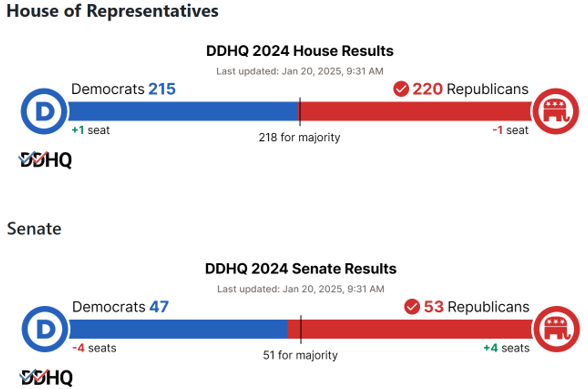
In August 2024, 18 Republican members of the House of Representatives sent a letter to the Speaker of the House urging him to prioritize business and market stability when considering modifications or a repeal of the IRA. This illustrates that even among Republicans, some districts acknowledge the importance of the renewable energy industry and the support it receives. If the Trump administration were to attempt suspending the IRA or enacting new legislation to replace it, garnering support from the entire Republican Party would likely prove difficult. Given that the GOP holds only a few seats advantage in both the House and Senate, any reductions in renewable energy support would probably be limited in scope. Even with just three defections from areas dissatisfied with the decrease in benefits, such a bill could fail in House
2. Tax Credit Policies
It will be challenging for the Trump administration to eliminate renewable energy tax credits. The tax credit for investing in renewable energy installations represents a significant tax reduction for many large U.S. companies. Repealing these credits would contradict Trump’s tax-cutting agenda. One of Trump’s key campaign promises is to lower the corporate tax rate to 15% to make the U.S. a more attractive place for business. Additionally, many renewable energy projects already in progress rely on these tax credits, so rescinding them would likely provoke strong backlash.
Furthermore, tax credits can be traded for up to 10 years after they are generated, making them more appealing to companies than a straightforward corporate tax rate cut.
However, it is likely that the tax incentives under the Inflation Reduction Act (IRA) will be reduced. The income tax breaks for individuals purchasing electric vehicles are likely to be the first to be eliminated. “It is possible that the new administration will phase out the IRA tax credit sooner than originally planned,” says Keith Martin, a partner at Norton Rose Fulbright. Even then, it is more probable that any adjustments will be partial rather than complete repeal.
3. Renewable Energy Competitiveness and Existing Infrastructure
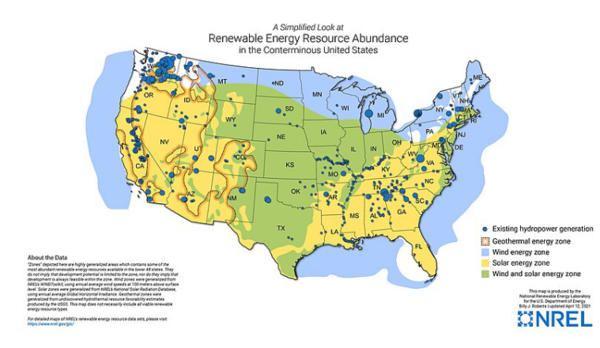
In regions of the U.S. where large-scale renewable energy development is concentrated, renewables are already competitive with fossil fuels on a cost-per-generation basis, and infrastructure deployment is progressing well. This trend is largely influenced by geography, which cannot be easily altered by short-term policy changes.
The Trump administration aimed to revitalize the manufacturing sector to create good jobs and enhance national security. Similarly, the Biden administration has focused on attracting investment in the electric vehicle, semiconductor, and battery sectors. Notably, South Korea has been the largest investor in the U.S. over the past four years. However, much of this investment is occurring in the southeastern United States rather than in the northern region near the Great Lakes, known as the Rust Belt. The southeastern states—Texas, Georgia, Louisiana, and Arizona, collectively referred to as the Sun Belt—are the primary destinations for manufacturing investment.
The Sun Belt offers relatively low costs and wages, newly built infrastructure, and pro-investment policies along with generous incentives from state governments. It also boasts strong solar and wind power resources and an abundant supply of natural gas, leading to low energy costs. In fact, natural gas generators can work synergistically with solar and wind power. Texas, which has the cheapest natural gas in the U.S., is home to the largest number of new wind and solar installations complementing natural gas generation.
“Unlike eight years ago, the current economic conditions are favorable for a clean energy transition,” stated S&P Global Commodity Insights. In fact, S&P predicts that the U.S. will install 45 GW of solar power in 2025, which would represent 8% of the 586 GW of global solar installations. As a single country, the U.S. ranks second only to China in annual solar installations, with much of this activity concentrated in the Sunbelt region. These regions are experiencing significant investments in transmission and distribution infrastructure to support large-scale renewable energy development, primarily driven by solar power.
The U.S. Energy Information Administration (EIA) forecasts a 75% increase in solar power generation between 2023 and 2025, expecting solar capacity to surpass wind power by the end of 2025. Given the synergies with abundant gas-fired generators, the ongoing growth in electricity demand, and the large-scale development projects and infrastructure investments currently underway, it is unlikely that short-term policy changes will reverse this trend.
4. Grid Connection and Supply Chain Issues
The biggest challenges currently facing the renewable energy industry are supply chain issues and high interest rates, rather than government policy. These challenges affect the industry, independent of any specific administration’s actions. There are significant waiting lists across the U.S. because the pace of renewable energy development has not kept up with the pace of grid connections. In PJM, the eastern power grid, only 2.4 GW of the 37 GW of generation that had been permitted for development was partially operational by the end of the third quarter of 2024. In total, the U.S. had 462 GW of generation waiting to be connected to the grid in 2010, compared to 2,598 GW in 2023. With 95% of this capacity being renewable, access to the grid is now recognized as the most significant obstacle to the growth of the renewable energy industry.
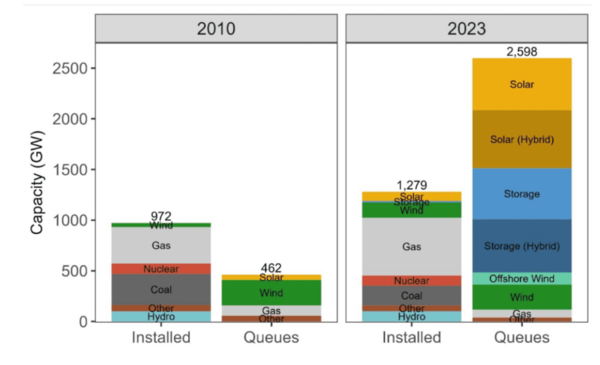
The current backlog in the renewable energy sector is primarily due to a shortage of grid equipment, such as high-voltage transformers, as well as complex permitting processes and community complaints. These challenges are specific to the industry rather than a result of federal policy and stem from the intricate legal system in the United States. The Trump administration has committed to attracting large-scale grid equipment manufacturing plants and aims to significantly simplify the permitting process for substantial investments, which could help alleviate some of the grid backlog.
However, Trump’s proposal to impose a 60% tariff on Chinese goods raises concerns. Tom Harper, a partner at Baringa, points out that “Chinese solar products are already subject to a 50% tariff, so Trump’s protectionist policies may have a limited impact on the industry.” It’s also worth noting that the Biden administration has imposed high tariffs on certain items, and the industry has already adapted to these changes.
Conclusion
While a second Trump administration will likely alter U.S. renewable energy policy, the overall impact may be less significant than anticipated. Given the conflicts of interest within the Republican Party, the sustainability of tax credits, the competitiveness of renewable energy, and other non-policy factors, the U.S. renewable energy sector is expected to continue growing.
That said, the growth pace may slow somewhat as government support diminishes. Nevertheless, the renewable energy industry is now considered “too big to fail.” Abigail Ross Hopper, president of the Solar Energy Industries Association (SEIA), emphasizes that renewable energy has become “a direct result of economic development.” Even in the conservative Sun Belt, there are now more advocates for renewable energy than detractors.
Moving forward, the key factors influencing the growth of the renewable energy industry will be state-level policies, business demand, technological advances, and global market trends. In particular, the increasing need for electricity driven by the rise of data centers will create new opportunities for the renewable energy sector. The outlook for the U.S. renewable energy industry during a second Trump term is generally positive; however, uncertainty may arise as the policy landscape shifts. Resolving supply chain challenges and queue-related issues will become increasingly important.
About the Author:
Jay Kwon is the leader of the Facebook knowledge group COR Energy Insight. He is dedicated to exploring better alternatives for sustainable energy. Jay organizes and shares research with experts in the energy industry to inform the public while also debunking fake news and misconceptions. Currently, he works as an executive in the energy business sector.






댓글