

“I have no idea today”
[Yeajin’s Apple Pie No.6] 1995, the time a big river flowed

The weather was not good for boating. The sky was a flat grey, as if it was about to snow. We boarded the boat, smothering our worries under fluttering excitement. We had no plan on how to return, but that didn’t matter to us. That day, we had to go into town. We couldn’t stand it any longer.
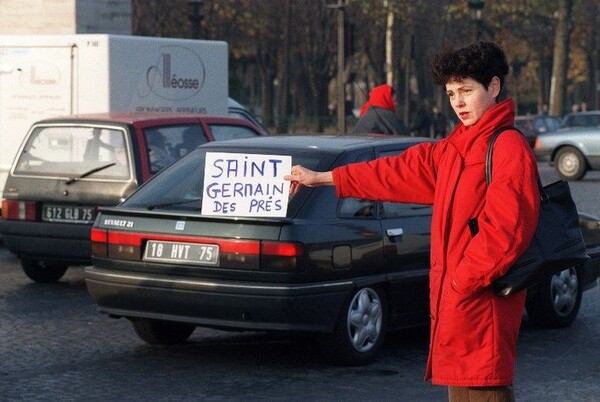
French workers’ general strike in 1995
At that time, I was sharing a small dilapidated apartment on the outskirts of Paris with another international student. The subway line did not reach our town, so our only link to Paris proper was the Montparnasse train station. A far cry from Paris’ pedestrian-friendly design and dense subway system. I had suddenly moved to Paris from another region, so I was in a hurry to secure lodgings. After I moved, I realized that the traffic in the village was inconvenient, so I started looking for a place to live in downtown Paris.
During my brief period of residence in the village, a massive general strike that marked a milestone in the modern history of France was held. It was a workers’ uprising with enormous ramifications, in which all public transport services across France, including buses, subways, trains and aircraft, were completely stopped. Strikes and rallies were sporadically held here and there, but at some point, public transportation all over the country stopped all at once. It seemed to have continued for almost a month, to my vague recollection.
It started with the ambitious welfare system reform plan that President Jacques Shirac and Prime Minister Alain Juppe, who came to power at the time, were trying to implement. Under their direction, the government declared a comprehensive reduction in welfare budgets such as pensions, family allowances, and medical insurance. What kind of country is France? Workers’ summer vacations are up to a month, post offices and banks also shut down during lunchtime, and most supermarkets closed on Sundays. The traces of the history of overthrowing the monarchy through the revolution, dragging the king and queen to the square and beheading them, were etched throughout their lives. The fact that the country’s most celebrated national holiday is Revolution Day shows how they perceive their identity. The Shirac government at the time had overlooked it. The country erupted in organized, united opposition to the reforms.
Living outside the city without a car, my roommate and I were stranded during the strike. I immediately gave up the school classes because of the circumstances but being confined to a quiet suburban village made me impatient. My blood threatened to boil from sheer boredom. I was about to go crazy. All I could do was watch the news, wait eagerly for the strike to end, stroll through a deserted park, and buy daily necessities at the small shop next to the apartment. Since the bus did not run, I could not even go to the supermarket where I usually shopped, so the menu was limited.
Then one day, M, a local resident, told me and roommate how to get to Paris by boat. A long way down the slope extending from the village intersection, there was a wharf for boats that travelled between the town and the center of Paris along the river Seine, which was not affected by the strike because it was a private cruise ship. Our sanity had been worn thin by ennui, so we rejoiced and asked for the exact location of the dock. M suggested that we all go to Paris together, saying that he should also invite his friend, but we managed to get him to spit out the ship’s timetable, curtailing his advances. Ahh! Who said youth is pure?
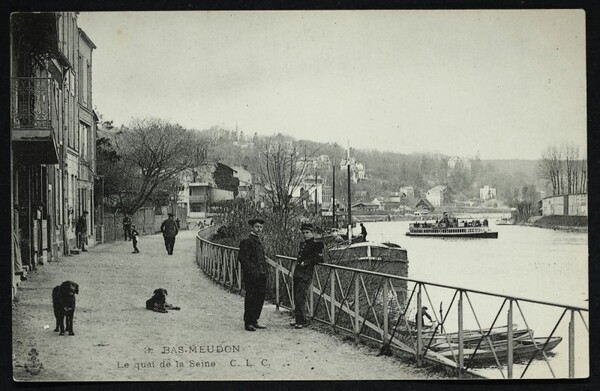
We were foolish for getting on the boat that day. When we arrived in Paris, we were briefly excited by the sense of liberation and wandered from place to place, but we quickly found ourselves worrying about the return trip. When we first arrived, the snow fell in short, light bursts. However, while we were exploring Paris, the weather worsened until it turned into a proper snowstorm. The streets turned a stark white after just a few hours. Our worst fears became a reality. The boat was forced to stay in Paris until the snow cleared up. The only other choice was a taxi, but because of the strike, catching a taxi was like plucking a star out of the sky. Besides, there were no taxis going out of town.
Why doesn’t anyone blame the general strike?
We ran to and fro on the snowy streets, cold and frightened. We had the intention of hitchhiking back to our apartment. Our minds were fraught with anger. We blamed ourselves for foolishly acting so gung-ho about coming out to the city. However, we discovered something strange while watching the related reports broadcast through TV news: no one raised a voice of dissatisfaction with the massive strike.
The anchor conveyed the positions of the government and Citizens’ Solidarity in a neutral manner, and the reporter released an on-site sketch of how positively citizens were enduring the situation. No one frowned when the reporter pointed the microphone at them. Some even smiled and calmly responded to the interview, saying they were commuting to and from school using motorcycles, bicycles, and rollerblades. Someone even remarked that they were glad for the chance to exercise.
I couldn’t quite understand. Isn’t it normal for someone in an emergency to be caught on the screen? Each person has their own circumstances, and when all public transportation is stopped without any acknowledgment like this, what do they do? How come no one gets upset? My roommate and I were equally baffled. In the end, even our assumptions that the media were trying to sway the masses were wiped away, because the people we met in the streets acted the same way.
It didn’t make sense that no one was complaining about the strike, so I asked around, trying to search for a dissenting opinion. It was useless. The gist of the answers were identical. It was a fight to protect the welfare of all. Some went as far as to say that it was right to persevere and cooperate even if the current issue did not have much to do with them, as they would like others to do so for them in the future. It was a true cultural shock to me.
That’s why we took the boat, forgetting that we were marching into a den strangers with no connections in case of an emergency. Everyone had been so relaxed that we also shifted our attitudes toward ignoring the inconvenience caused by the strike. It never occurred to me that I would end up stranded on a snowy street.
Eventually, a sedan stopped in front of us, saving us from the fate of freezing to death on the streets. Ever since we were saved by that kind lady, we stayed in the village until the strike was over. The Shirac government eventually withdrew the welfare reform plan, and the strike ended in a workers’ victory. It happened 26 years ago, in 1995. The experience of shivering out on the streets as my lips turned blue remains a trauma to this day.
The days when we gathered together by a big river
After a quarter of a century, at the end of 2021, I now live in the United States. Coincidentally, as I am writing this, there is a gray sky outside the window, just like that day. Even the snowflakes are the same. The seasons and air are similar to then, but a lot has changed. At that time I was witnessing people who shut down a nation for welfare, and now I live on a continent dominated by the principles of market economy. There and here, each has changed in some way, but there is one point of contact.
There was a time when streams from all sides gathered into a great river. Although a current as huge as the French strike of 1995 has always been rare, at one time human beings knew it was a virtue to endure personal discomfort for the sake of a cause. There is no such thing as a river flowing as one now. Many different streams flow in their respective directions, covering the earth’s surface evenly. Like a great pulsing artery of change, whose vitality had been split up amongst a million little capillaries.
I know the big river’s destination isn’t always right. I thought such a collective would always stretch out and meet the great sea, but the history of waterways splitting or changing direction by bumping into unexpected terrain always repeats itself. During a time in which different values collide, can we all reach our respective destinations? If it is reached, is that truly where we want to be? Even though I feel that nothing is certain, it is often sad to see attempts to create a large stream of water leak and evaporate into a small stream.
In this era when no great rivers flow, is it a sign of hope or disaster? On that day 26 years ago, a boat moved along the Seine and took me to downtown Paris. I did not foresee the heavy snow, so I could not return the same way I came.
*The title of this article, ‘I have no idea today’, is a quote from Bo-seon Shim’s poem.
Yeajin Hong
Yeajin Hong is the author of <Pine Theater> the fiction and <An Excellent Taste> the essay collection. In addition, she published her short stories at various short story compilation after she received the grand prize for the short story at the Overseas Korean Literary Award Competition (2014). She lives in a seaside town in Connecticut, USA.


댓글