

Europe Falling Behind in the Tech Hegemony
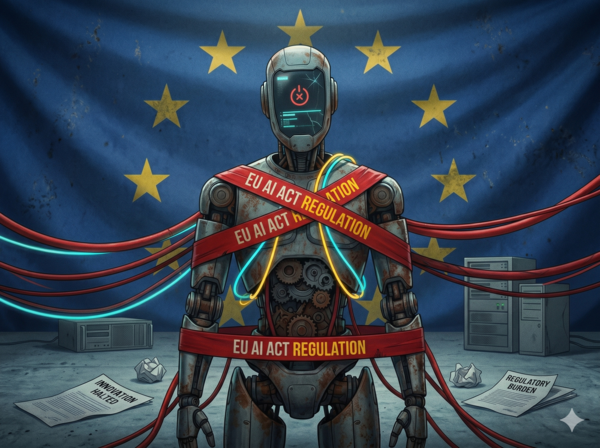
- The Limits of the Brussels Effect and Pitfalls of Ex-ante Regulation Blinded by the illusion that its regulations would become the global standard, Europe enacted the “AI Act.” However, this regulatory moral absolutism—which shackles the technology itself without a domestic industrial foundation—has instead turned into a barrier that paralyzes the self-sustainability and innovation momentum of regional startups.
- The Failure of Regulation Without Hegemony and the 16-Month Postponement Unlike the United States’ voluntary ex-post (after-the-fact) regulation, Europe’s precautionary ex-ante (preemptive) approach obstructed market growth and triggered a disastrous industrial retreat. Cognizant of this fatal crisis, the European Commission ultimately postponed the full implementation of the AI Act for 16 months on May 7, 2026, effectively conceding a bureaucratic blunder.
- Loss of Tech Hegemony and the Imperative of Sovereign AI In a market where General Purpose AI (GPAI) and Large Language Models (LLMs) are monopolized by US and Chinese Big Tech, failure to establish independent AI sovereignty will inevitably lead to the subjugation of national public functions and cultural identity. Building a defensive perimeter through “Sovereign AI” to protect domestic industries and forging strategic alliances among middle-power nations is a matter of immediate urgency.
The Illusion of ‘the Brussels Effect’ and the ‘AI Act’ Monster
Germany lacks a homegrown, flagship General Purpose AI champion capable of leading the AI era. This is increasingly cited not merely as a German predicament, but as a systemic crisis afflicting the entirety of Europe. The pace of technological innovation in Europe’s AI industry has visibly stagnated. At the epicenter of this stagnation lies a legislative behemoth engineered by the European Union: the AI Act.
Initially drafted by the European Commission in 2021 and officially adopted in March 2024, the legislation was heralded at its inception with optimistic assessments that it would “foster European innovation anchored in trust, transparency, and accountability.” But has it?
Within Europe’s digital framework, two monumental pieces of legislation stand out: the General Data Protection Regulation (GDPR) and the AI Act. Following the full implementation of GDPR in 2018, any digital enterprise seeking access to the EU market was compelled to strictly adhere to these stringent privacy protocols.
This privacy mandate, backed by the sheer purchasing power of a single consumer market of 450 million people, effectively morphed into a global benchmark—giving rise to what is known as the “Brussels Effect.” This term encapsulates the phenomenon where rules and regulations enacted by the EU become the de facto global standards due to the EU’s formidable market leverage over multinational corporations. It was a reflection of Europe’s supreme confidence that whenever it drafts a regulation, the rest of the world has no choice but to follow.
Buoyed by this confidence, the EU sought to preemptively codify the boundaries of technology and data processing for the dawning AI era through the AI Act. Enacted in 2024, the law is currently undergoing a phased implementation spanning 2025 and 2026. The strategic objective was clear: compel the global market to adopt this regulatory framework, thereby ensuring that the EU would lead the norm-setting arena of tech hegemony.
‘Regulatory Moral Absolutism’ Triggers Self-Harm
However, a critical distinction remains: while GDPR governs individual privacy rights, the AI Act directly regulates the “technology” itself—the very core of tech hegemony. Consequently, rather than catalyzing trusted, transparent, and responsible innovation, the law has mutated into a primary barrier stifling the survival and growth of European AI startups.
The AI Act mandates that developers of General Purpose AI models must rigorously comply with European copyright laws and publicly disclose granular summaries of their training datasets. Unlike capital-flush US tech giants, underfunded European startups face an insurmountable financial hurdle in the form of mandatory copyright royalties.
Given that roughly 90% of an AI’s performance hinges on the sheer volume of its training data, this mandate effectively suffocates the European AI industry in its infancy. Furthermore, compelling the disclosure of training data risks exposing the core proprietary technology and trade secrets of these startups—a provision that has drawn fierce criticism from European entrepreneurs since its early stages.
Europe’s flagship General Purpose AI contenders include France’s Mistral and Germany’s Aleph Alpha. Recognizing the impending threat, these firms coalesced early on to aggressively lobby against their core models being categorized under the “High-Risk” tier of the AI Act. While they successfully secured substantial exemptions from these rigid obligations, late-moving startups were left to shoulder the full weight of the technological barriers imposed by the Act.
As a result, the AI Act can no longer be characterized as an ecosystem designed to nurture regional startups. Instead, it operates as a regulatory framework excessively skewed toward consumer safety and fundamental rights at the expense of industrial viability.
Contemplating where this framework of preemptive, ex-ante regulation will lead the EU market yields a grim outlook. When contrasted with the regulatory approach of the United States—which prioritizes market agility—the European framework severely dampens the momentum required for industrial innovation.
In fact, both Mistral and Aleph Alpha have implicitly conceded that competing head-to-head against US Big Tech in the mainstream LLM arena is a losing battle. Consequently, they have pivoted their strategies toward building “Sovereign AI” platforms tailored specifically for domestic enterprises and government institutions. Ultimately, in the global general-purpose AI and search engine market, Europe is rapidly degenerating into a mere “digital consumer outpost,” paying continuous rents to American tech behemoths.
The Limitations of Regulation Without Hegemony
The EU’s AI Act utilizes a risk-based classification to enforce a fundamentally precautionary, ex-ante regulatory approach. Conversely, the United States champions an ex-post (after-the-fact) regulatory model, leveraging market autonomy and existing legal frameworks. Meanwhile, China maintains ironclad state control over technology, weaponizing it to preserve national security, uphold socialist values, and defend regime stability.
When comparing the industrial philosophies of the US and the EU, the contrast is stark. The EU dissects AI into rigid risk tiers (Unacceptable, High, Limited, and Minimal Risk) and imposes exhaustive compliance mandates, including ex-ante verifications, continuous risk assessments, and transparency obligations. This is the direct consequence of prioritizing fundamental rights and safety over industrial innovation.
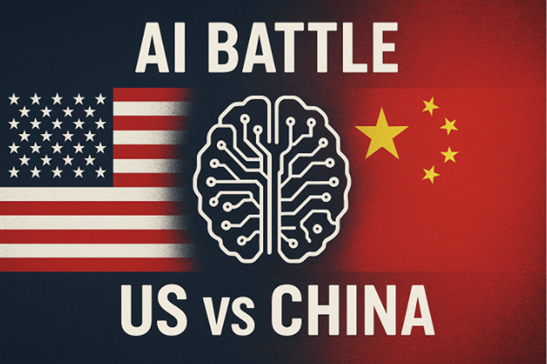
Herein lies the self-harming paradox engineered by the EU. In its zeal to champion ‘regulatory moral absolutism’ under the banner of protecting civil society, the EU has inadvertently choked the germination of its own AI industry.
If the US model of ex-post regulation successfully consolidates its dominance over the global general-purpose AI market (excluding China), American Big Tech will have zero incentive to adopt the EU’s AI Act as a global standard. Regulation absent technological hegemony ceases to be a global benchmark; it is reduced to a “local rule” confined strictly within the boundaries of its own consumer market.
Furthermore, it is logistically impossible for the EU to police every extraterritorial transaction involving EU citizens’ data, detect non-compliance, and levy fines. Instead, a more plausible and dangerous scenario is emerging: Big Tech firms expanding into the EU may simply roll out downgraded, lower-spec AI services or indefinitely delay product launches, effectively isolating the European digital market from global advancement.
Sensing this imminent marginalization, the European Commission made a pivotal intervention on May 7, 2026, officially postponing the full enforcement of the AI Act by 16 months. Evaluated purely through the lens of industrial competitiveness, the AI Act represents a catastrophic blunder by a bureaucracy entirely disconnected from the operational realities of the digital economy.
The Brink of Game Over: Aligning for Sovereign AI
In his book The Coming Wave, Mustafa Suleyman, co-founder of Google DeepMind, articulates a warning that the EU and sovereign states globally must heed: the impending wave of AI technology threatens a massive democratization of knowledge paired with a critical loss of state control.
When technology begins to hollow out the core public functions of a state, failing to establish independent AI sovereignty guarantees a rapid descent into becoming a “digital colony” of tech monopolies and the superpowers that harbor them. The data of European citizens will inevitably be siphoned into the proprietary algorithms of US Big Tech, rendering Europe a passive consumer base.
Concurrently, Europe’s cultural and political identity will undergo rapid erosion, accelerating its Americanization. There is no structural guarantee that the “geopolitical security hostage crisis” Europe currently faces under US hegemony will not mutate into an irreversible “digital technology hostage crisis.” For Europe, the window is closing, and the situation is perilously close to a “game over” scenario.
For nations outside the US-China duopoly, pouring national resources into cultivating domestic AI capabilities is not an issue of economic strategy—it is a prerequisite for national survival. Even if competing in the capital-intensive, frontier LLM arena is no longer viable due to the astronomical investments of American tech giants, nations must urgently erect “Sovereign AI” perimeters to safeguard their unique public services, localized industries, and institutional data.
The paradigm shift is clear: nations must treat the EU’s preemptive regulatory overreach as a cautionary tale and pivot toward concentrating state capacity on protecting and fostering local AI industries. Simultaneously, middle-power nations facing identical existential pressures from the tidal wave of US and Chinese Big Tech must aggressively forge “middle-zone strategic alliances.” When unilateral defense is impossible, forming coalitions to mount collective resistance is the only viable geopolitical alternative.
Tech leaders, including Elon Musk, calculate that the inflection point where AI entirely eclipses human cognitive labor is rapidly approaching. They warn that the next two to five years (prior to 2028–2030) constitute the definitive “golden time” that will dictate the survival of both individuals and nation-states.
Major powers and global institutions view 2030 as the ultimate baseline. Within this window, the industrial landscape and the mechanisms of state control will undergo a total metamorphosis. As we contemplate the future structure of state sovereignty, it remains highly uncertain how many of the 193 UN member states will retain the practical capacity to guarantee the security and digital autonomy of their citizens. The era of digital colonization is knocking on our door.


댓글